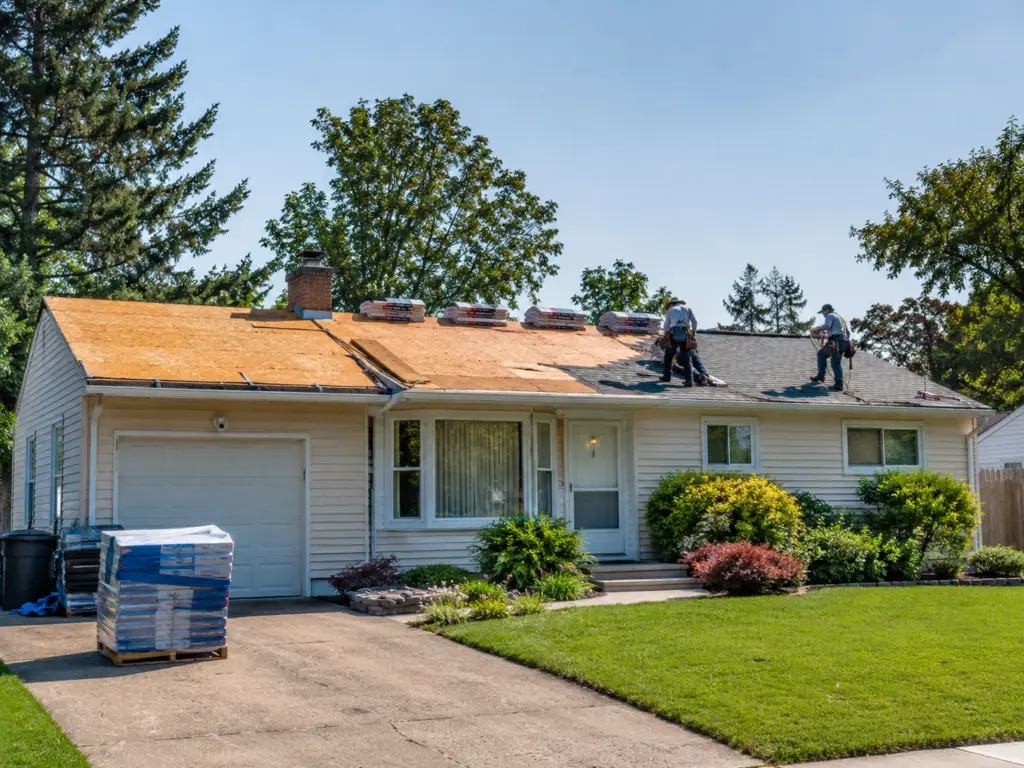
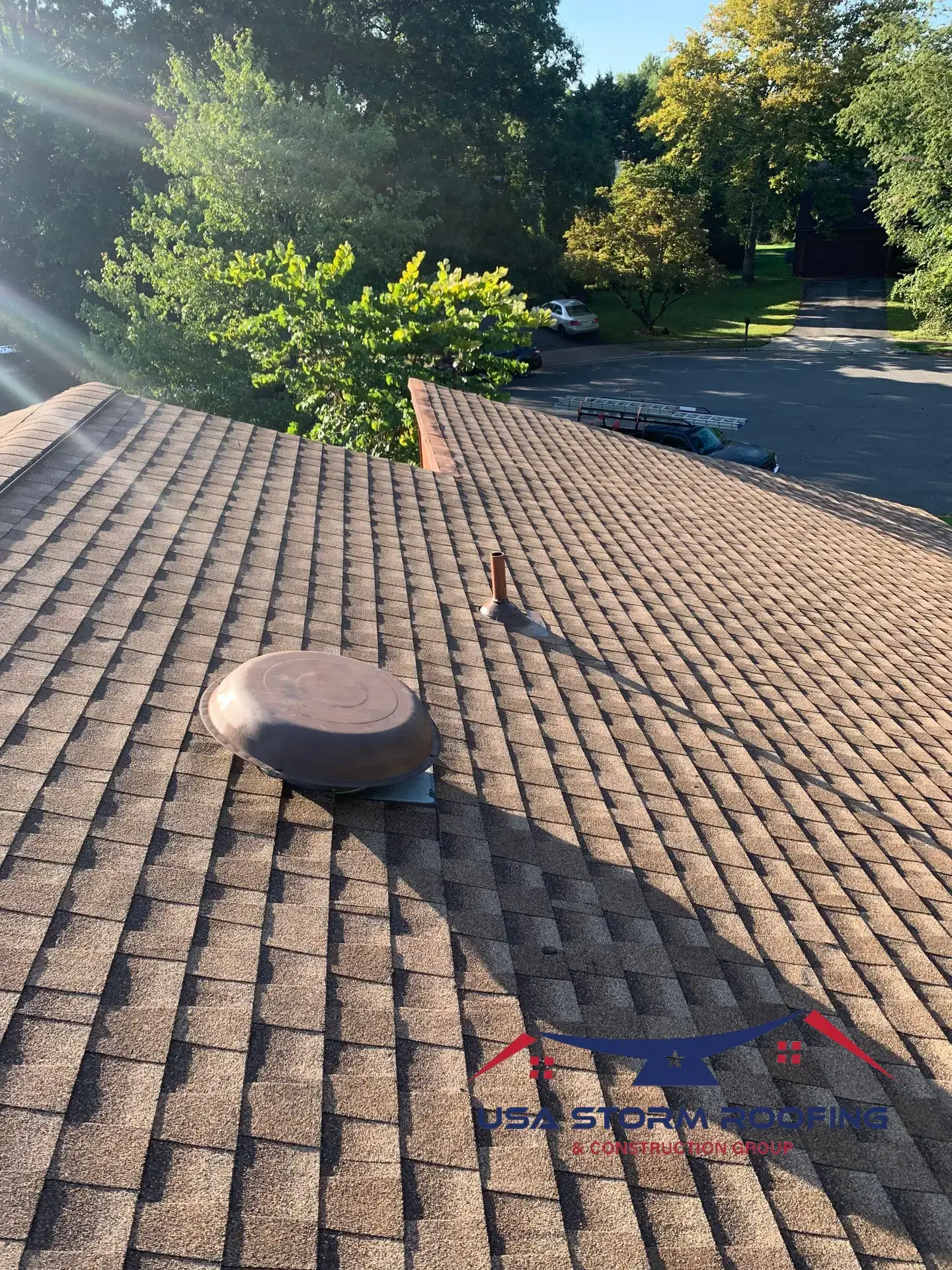
A 2,200-square-foot home does not necessarily have a 2,200-square-foot roof. If that number describes interior living space, it is only a starting point for discussing a replacement. The contractor needs the roof’s actual dimensions and condition before preparing an estimate.
Why living area and roof area differ
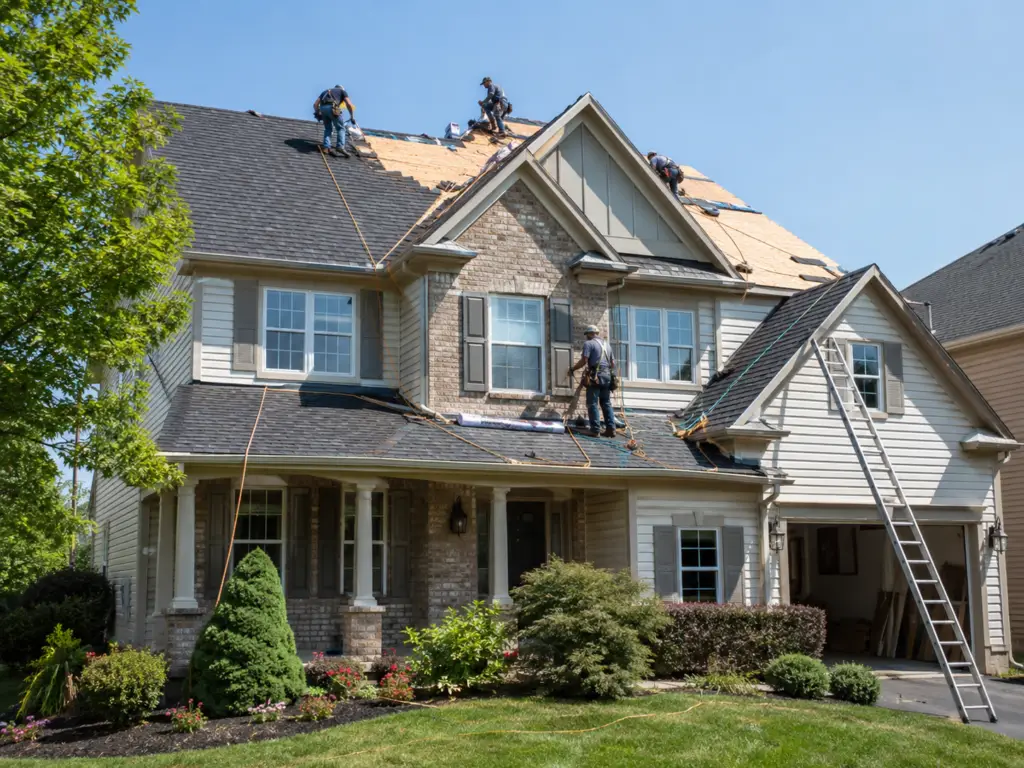
A two-story house can have much less roof footprint than a one-story house with the same living area. Roof slope increases the surface area above that footprint. Garages, porches, overhangs, dormers, and additions can add area that the living-space figure does not include.
Complexity matters too. A roof with many valleys, wall junctions, and penetrations may require more detail work than a simple roof of similar size. Separate low-slope sections may need a different roofing system.
A simple measurement example
Illustration only: suppose a simple roof has a measured horizontal projection of 2,200 square feet and a consistent 6:12 slope. A 6:12 slope rises 6 inches for every 12 inches horizontally. Its slope factor is approximately 1.118, so the sloped roof area would be about 2,460 square feet before waste.
That example assumes the projection already includes the full area being covered and that there are no additional roof sections or geometry changes. It is not a measurement of your house and does not apply just because your listing says 2,200 square feet of living space.
One roofing square equals 100 square feet. In the example, 2,460 square feet is about 24.6 squares of measured roof area. The ordering quantity will depend on layout, product packaging, cuts, and the contractor’s explained waste allowance. Have a professional measure the roof; homeowners do not need to climb onto it.
What a roof estimate should include
- Measured area and identification of each roof section.
- Removal of existing layers and disposal.
- Deck inspection, included repairs or allowances, and pricing for additional damage.
- Specified covering, underlayment, starter, ridge caps, and compatible accessories.
- Flashing, edge details, penetrations, and ventilation work.
- Access, protection, cleanup, applicable approvals, and warranty documents.
Choose materials for the actual roof
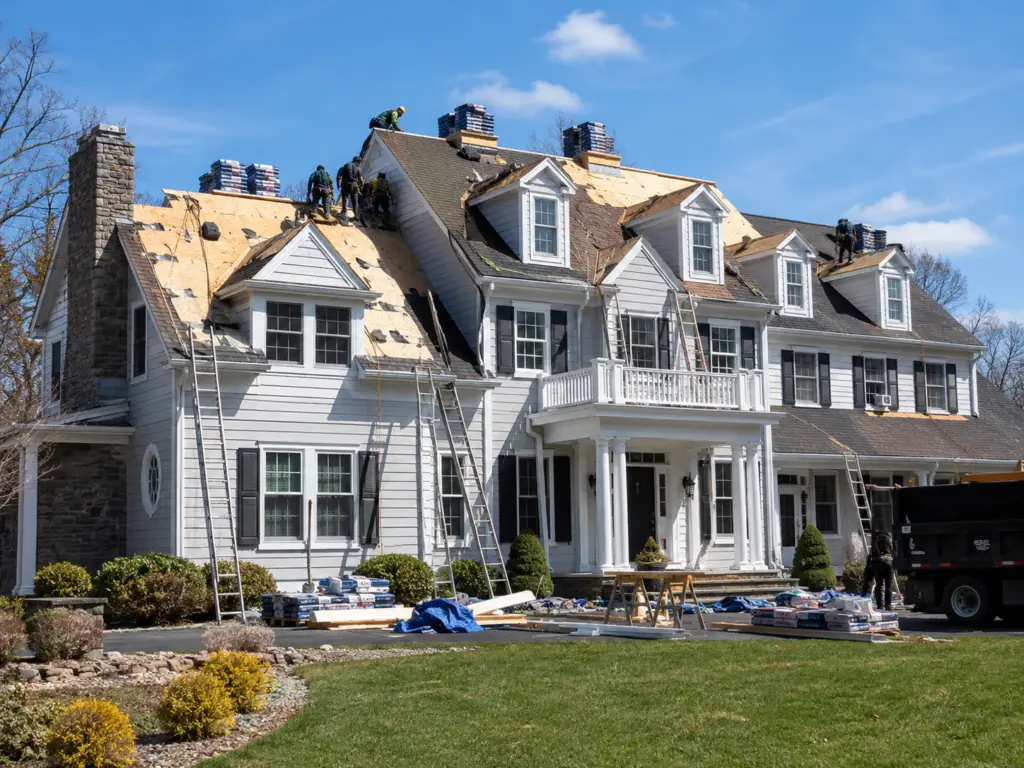
Start with the roof’s slope, structure, existing details, appearance requirements, and maintenance expectations. Asphalt shingles, metal, and other systems have different installation requirements. A heavier material may require a structural assessment before it can be considered. A product intended for a steep roof should not be assumed suitable for a low-slope section.
Compare the exact products and system specifications rather than assuming a material category guarantees a certain lifespan or energy saving. Confirm which options the contractor installs and supports.
Why a generic price table is not a quote
A price attached only to home size leaves important questions unanswered: how much roof is being replaced, what layers are removed, whether decking needs repair, and which flashing or ventilation work is included. Material and labor prices also change.
Request itemized proposals based on the same measured roof and scope. If one proposal is lower, ask about exclusions, allowances, material differences, and disposal before comparing totals. An unusually broad online range cannot resolve those details.
Questions before approving replacement
Could a repair address the problem?
Ask what condition supports the replacement recommendation and whether a limited repair is practical. Roof age and floor area alone do not establish the correct scope. For an active leak, confirm whether a separate paid leak investigation is needed.
How will concealed damage be priced?
Request the unit prices or allowance basis, the documentation you will receive, and the approval process for additional work discovered after removal.
What affects the schedule?
Product availability, weather, access, approvals, roof complexity, and unexpected repairs can affect timing. Ask for a project-specific schedule and how changes will be communicated.
USA Storm Roofing and Construction Group serves the communities listed on our service-area page. Request a roof replacement consultation and bring previous estimates or measurements so differences can be explained. See our replacement service overview for the next steps.