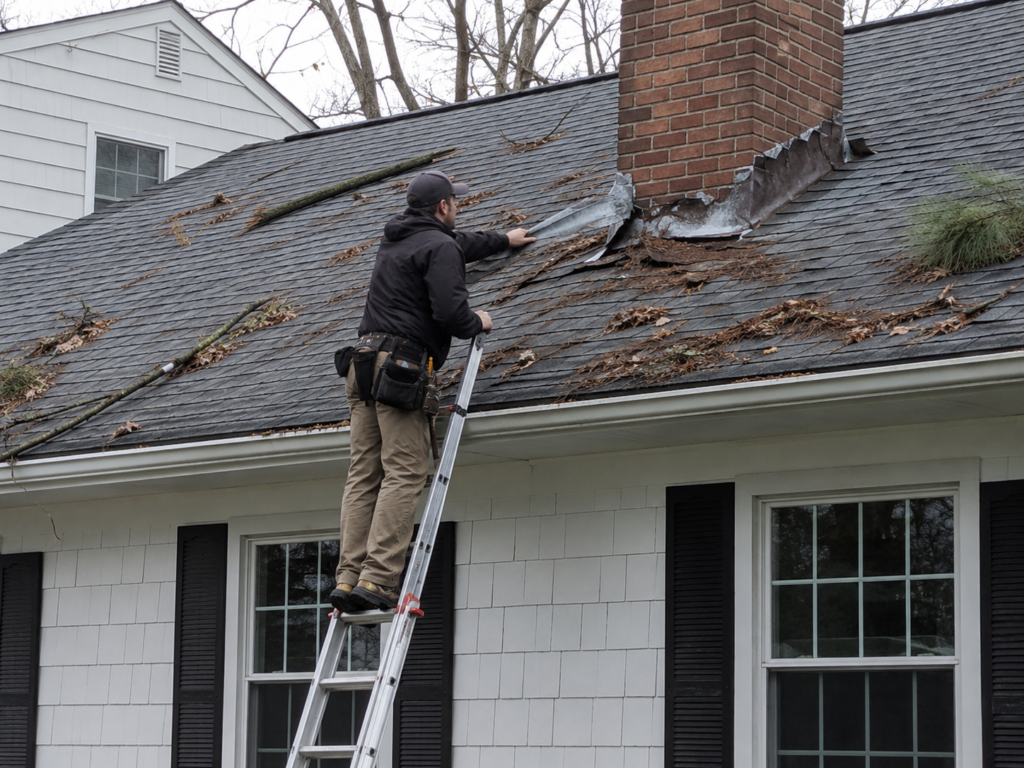
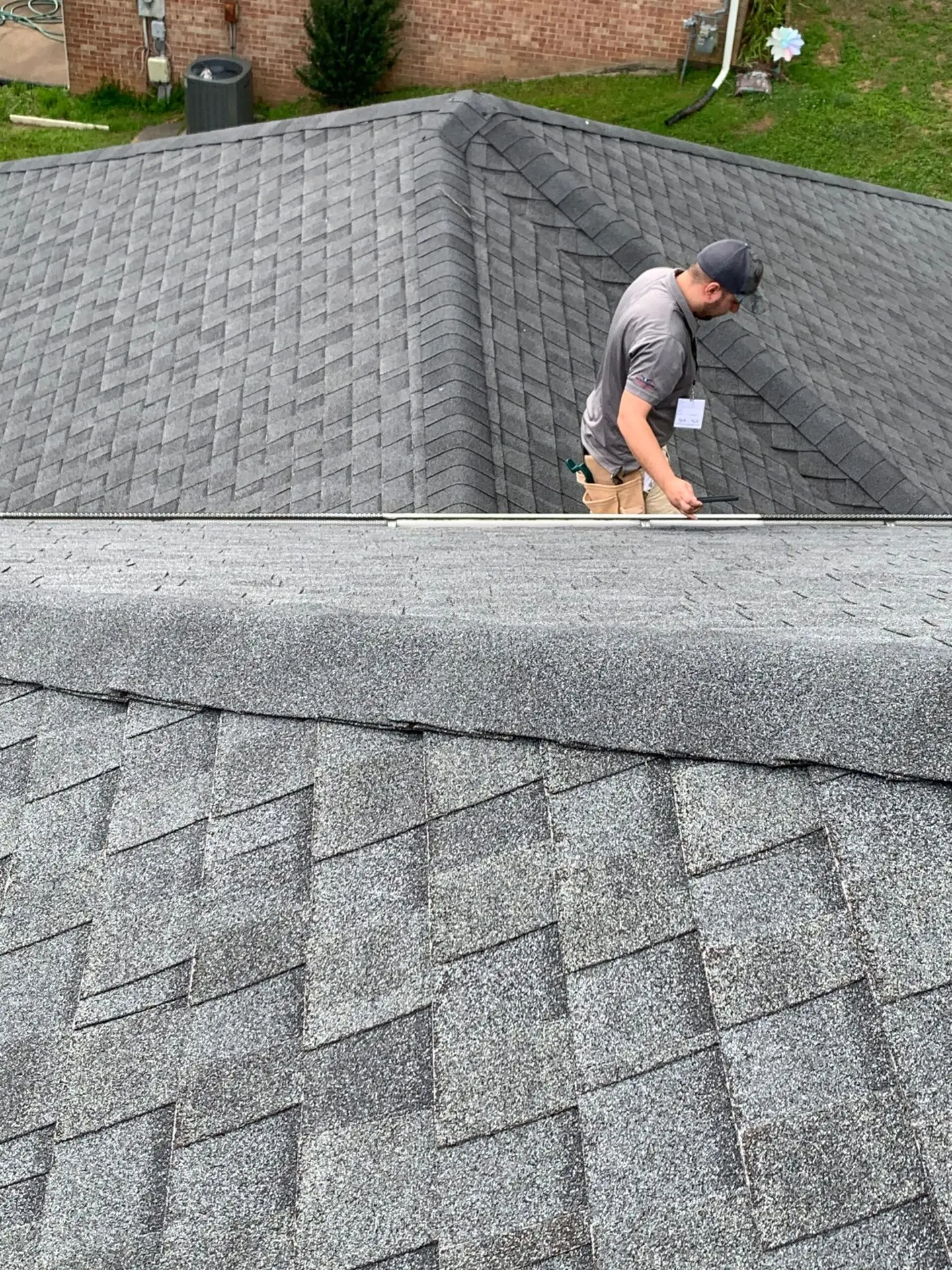
Call a roofer when you notice new roofing damage, water entry, a recurring stain, or a change that needs a qualified assessment. You do not need to know the exact cause before making the call. Describe what happened, where you see it, and whether the condition is active.
Address immediate hazards first
Stay clear of a sagging ceiling, unstable structure, fallen lines, or water near electrical equipment. Contact emergency services or the relevant utility if there is immediate danger. A routine roofing appointment is not a substitute for emergency response.
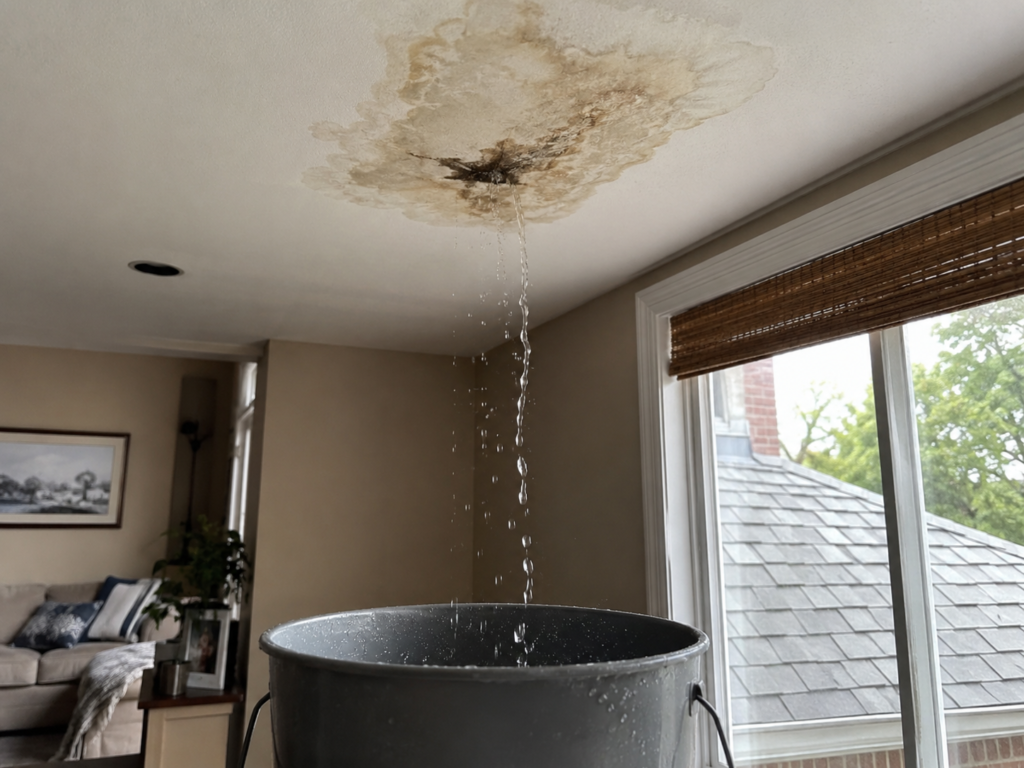
For an active leak without an immediate hazard, tell the company that water is currently entering and ask about availability, investigation, and temporary protection. Do not climb onto a damaged roof to inspect or tarp it.
Arrange an assessment for these changes
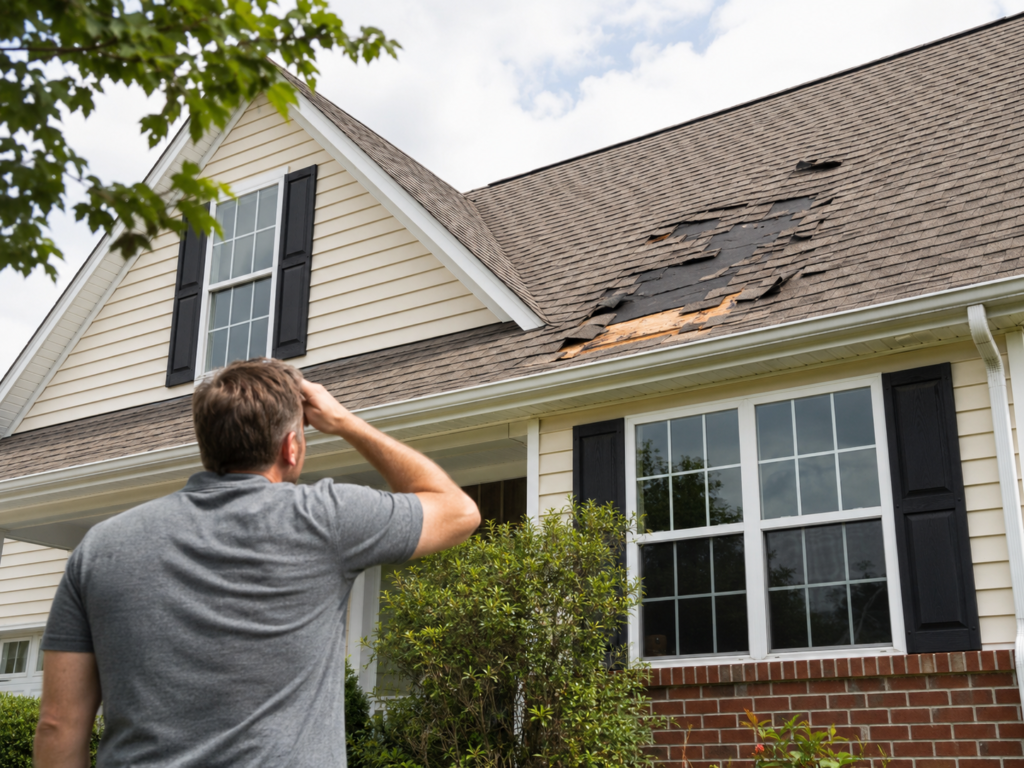
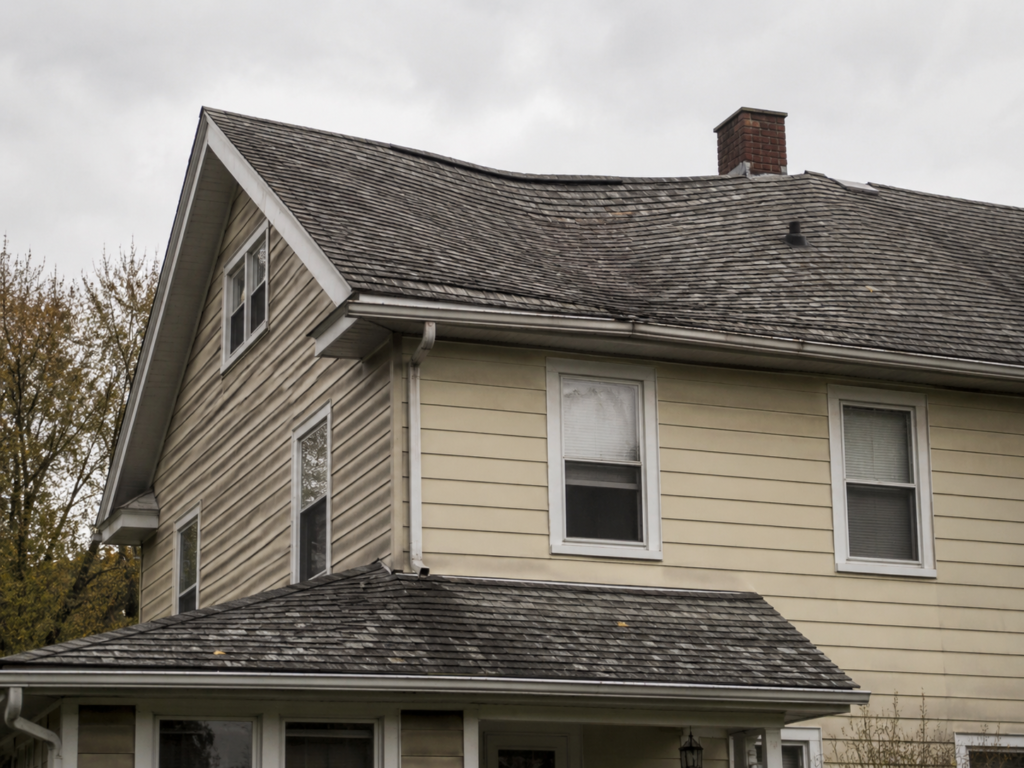
- Missing, displaced, cracked, or visibly damaged roof covering.
- A new or recurring interior stain, drip, or damp area.
- Damage visible after wind, hail, or falling debris.
- Repeated repairs at the same location.
- Loose or damaged details near a chimney, wall, vent, or roof edge.
- Drainage or gutter overflow that may be affecting adjacent roof or wall details.
These observations do not automatically mean replacement is necessary. Ask the assessment to distinguish the symptom from the cause and explain whether a focused repair is practical.
What to record before the visit
From safe locations, take an overall photograph and a closer view where accessible. Record the room or side of the house, the date first noticed, and whether it occurs during wind-driven rain, after a long storm, or at another time. Keep previous repair invoices and roof product records if available.
Do not enter an unsafe attic, move unstable debris, or damage the roof to collect evidence. Explain any inaccessible areas when scheduling.
Choose the right type of appointment
A free exterior inspection can support a discussion about visible condition and a proposed exterior project. Locating an active leak can involve a different investigation. USA Storm Roofing’s leak diagnosis service is paid; confirm its scope, fee, access requirements, and any repair-credit terms before booking.
If the concern is condensation, plumbing, structural movement, or another non-roof source, additional expertise may be needed. A useful assessment should say when the cause is uncertain or outside the roofing scope.
Questions to ask after the assessment
- What did you observe, and can you show the location?
- What is the likely cause and what still needs investigation?
- Which areas could not be checked?
- What repair options are practical and what limitations remain?
- What would the written proposal include and exclude?
- How will further damage or scope changes be documented?
What is not proof of roof failure?
Roof age, discoloration, or a higher energy bill alone does not establish that a new roof is needed. Bills can change with weather, energy rates, equipment, insulation, air leakage, and household use. Surface growth or staining should be assessed according to the roofing material and its care guidance; do not pressure-wash or apply a treatment without checking suitability.
Contact USA Storm Roofing and Construction Group with your property address and observations. Read our roof warning-sign guide for more detail on what different symptoms may mean.