
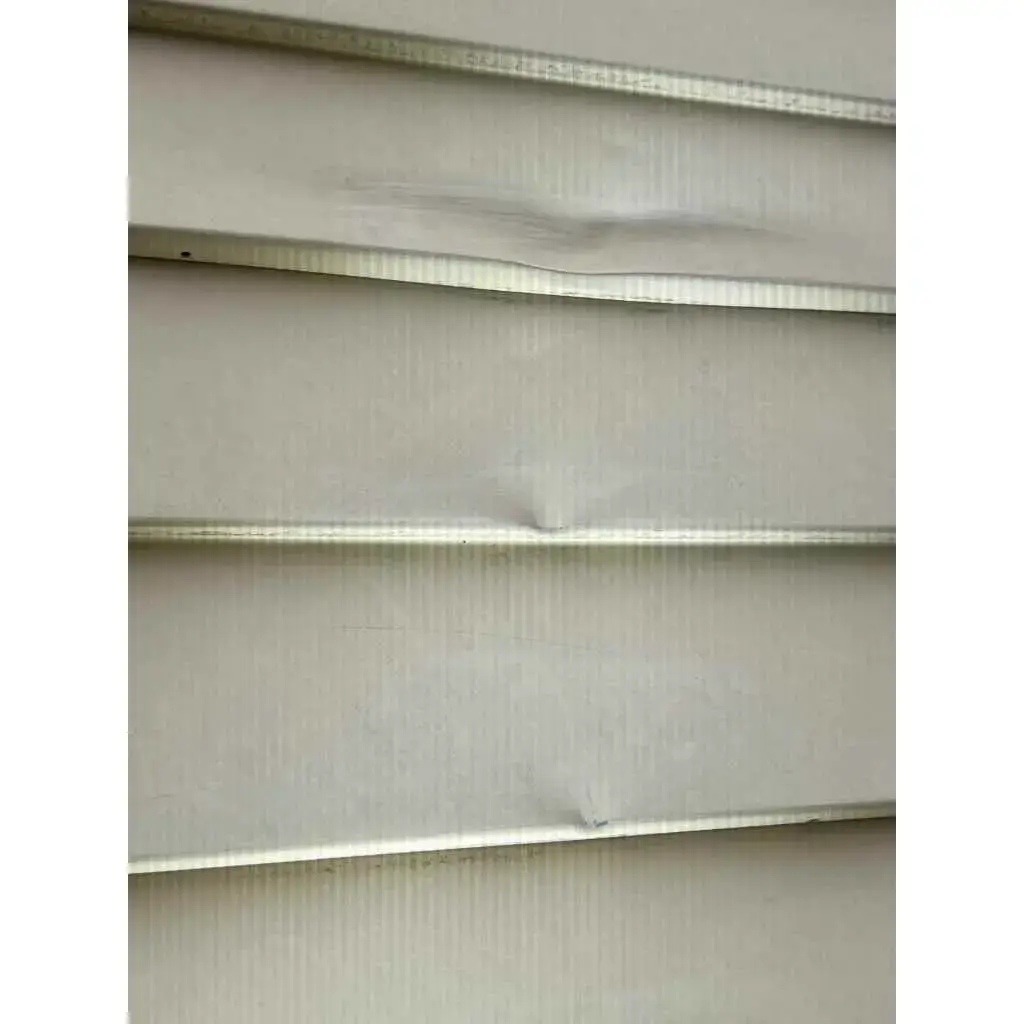
After a hailstorm, siding may show dents, cracks, punctures, or damage to its finish. The next step is to identify the material and the extent of the damage before choosing a repair. A mark on the surface does not, by itself, establish that the wall is leaking or that the entire home needs new siding.
Start with a safe inspection
Wait until the storm has passed and follow local weather warnings. Check the exterior from the ground; leave ladders, roof access, and loose overhead materials to a qualified professional. The National Weather Service thunderstorm safety guide explains the hazards of hail, strong winds, and lightning.
Photograph each affected wall from a distance, then take closer pictures where you can do so safely. Note the storm date, the side of the home, and any new interior water stains. Include trim, shutters, downspouts, and window surrounds so an inspector can compare the damage across the exterior.
What to look for on different siding materials
Vinyl siding: Look for cracks, holes, broken edges, or loose panels. Ask whether a matching replacement panel is available and whether the material behind the opening needs attention. A cosmetic color difference and an opening in the wall covering are different repair concerns.
Metal siding: Document dents and any punctures or separated seams. An inspection should distinguish a surface dent from damage affecting the panel connections or the protection behind the siding.
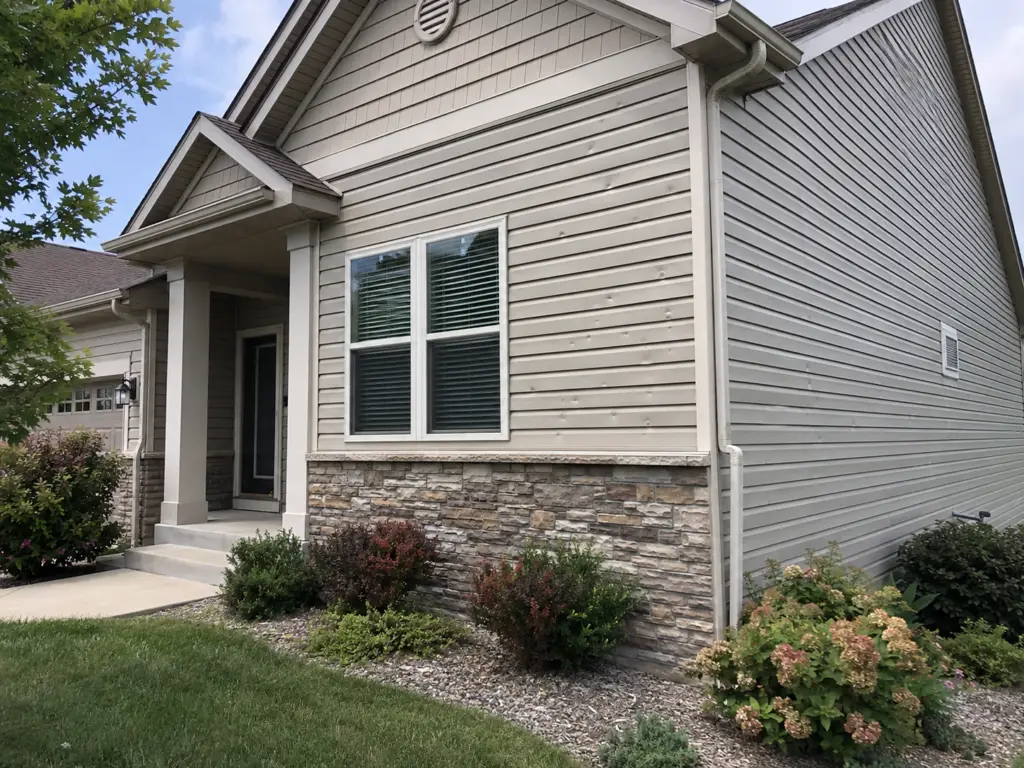
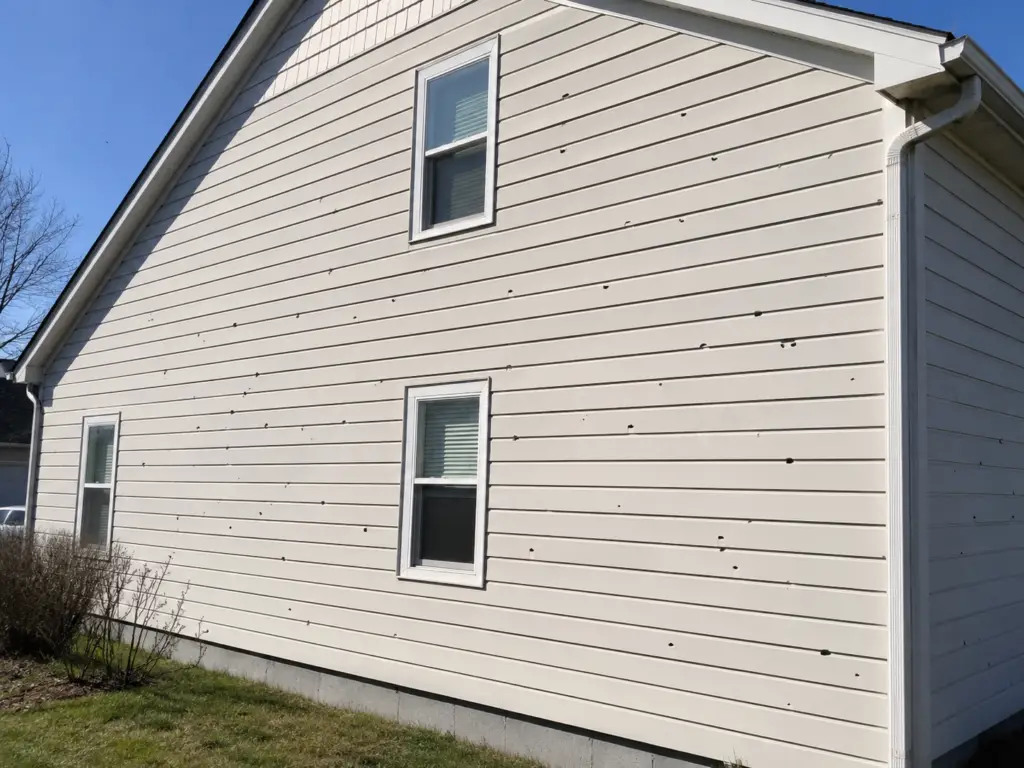
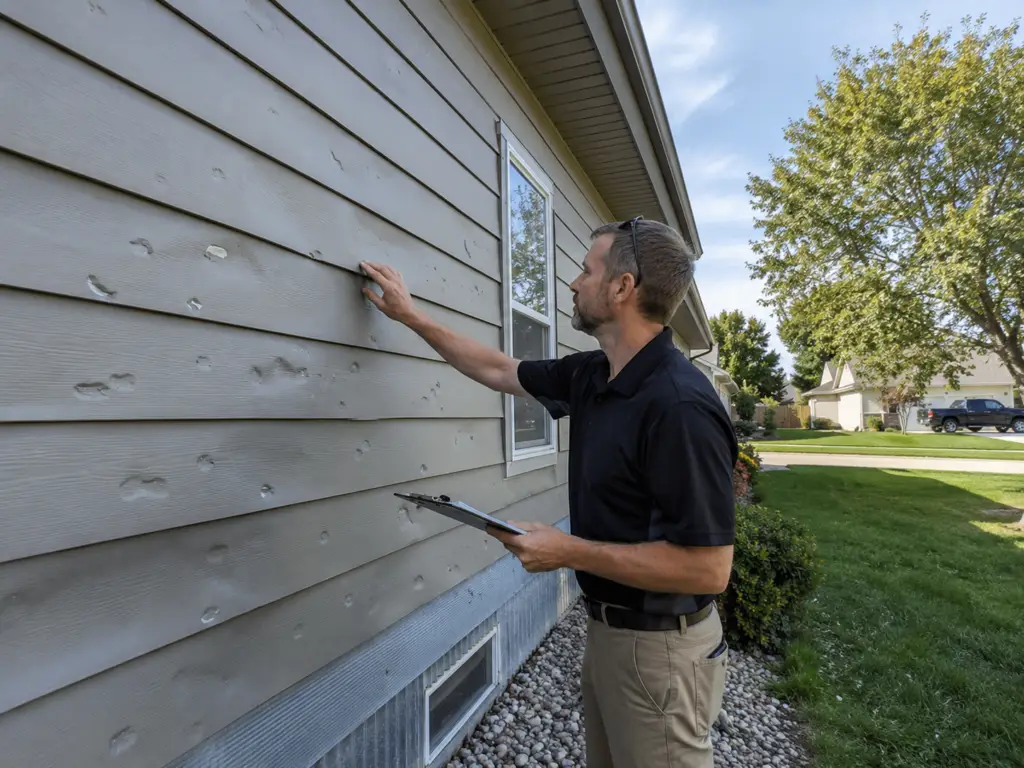
Fiber-cement siding: cracks and finish damage
Fiber-cement siding should be checked for cracks, broken corners, displaced boards, and damaged finish. Do not assess it using asphalt-shingle granule-loss criteria. The material, its installation, and the location of the damage determine the appropriate repair.
Chipped or peeling paint can have more than one cause, including age, moisture, or impact. Ask the inspector to explain the evidence before attributing it to hail. Painting over a damaged board does not resolve a crack or an underlying moisture problem. Manufacturer instructions should guide repairs and refinishing; see James Hardie’s product information for its fiber-cement siding.
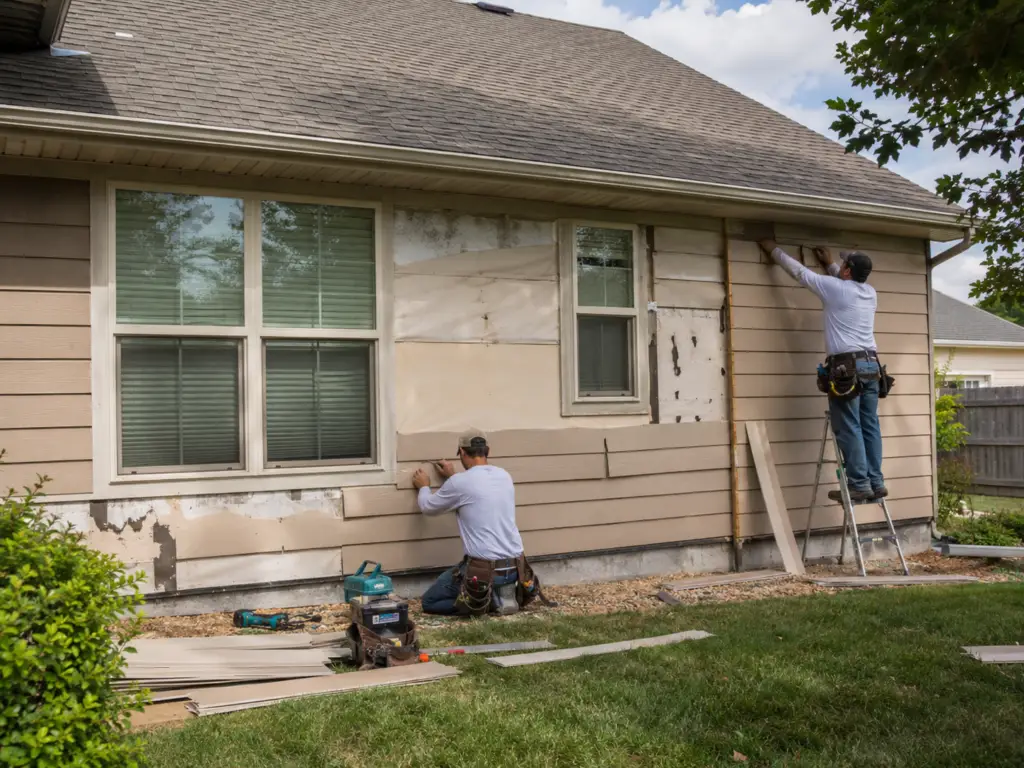
Repair a section or replace the siding?
A localized repair may be appropriate when damage is limited and compatible materials are available. More extensive replacement may be needed when damage is widespread, a suitable match is unavailable, or inspection identifies problems behind the siding. Request a written scope that identifies the affected areas, material and color, preparation, disposal, and any work on trim or flashing.
Compare the proposed work with the documented damage. Ask what is included in the estimate, what could change after the siding is opened, and what product and workmanship warranty terms apply. Our siding repair and siding replacement pages explain the available service options.
Document damage before an insurance decision
Keep your photographs, inspection findings, repair estimates, and relevant receipts. Contact your insurer about its reporting requirements and policy terms. USA Storm Roofing can inspect the exterior and document the proposed repairs; the insurer determines coverage, deductibles, and payment under your policy.
For an inspection of your roof, siding, and related exterior components, contact USA Storm Roofing and Construction Group or call (571) 653-1241.