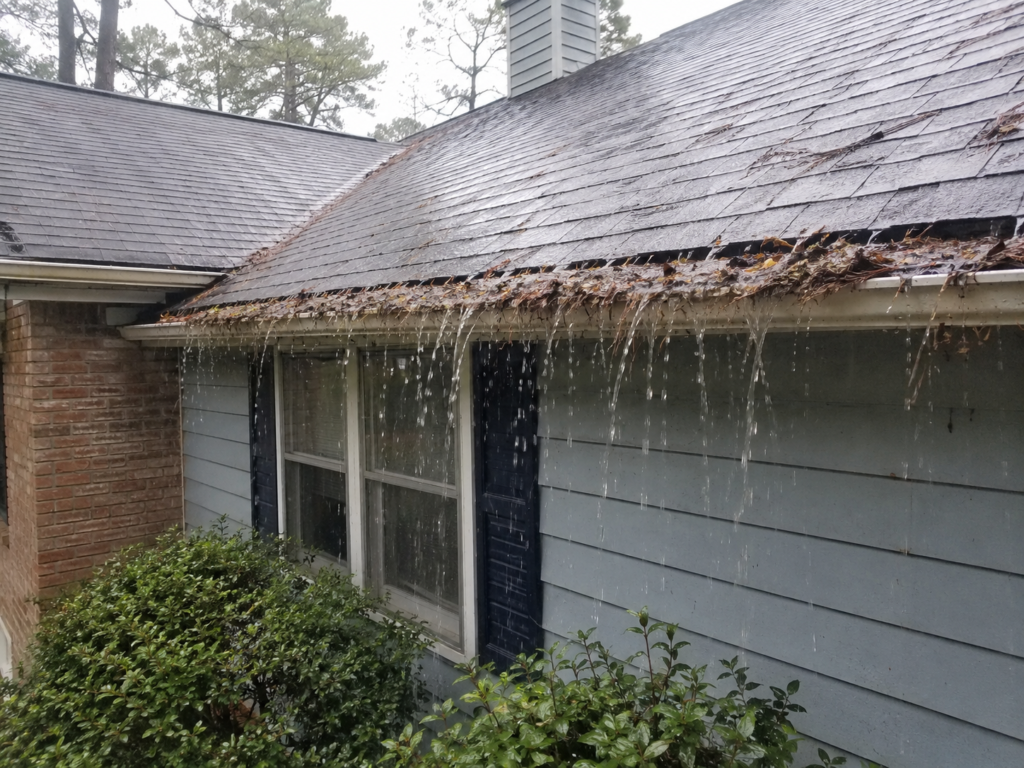
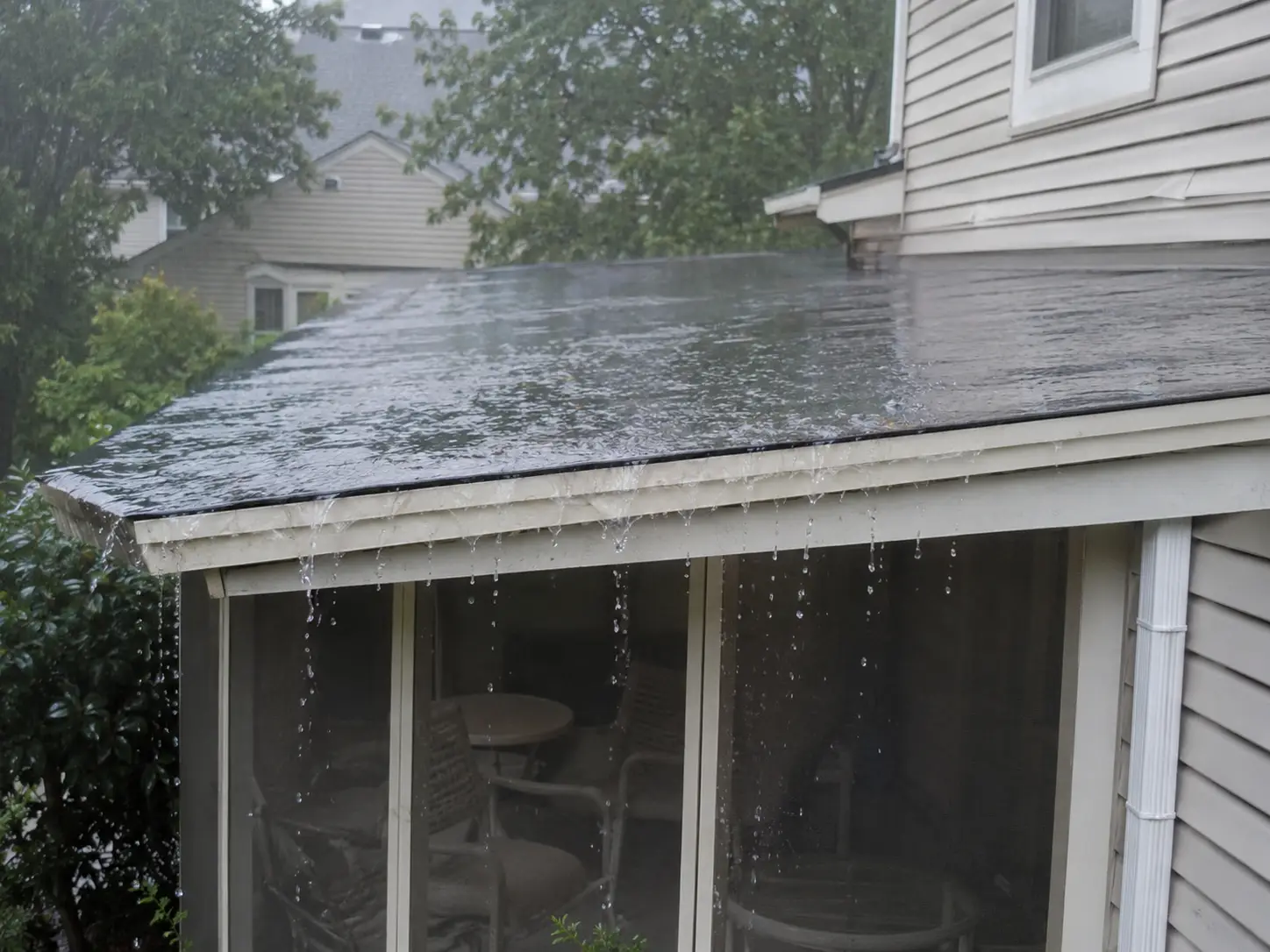
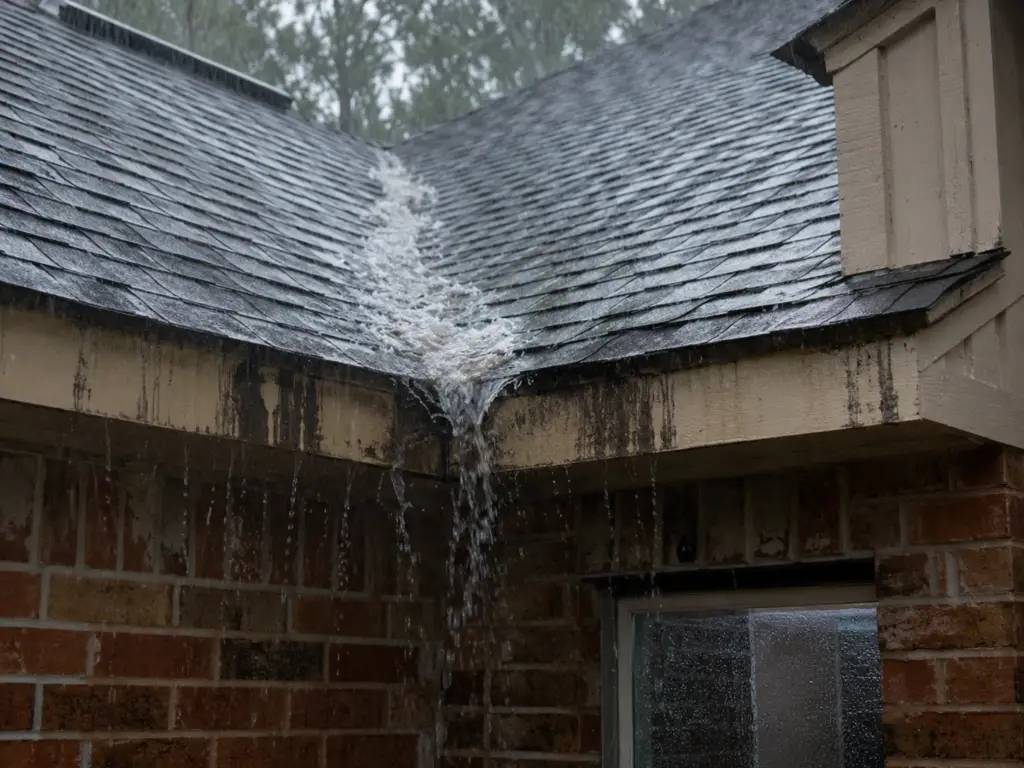
Rain can reveal where a roof’s drainage path breaks down: at a valley, along the gutter, inside a downspout, or after water reaches the ground. The location matters. Replacing a gutter will not necessarily solve a blocked underground pipe, and clearing leaves will not correct a poor roof-to-gutter connection.
Record where the water first leaves its intended path
From a sheltered, safe location, note the part of the home affected and whether the problem happens in ordinary rain or only a very intense downpour. Do not go outside during lightning or high winds, climb a wet ladder, or stand below a loose gutter. A short video from safety may show a moving water path more clearly than a stain photographed later.
- Water spills over the front: Have debris, gutter alignment, outlet restrictions, and system capacity evaluated.
- Water runs behind the gutter: Ask about the roof-edge connection and the condition of the adjoining fascia and flashing.
- Water escapes at a joint: Identify whether the gutter seam, downspout joint, or a nearby overflow is the source.
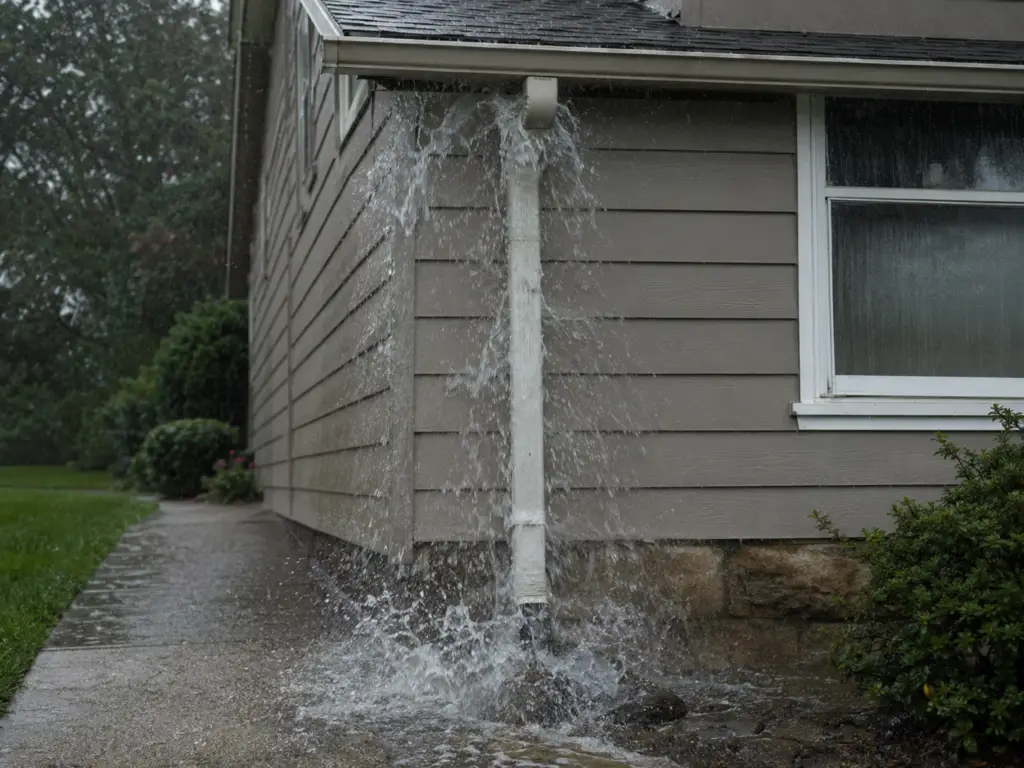
- Water reaches the downspout but pools beside the house: The discharge route, buried pipe, or ground slope may need separate attention.
- Water appears indoors: Request a leak investigation. The nearest overflowing gutter may be relevant, but is not proof of the entry point.
Have the entire drainage route assessed
Ask the contractor to follow runoff from the roof surface to its destination. The review should consider the roof area feeding each gutter, concentrated flow from valleys, gutter supports and slope, outlet locations, and the condition of the downspouts. A larger gutter alone may not resolve a restricted outlet or a downstream blockage.
The Building America guide to gutters and downspouts explains the importance of collecting runoff and carrying it away from the building. A suitable discharge arrangement depends on the property and applicable local requirements. Avoid directing water onto a neighbor’s property, across a walking route, or toward another vulnerable part of your home.
Choose work that addresses the observed failure
Cleaning: Ask which gutter runs, outlets, and accessible downspouts will be cleared and how flow will be checked afterward. Confirm whether a buried drain is excluded.
Repair: A proposal might address a failed joint, displaced support, disconnected downspout, or roof-edge detail. Have it identify the location and any adjoining materials that must be removed or replaced.
Redesign or replacement: Repeated overflow from an otherwise clear system deserves a capacity and layout review. Ask why the proposed gutter size, outlet arrangement, and discharge route suit the roof rather than choosing a size by habit.
Site drainage: Pooling after discharge can require grading or drainage expertise beyond a gutter appointment. Basement moisture can have several causes; gutter work should not be presented as a guaranteed cure without an assessment.
Put boundaries and follow-up in the written scope
- Identify the exact gutter runs, roof edges, downspouts, outlets, and discharge points included.
- Separate cleaning, replacement parts, buried-pipe work, fascia repairs, and painting.
- Explain how concealed deterioration will be documented and approved if opening the area reveals more work.
- Record the planned flow check and any limitations of testing during dry weather.
- Ask what to watch during the next rain and whom to contact if the same overflow returns.
If water is already entering the home
Keep away from wet electrical fixtures and bulging ceilings. Move belongings only when safe and arrange professional help for active water entry. Interior drying and repair may be separate from correcting the exterior source. Do not wait for the next storm to investigate an active leak.
If you believe a storm caused new damage, keep dated photographs, reports, and temporary-work receipts. Your insurer determines coverage under the policy; an overflow or a recent storm alone does not establish coverage.
Arrange a roof and gutter review
USA Storm Roofing and Construction Group serves Virginia, Maryland, and Washington, DC. Share your photographs and describe the first place water escapes when you request an appointment. Review our gutter services and roof repair options to help explain your concern.
Roofing estimates are free. If water is appearing indoors and the source is uncertain, leak diagnosis is a paid service. Confirm the visit scope, fee, and any separate drainage work before booking.