
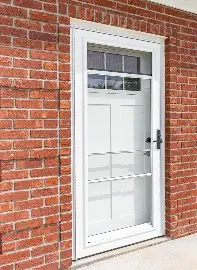
A storm door is a second door fitted outside the main entry door. It can add weather protection, ventilation, and comfort, but the benefits depend on your existing door, sunlight exposure, and the model you choose. Check those details before buying.
1. An extra layer of weather protection
A closed storm door helps shelter the entry door from wind-driven rain and everyday exposure. It can be useful for an older door that is still sound, especially at an exposed entrance.
It will not repair a leaking threshold, rotten frame, damaged weatherstripping, or poor flashing. If you see water inside the entryway, identify the source before covering it with a new door. Ask the installer to inspect the frame and threshold and explain any repairs separately in the estimate.
2. Potential comfort and energy benefits
The benefit is usually greater when the existing entry door is older and uninsulated. A newer insulated door with good seals may gain little additional energy savings from a storm door. Start by checking for drafts and worn seals rather than assuming a second door will lower your bills.
Sun exposure also matters. Glass can trap heat between the two doors and damage some entry doors or finishes. Check the entry-door manufacturer’s instructions and warranty before adding a storm door to a sunny entrance. Vermont Energy Saver explains these energy and heat-buildup considerations.
3. Fresh air and daylight when conditions suit
Screen panels let you open the main door for ventilation on mild days. Depending on the product, the screen may be removable, self-storing, or retractable. Full-glass models allow a clearer view, while partial-glass designs offer a different balance of light and privacy.
Compare how the panels operate and where you would store removable glass. ProVia’s storm-door range illustrates different glass and screen configurations. A screen does not provide the security or weather protection of a locked main entry door.
What to check before installation
- Opening and clearance: Have the installer confirm the frame dimensions, handle clearance, hinge side, and room for the outward swing.
- Existing damage: Include frame, sill, or trim repairs in the written scope where needed.
- Daily use: Try the closer, latch, screen operation, and any glass-panel changes before choosing a model.
- Compatibility: Check the entry-door manufacturer’s guidance, finish limitations, and applicable community appearance rules.
- Price and warranty: Ask what installation, disposal, hardware, and workmanship coverage are included.
If the main door is deteriorated, compare repair with entry-door replacement before adding a storm door. Contact USA Storm Roofing & Construction Group to discuss your entrance and request an assessment.