
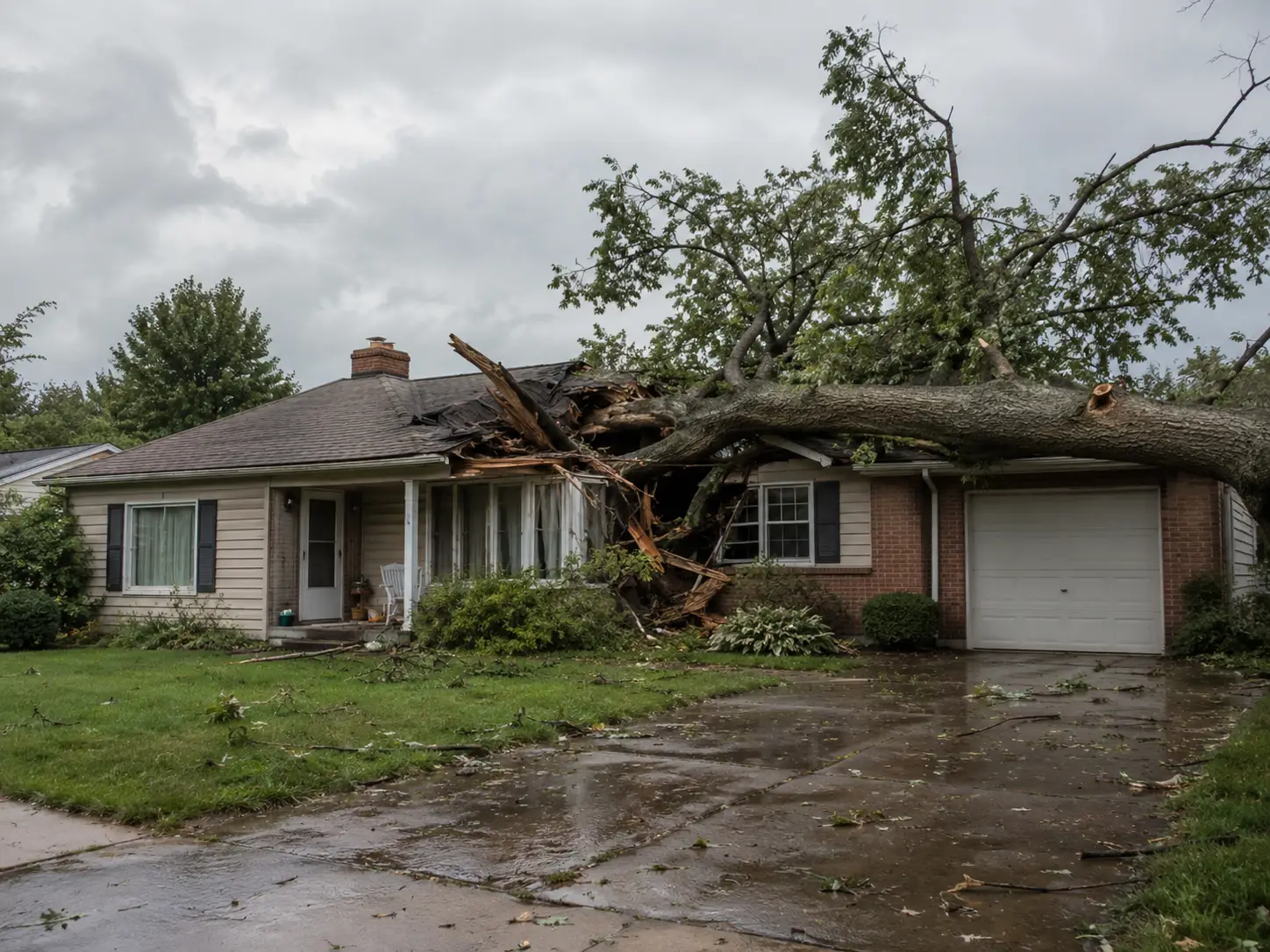
If a tree or large limb has struck your roof, protect people first. Stay away from the affected part of the building, damaged wiring, and unstable branches. If there is an immediate danger, injury, fire, or possible collapse, contact emergency services from a safe location. A roofing estimate comes after the scene is safe.
1. Keep clear of hazards
Do not climb onto the roof, cut a tree resting on the building, or enter an attic beneath the impact. A tree under tension can move unexpectedly, and damage to framing may not be visible from outside. Stay away from downed power lines and report them to the utility or emergency services. Follow the National Weather Service guidance after severe weather.
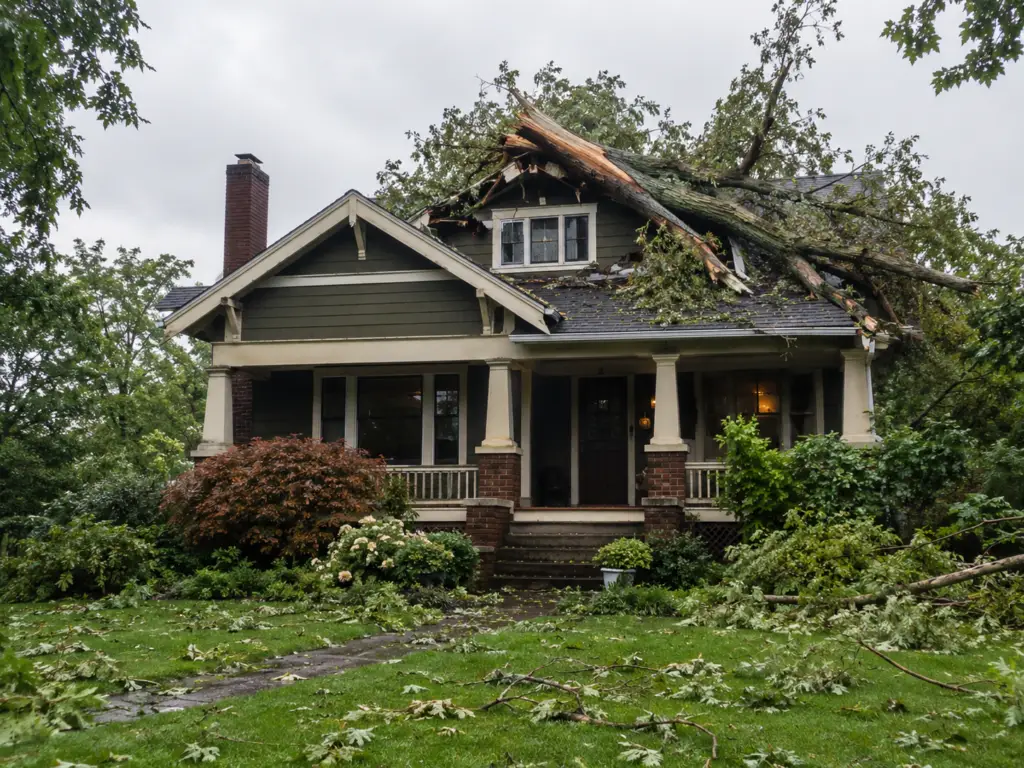
2. Arrange the right professional assessment
Tree removal, utility safety, structural assessment, and roof repair are different jobs. Depending on the damage, you may need a qualified tree-service professional, the utility, a structural professional, and a roofing contractor. Confirm who is responsible for each part of the work and how access will be coordinated. Do not assume a roofing appointment includes tree removal or structural engineering.
USA Storm Roofing and Construction Group can discuss tree-related exterior damage and the roofing work within the agreed scope. Availability and safe access determine when an inspection or temporary protection can begin. Concealed damage may require further investigation after debris or materials are safely removed.
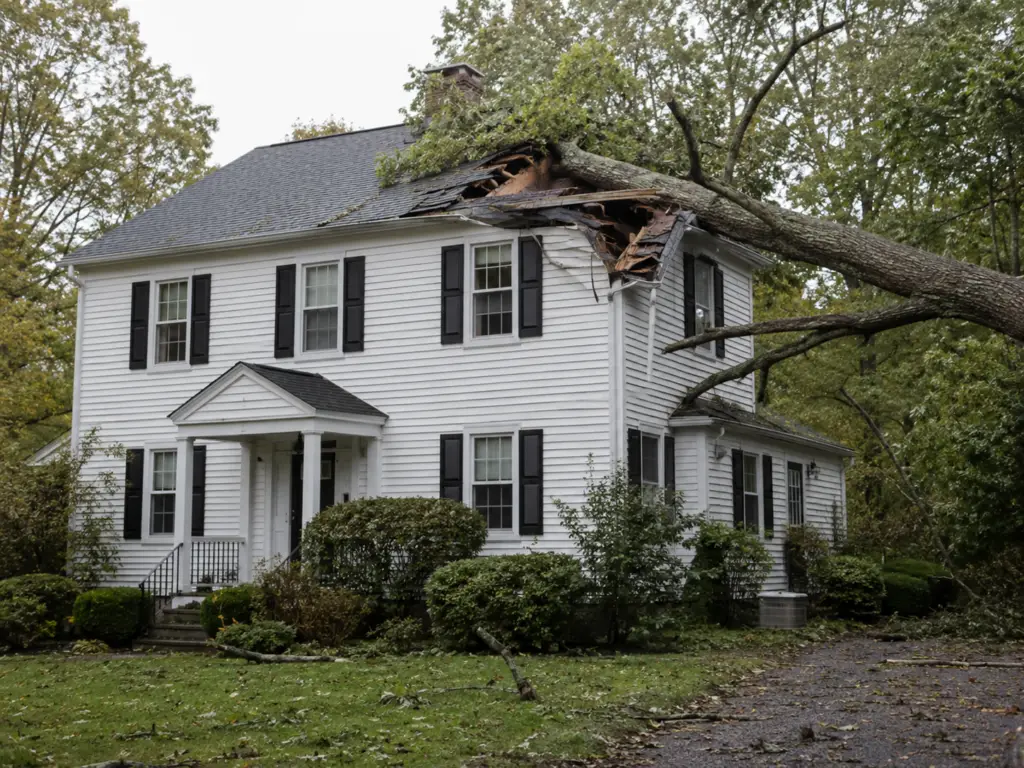
3. Document what you can safely see
From a safe location, photograph the overall impact and visible damage. Record when the incident occurred and retain invoices for emergency services. You do not need to climb onto a damaged roof to collect evidence. Contact your insurer promptly to ask about reporting requirements, temporary protection, and documentation before permanent repairs begin.
The contractor can provide photographs and a written repair estimate. Your insurer determines coverage, deductibles, and payment under your policy. Keep copies of communications and ask the insurer about any proposed work that is outside its estimate.
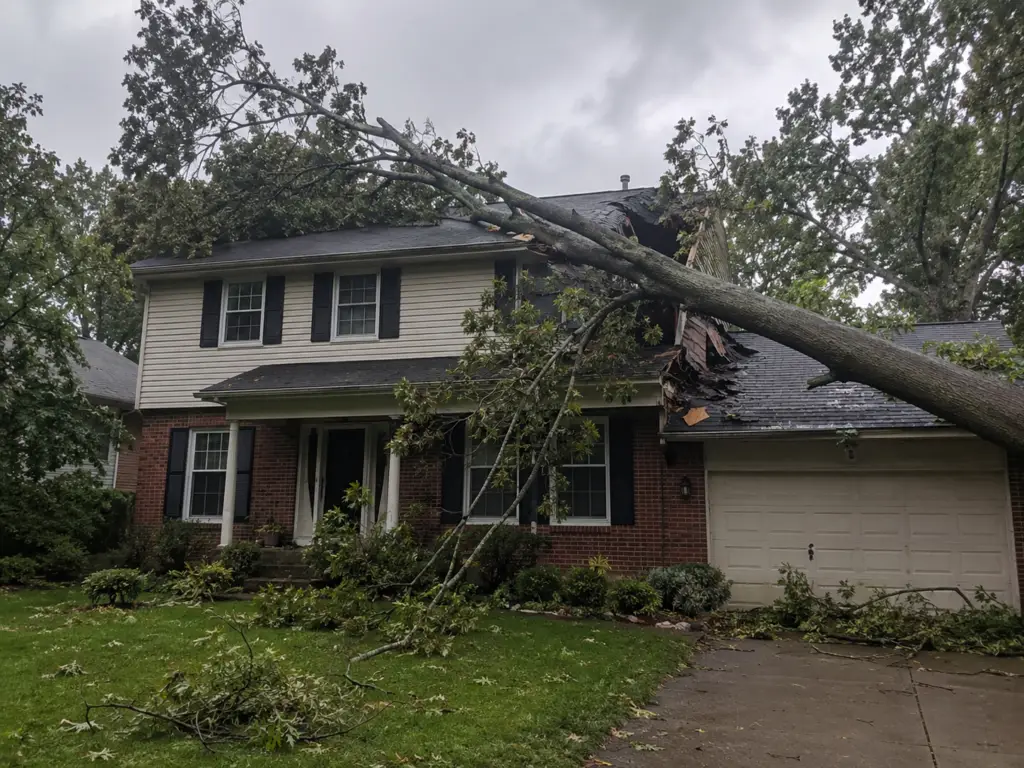
4. Separate temporary protection from permanent repairs
Where safe and appropriate, a qualified professional may install temporary protection to limit further water entry. Roof tarping on a damaged structure is not a homeowner task. Discuss the expected duration, limitations, and cost of temporary work. Keep people away from wet electrical fixtures or sagging ceilings inside the home.
5. Review a complete repair scope
The permanent proposal should identify the affected roof areas, removal and disposal, required framing or decking repairs, and compatible roofing components. Ask how flashing, underlayment, ventilation, gutters, and nearby siding will be addressed. If concealed damage is found, agree on a process for documenting and authorizing additional work.
A focused repair may be suitable for limited damage. Widespread damage or poor surrounding roof condition may lead to a replacement discussion. The visible hole alone does not establish the full scope.
After repairs are complete
Request completion photographs, relevant inspection records, and product and workmanship warranty terms. Ask a qualified tree professional about the condition of remaining trees and limbs near the home. No maintenance plan eliminates storm risk, but documented inspections and timely repairs can help address developing problems.
When the property is safe to access, contact our team to describe the incident, the work already completed, and the exterior repairs you need.