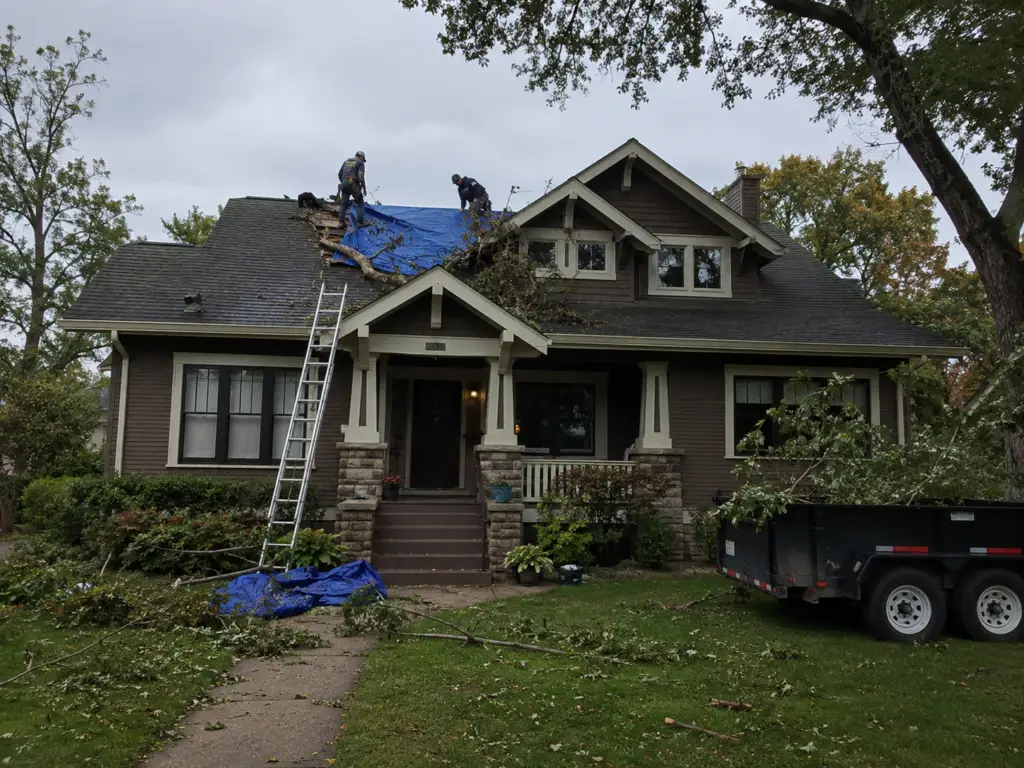
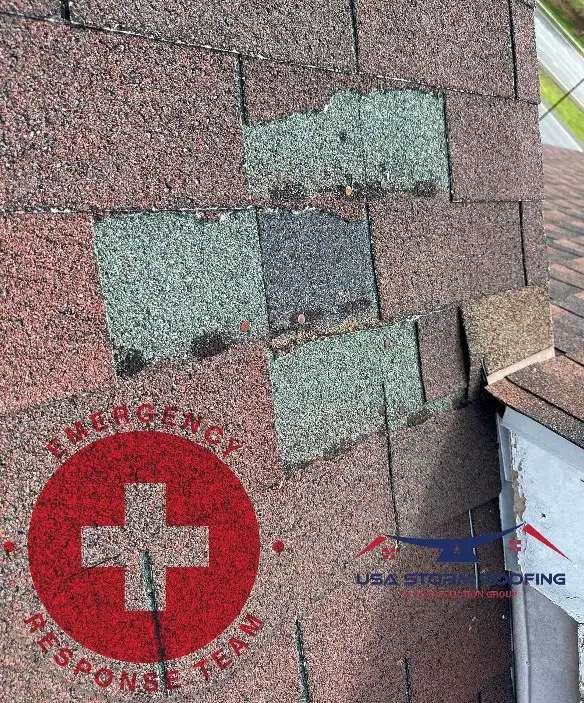
When a roof is damaged, the first priorities are people’s safety, limiting further water entry when it can be done safely, and arranging an assessment. Temporary protection and a permanent repair are different tasks. Call 571-653-1241 to discuss current service availability with USA Storm Roofing and Construction Group.
Deal with immediate hazards first
Stay away from downed power lines, unstable trees, sagging ceilings and areas that may be structurally damaged. If there is an immediate threat to life or safety, leave the affected area and contact emergency services. Do not enter a damaged building until the appropriate authorities or qualified professionals consider it safe.
Do not climb onto a wet or storm-damaged roof or attempt to remove a tree resting on the building. The National Weather Service’s after-storm guidance explains basic precautions after severe weather.
Tell the contractor what is happening
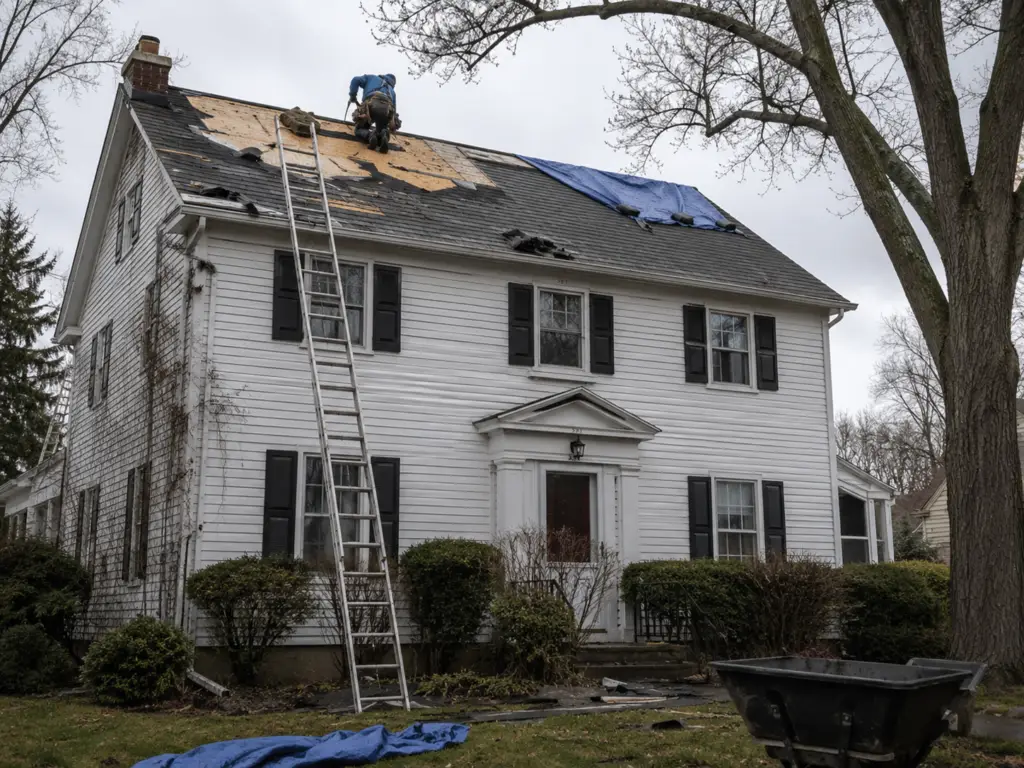
When you request help, provide the property address, a contact number, when the problem began and whether water is actively entering. Describe any visible tree impact, missing roof covering or affected rooms. Share photographs taken from a safe location.
Ask about availability, access requirements, the proposed assessment and any fee before authorizing work. Response and installation timing depend on weather, site safety, access and crew availability; this article does not promise an immediate arrival or completion time.
Understand temporary protection
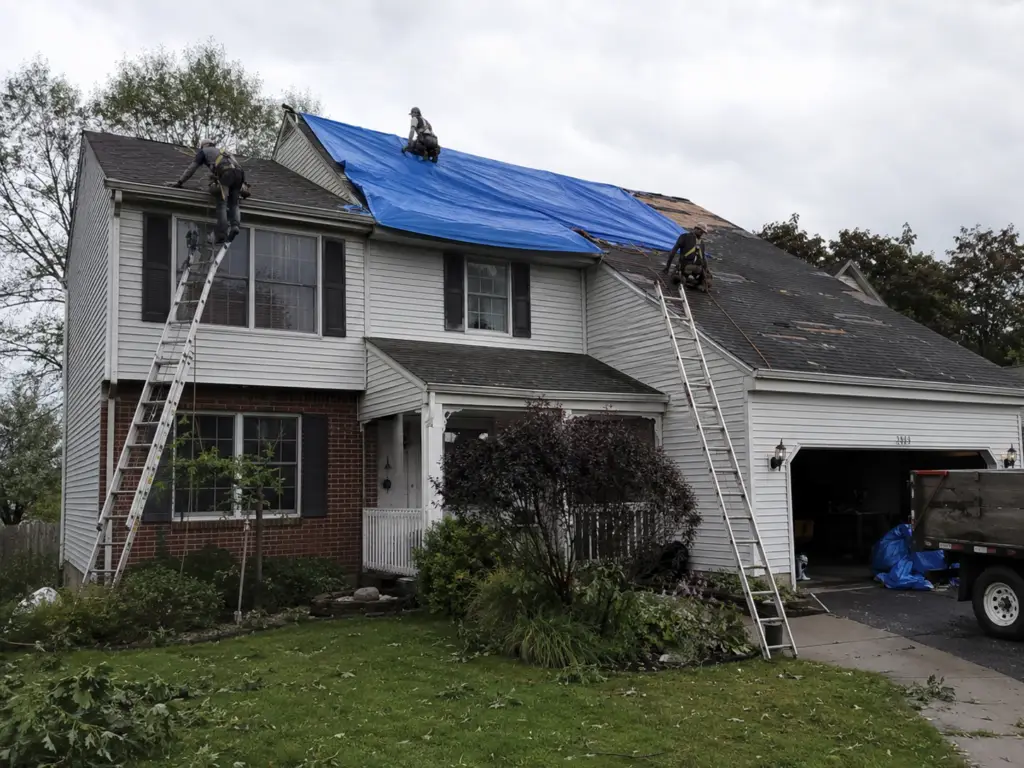
A qualified crew may recommend temporary covering or another limited measure when conditions allow. Ask what the measure is intended to address, how long it is expected to remain in place, whether follow-up is needed and what is excluded. Temporary protection does not establish that all roof or interior damage has been repaired.
Investigate the source before permanent repair
The place where water appears indoors may be different from where it enters. Flashing, penetrations, roof covering, gutters and nearby wall details may need assessment. Ask for the observed findings, photographs and any inspection limitations.
Our leak diagnosis service is paid. If a roof leak is identified and you hire us to fix it, the inspection fee is credited toward the repair total. Confirm this scope when scheduling; a free exterior inspection is a different service.
Roof repair and interior drying or restoration may involve separate scopes. Discuss wet insulation, finishes and other affected materials with the appropriate professionals. The EPA’s moisture and mold guide explains why correcting the water source and addressing moisture both matter.
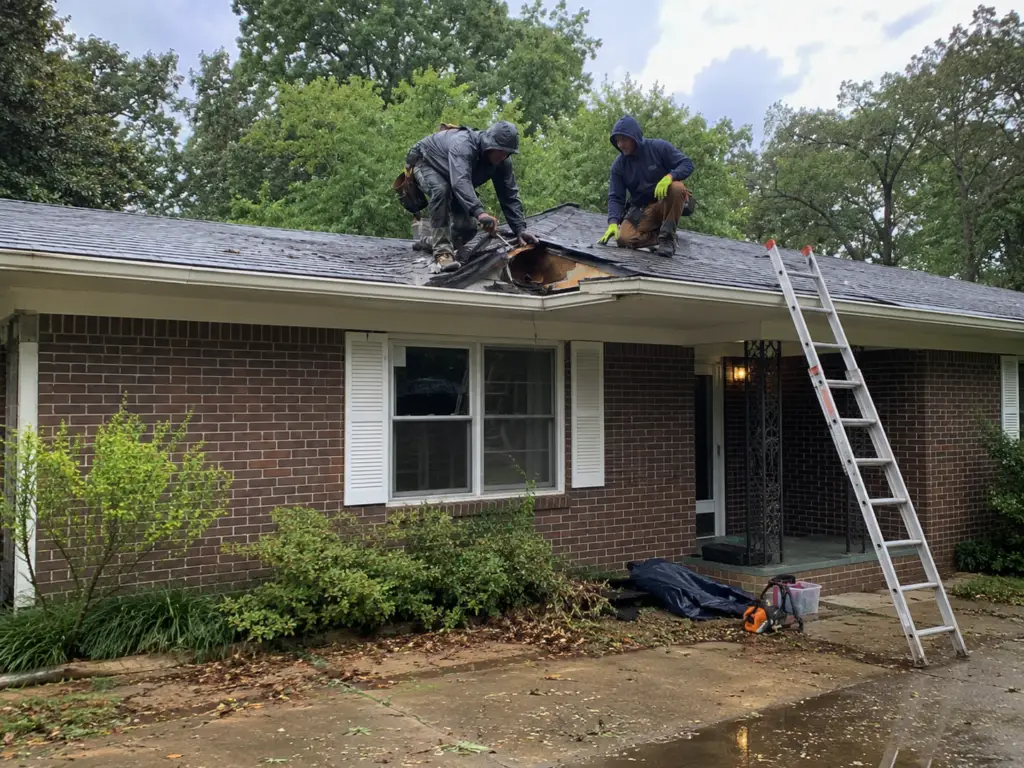
Keep documentation and review the repair proposal
Keep dated photographs, estimates, invoices and receipts for authorized temporary work. Contact your insurer about reporting requirements and your policy. A contractor can document observed damage and the proposed work, but the insurer decides coverage, deductibles and payment. Claim approval is not guaranteed.
The permanent repair proposal should identify the affected areas, materials, flashing or decking work, disposal, exclusions and the process for approving concealed repairs. Ask why a local repair or broader replacement is recommended.
Arrange the next step
USA Storm Roofing and Construction Group serves the communities listed on our service-area page. Contact our team to explain the roof problem and confirm availability. For an immediate safety emergency, contact emergency services first.