
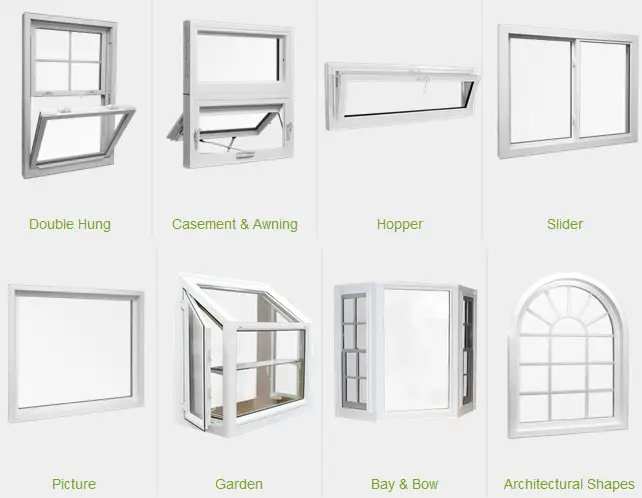
A window style should suit the way you use the room, the space outside the opening, and the work needed to install it. Start with the problem you want to solve: difficult operation, limited ventilation, poor visibility, or an opening that no longer meets your needs. Then compare specific products rather than assuming every window of one style performs alike.
Single-hung and double-hung: vertical operation
A single-hung window usually has one operable lower sash; a double-hung unit allows both sashes to move. These styles can work where an outward-opening sash would interfere with a walkway or patio. Check whether you can reach the locks comfortably and how much of the opening is available for ventilation.
Tilt-in cleaning features vary by product and sash. Ask for a demonstration of the exact model, including how it locks back into position. Do not assume every double-hung window can be cleaned entirely from inside.
Casement and awning: check exterior clearance
Casement windows are hinged at the side; awning windows are hinged at the top. Both commonly open outward. Check for shrubs, exterior screens, nearby doors, and walking routes before choosing their size and location. Try the handle and locks from the position where you will normally stand or sit.
An open awning sash may shelter part of the opening, but it does not make an open window rainproof. Wind-driven rain can still enter. Close windows during unsuitable weather and follow the manufacturer’s operating instructions.
Sliding windows: reach and track care
Sliding units open horizontally and do not swing into outdoor space. Configurations differ: one or more panels may move, while others remain fixed. Check the actual clear opening, the effort needed to slide the sash, and access to all locks, especially above a counter.
Tracks and drainage paths still need care. Ask how the selected model is cleaned and maintained; a simple-looking mechanism does not mean maintenance can be skipped.
Picture, bay, and bow windows: views and installation scope
A fixed picture window provides a view without an operating sash, so plan ventilation elsewhere. Bay and bow assemblies project beyond the wall and combine multiple units. Some units may open, depending on the design.
Replacing a flat window with a projecting assembly can involve support, roofing or enclosure details, flashing, and interior finish work. Ask the installer to assess those details before comparing prices. The visual sense of extra space is different from adding usable floor area.
Compare the whole product and the opening
- Performance: Compare the ratings for the exact size, glass, and frame configuration. The NFRC residential guide explains window energy labels.
- Use and safety: Ask about applicable emergency escape, fall-protection, safety-glazing, and opening requirements for the room. A style name alone does not establish suitability.
- Installation: Confirm whether the quote retains the existing frame or replaces it, and how water management, trim, and concealed damage will be handled.
- Care: Review screens, hardware, cleaning access, warranty terms, and replacement-part availability.
Plan your window replacement
Make a room-by-room list of what works and what does not. Bring it to a window consultation, along with any association or historic-district requirements you know about. USA Storm Roofing can discuss window replacement options and provide a written scope for your home.