
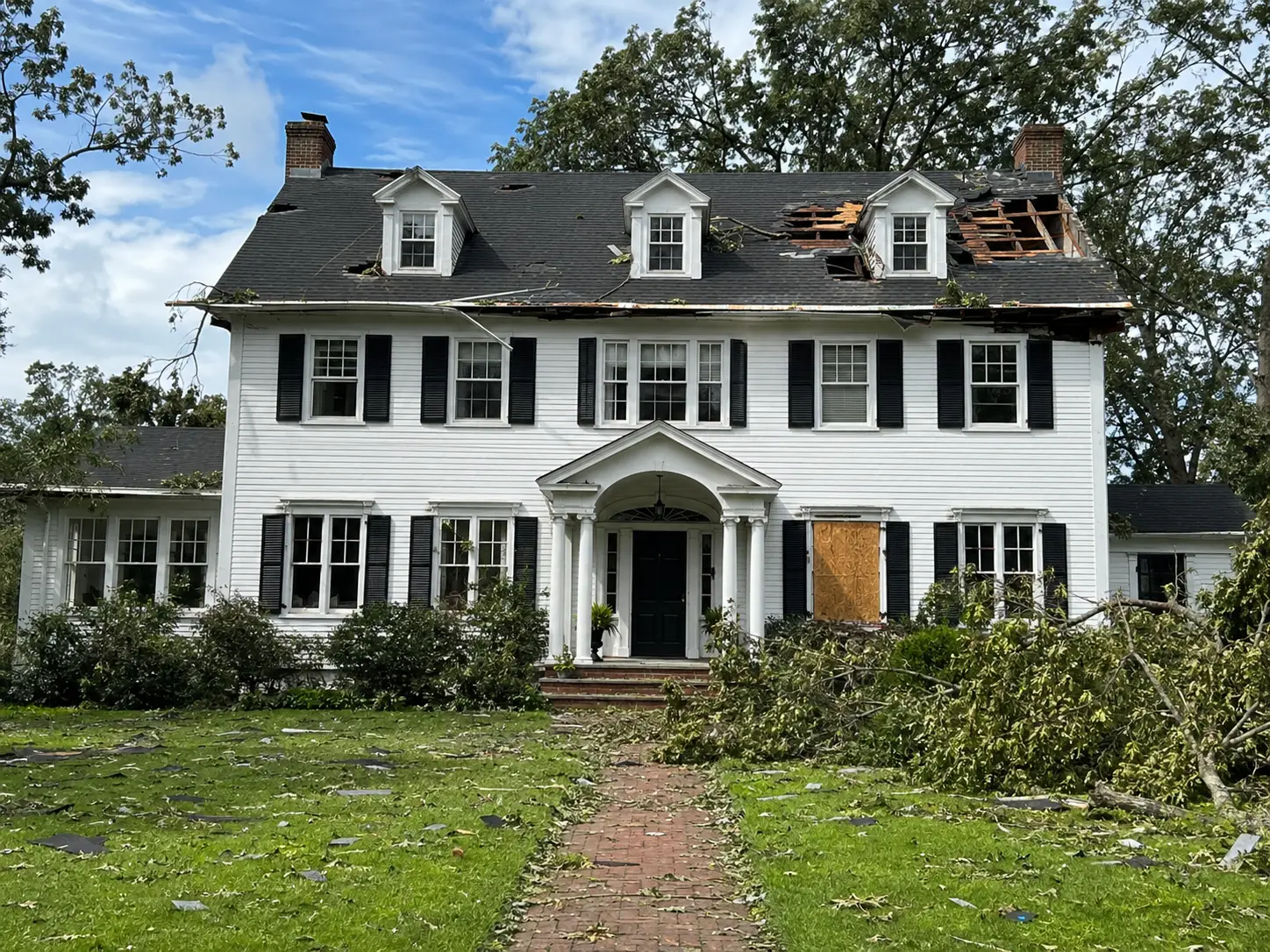
Use this checklist to make a clear record of what you can see after a storm. It is a ground-level observation guide, not a roof-access or repair procedure. Do not inspect during unsafe weather or approach downed wires, unstable trees, loose materials, broken glass, or damaged structures.
1. Note urgent concerns first
- Is water actively entering the home?
- Are ceilings sagging or electrical fixtures wet?
- Are branches, roof materials, siding, or gutters unstable?
- Are openings exposed or glass broken?
Keep people away from hazards and contact the appropriate emergency service, utility, or qualified professional when necessary. Ask a contractor about temporary protection and availability. Do not delay a safety response for photos.
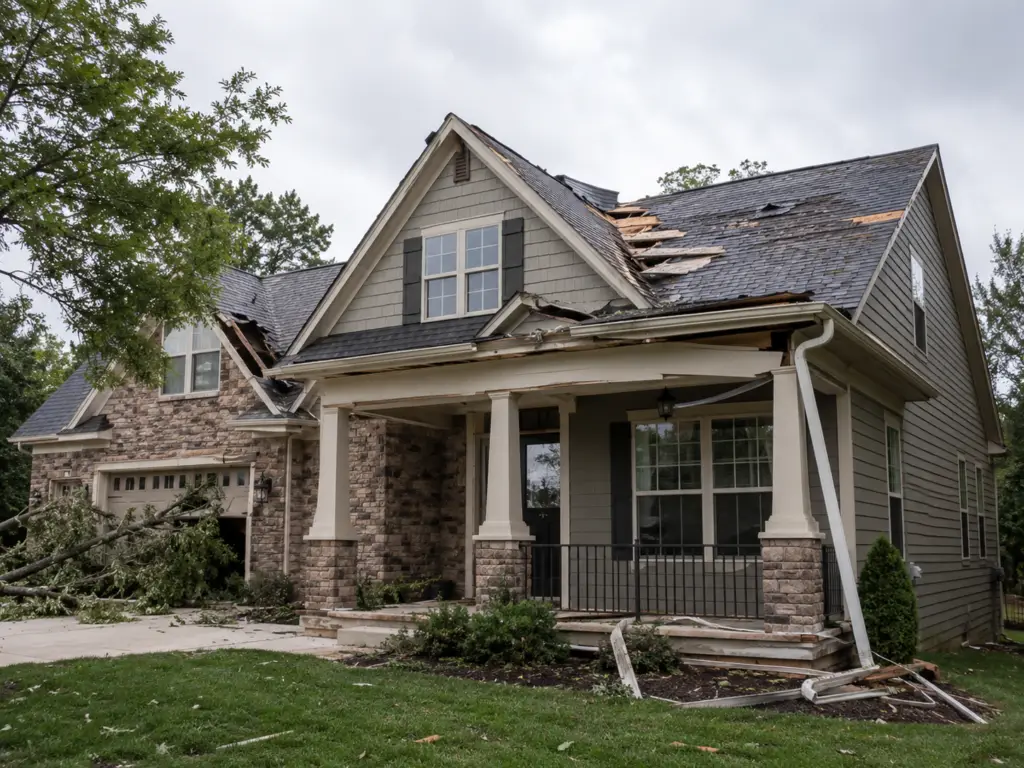
2. Walk the accessible perimeter from the ground
For each side of the home, take an overview photo and record the location of visible concerns. Stay on stable ground; do not pull on loose materials or use a ladder for this check.
- Roof: Displaced or missing material, debris, or visibly changed lines.
- Siding and trim: New cracks, missing pieces, loose sections, or damaged corners.
- Gutters and downspouts: Detached sections, deformation, overflow evidence, or changed discharge locations.
- Windows and doors: Broken glass, damaged screens, loose trim, or water around an opening.
- Ground and access: Debris, fallen pieces, and obstructions to safe contractor access.
A visible mark does not establish its cause or prove that the whole component needs replacement. Record observations without testing or dismantling the assembly.
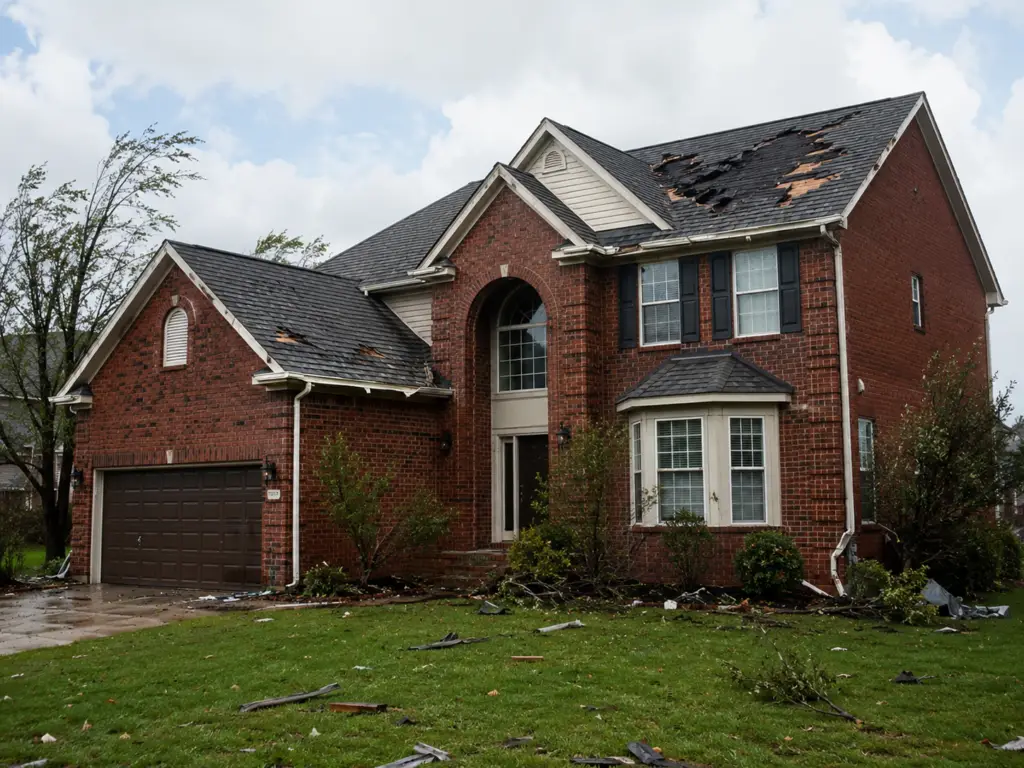
3. Check normal, safely accessible interior spaces
Look for new ceiling or wall marks, water near openings, and changes in areas that previously leaked. Note the room and approximate location relative to an outside wall. Do not enter an unsafe attic or stand beneath a damaged ceiling.
Water can travel before appearing indoors, so the stain may not identify the entry point. Explain whether it appeared during the storm, afterward, or under other conditions.
4. Build one useful record
Keep dated photos, the time you first noticed each issue, prior repair records, and temporary-work receipts together. Ask your insurer promptly about reporting requirements if the damage may involve a claim. Coverage decisions belong to the insurer.
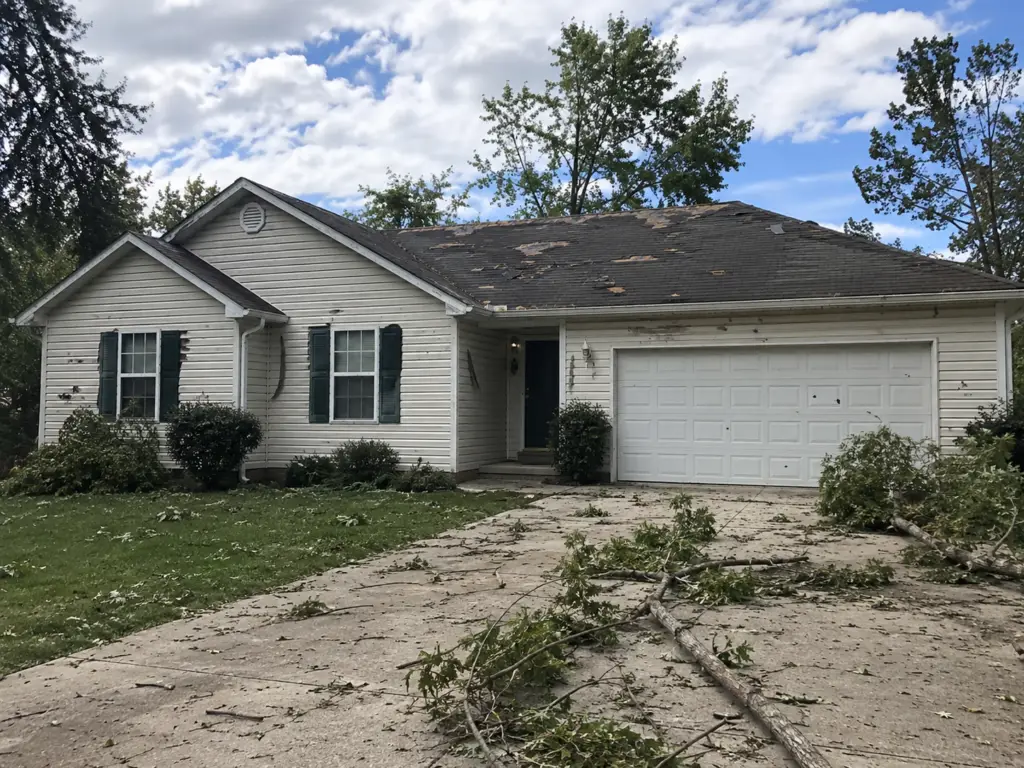
5. Hand the observations to the assessor
Ask for findings by location, inspection limits, recommended next steps, and a written scope. If several exterior components are affected, ask who will coordinate their shared junctions and repair sequence. Our storm restoration planning guide covers that coordination.
USA Storm Roofing serves all communities listed on our service-area page. Request an exterior assessment with your address and observations. Active leak investigation may require our separate paid diagnosis service; confirm the scope before booking.