
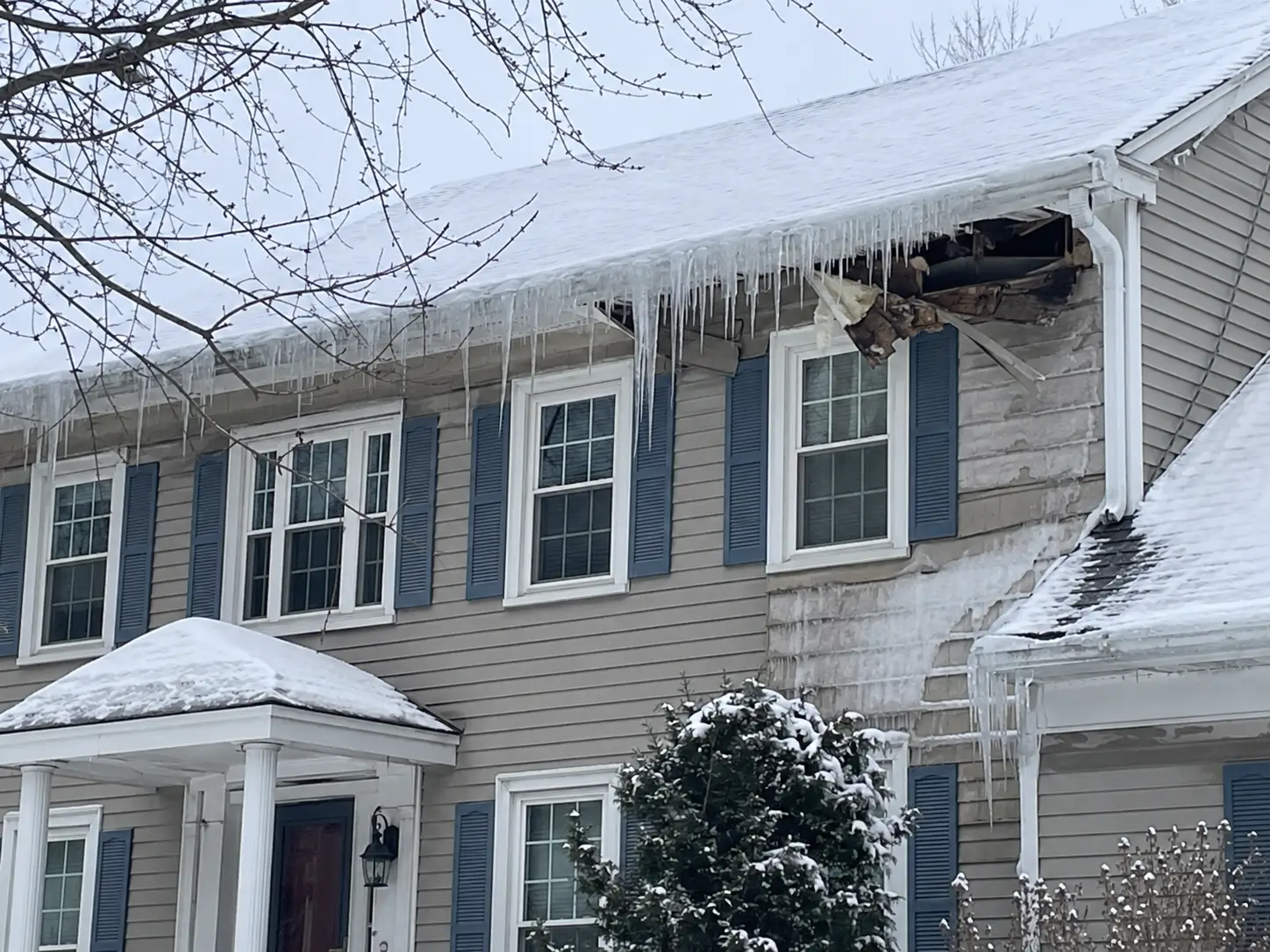
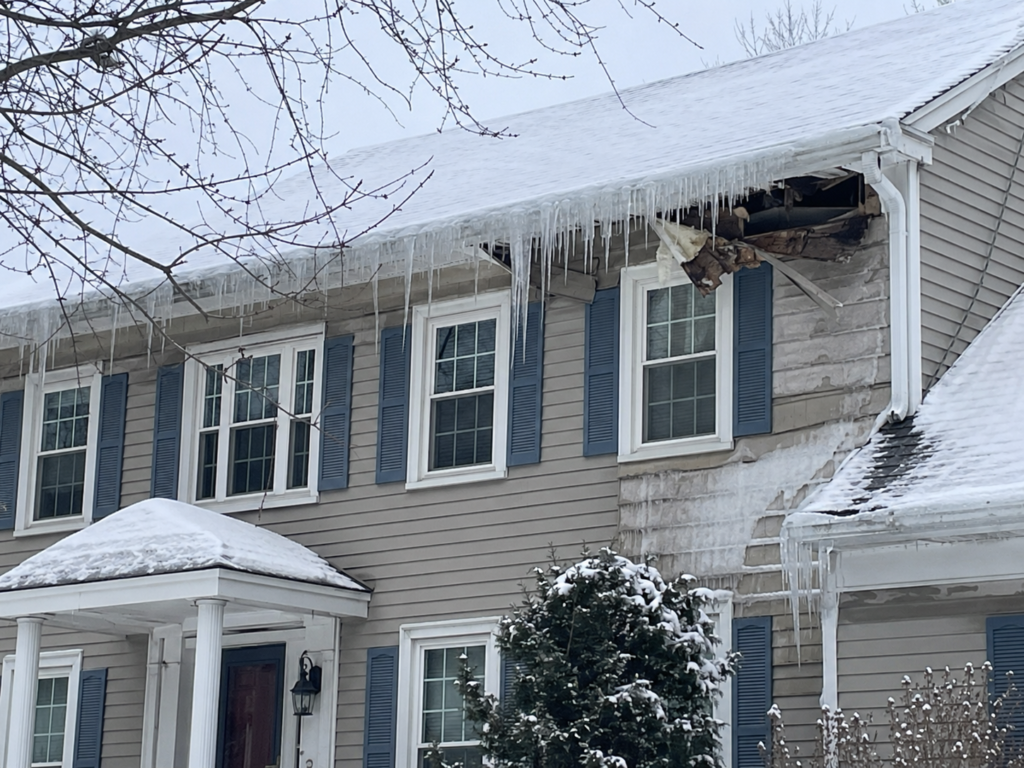
An ice dam forms when melting snow refreezes along a colder roof edge and obstructs drainage. Water held behind the ice can enter the roof assembly. Repairing the resulting damage and reducing the conditions that created the dam are two separate parts of the plan.
Respond safely to ice and active leakage
Stay off icy roofs and ladders, keep away from hanging ice and loose gutters, and avoid walking beneath an affected edge. Do not chip at ice, use an open flame, or place a heater in the attic. Ask a qualified professional about safe temporary measures for the actual roof and conditions.
Indoors, keep clear of wet electrical fixtures and sagging ceilings. If the roof or ceiling appears to be moving or at risk of collapse, leave the building and contact emergency services. An ordinary roofing appointment is not the appropriate response to an immediate collapse concern.
Understand the heat-loss connection
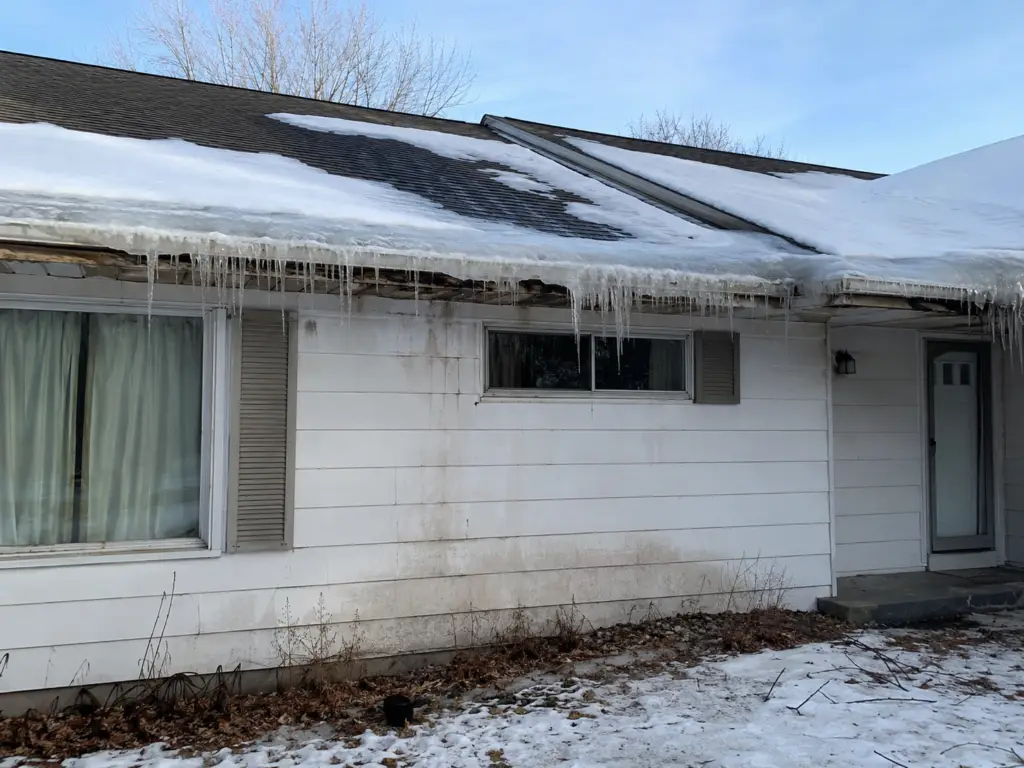
Snow cover and uneven roof temperatures allow melting higher on the roof and refreezing lower down. Heat escaping from the house is often part of that process. The University of Minnesota Extension’s ice dam guide explains the roles of air leakage, insulation, and heat movement.
Gutter cleaning is useful drainage maintenance, but it should not be presented as a complete cure for an ice dam caused by heat loss. Likewise, adding roof vents without assessing the house and attic is not a universal solution.
Record the event from safe locations
- Dates of snowfall, thawing, and first visible leakage.
- The affected roof edge and interior room.
- Photos of ice, staining, or loose components taken without approaching hazards.
- Previous winter leaks and any earlier attic or roofing work.
- Receipts and descriptions of professional temporary protection.
You do not need a complete photo set before contacting your insurer or arranging urgent assistance. Ask the insurer about reporting and documentation requirements promptly if a claim may be involved.
Separate damage repair from prevention
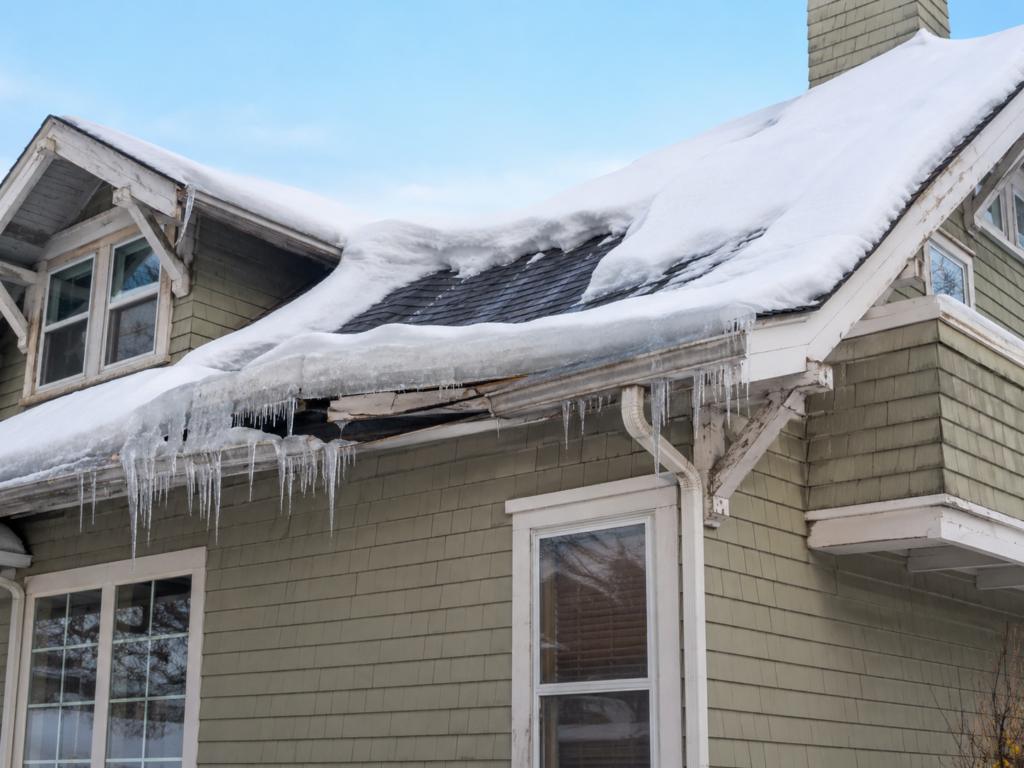
A roofing assessment should identify damaged shingles, flashing, roof-edge details, decking, or gutter components where accessible. The report should explain what remains hidden and whether further opening is needed. A stain alone does not locate the entry point or establish the full damage extent.
Prevention may require a separate evaluation of air leakage and insulation by a qualified building-performance or insulation professional. Coordinate that work with roofing repairs so the source of heat loss and moisture is considered before interior finishes are restored.
Questions for the written scope
- What temporary measures are proposed, and what limitations remain?
- Which roof and gutter components are actually damaged?
- How will concealed findings be documented and approved?
- Who handles wet insulation, drying, drywall, and painting?
- What work addresses recurrence, and which professional is responsible?
A roof-edge membrane or new shingles may be part of an appropriate roof assembly, but neither should be sold as a guarantee that ice dams can never form.
Arrange the appropriate assessment
Contact USA Storm Roofing to discuss winter roof repair assessment and current appointment availability. Explain any active leakage and access restrictions when booking.
Investigating an unknown leak may require our paid leak diagnosis service, separate from a general exterior inspection. Confirm the scope and fee, and ask whether another specialist is needed for attic or structural concerns.