
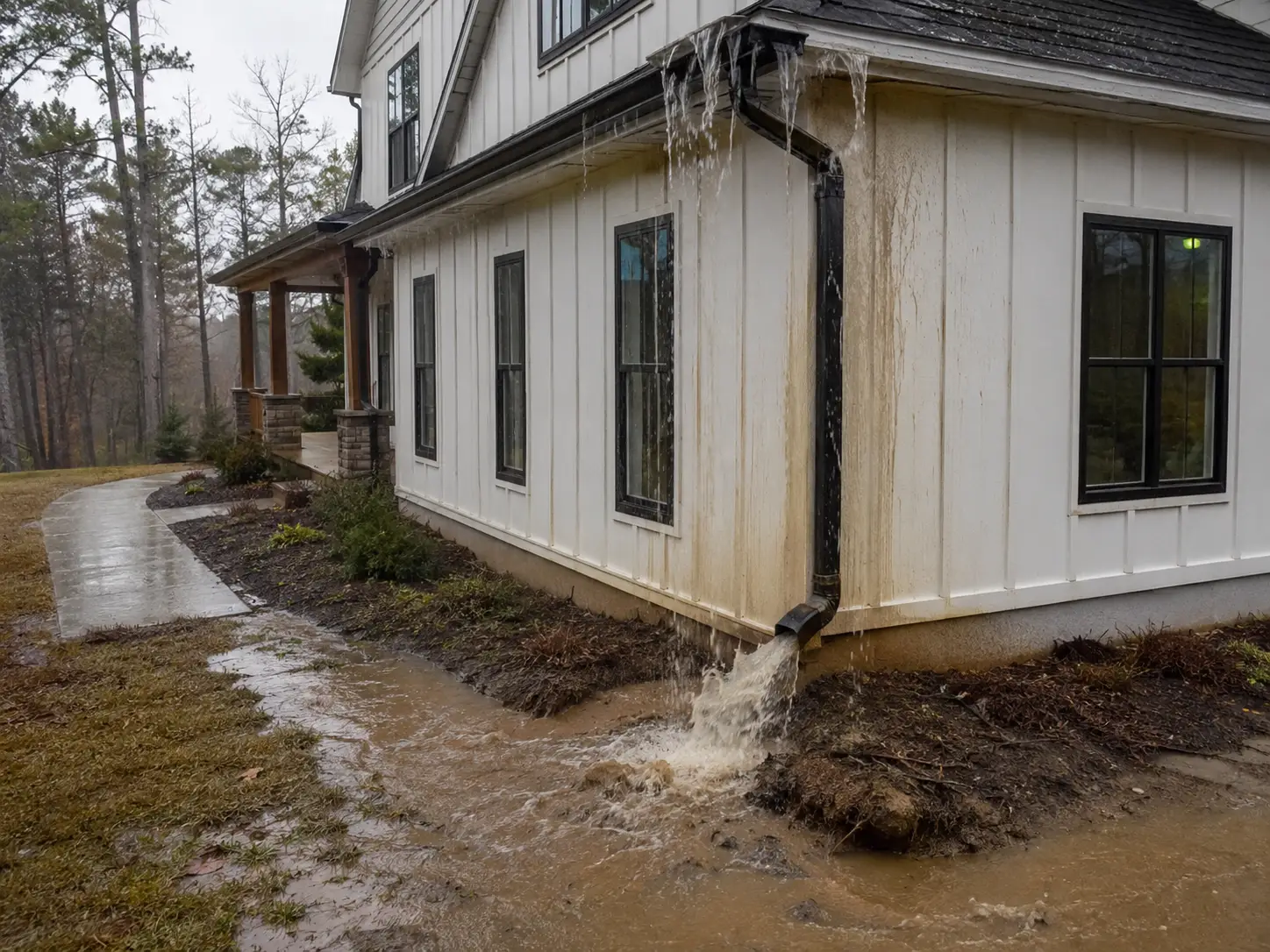
A gutter can be clear while its downspout is blocked. The outlet, elbows, vertical pipe, and final discharge point all need a usable water path. Overflow alone does not tell you which section is responsible, so a useful inspection follows the flow from the gutter to its destination.
Record where the flow changes
From a safe ground-level position after severe weather has passed, note whether water spills at the gutter, escapes at a downspout joint, or pools where the pipe ends. Record the side of the home and whether the problem occurs in ordinary rain or only during very heavy rainfall.
Little visible flow at one outlet is not proof of a blockage; roof layout and rain intensity affect what reaches it. Photos or a short video can help the contractor understand the pattern without asking you to use a ladder.
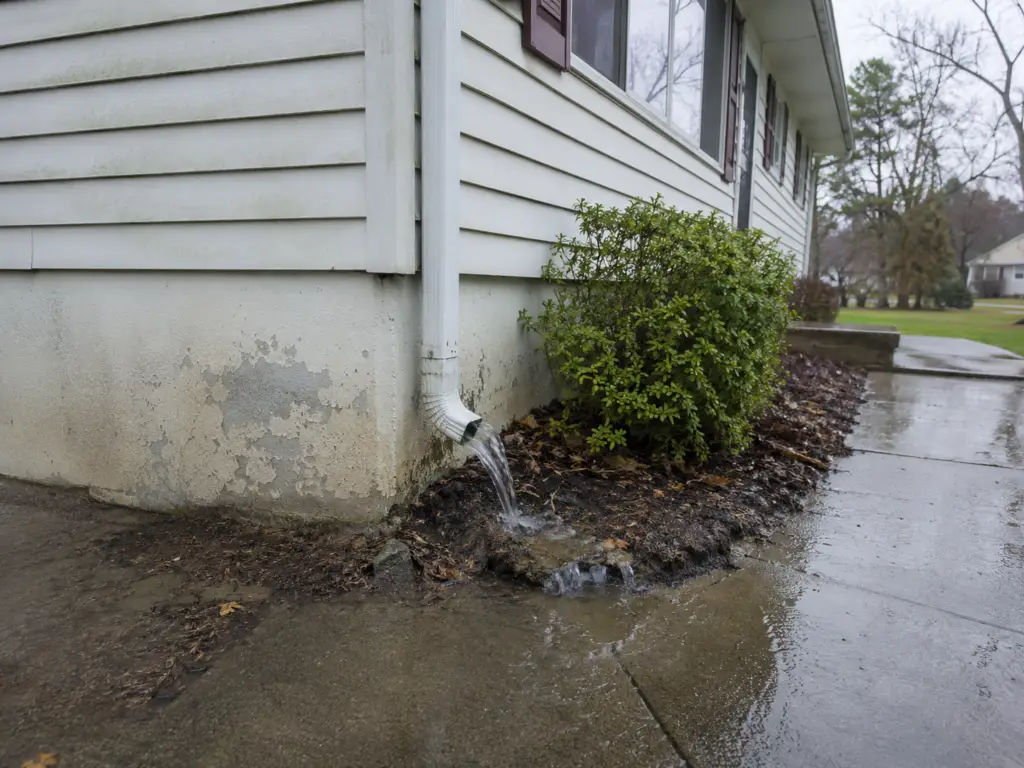
Distinguish blockage from damage or poor discharge
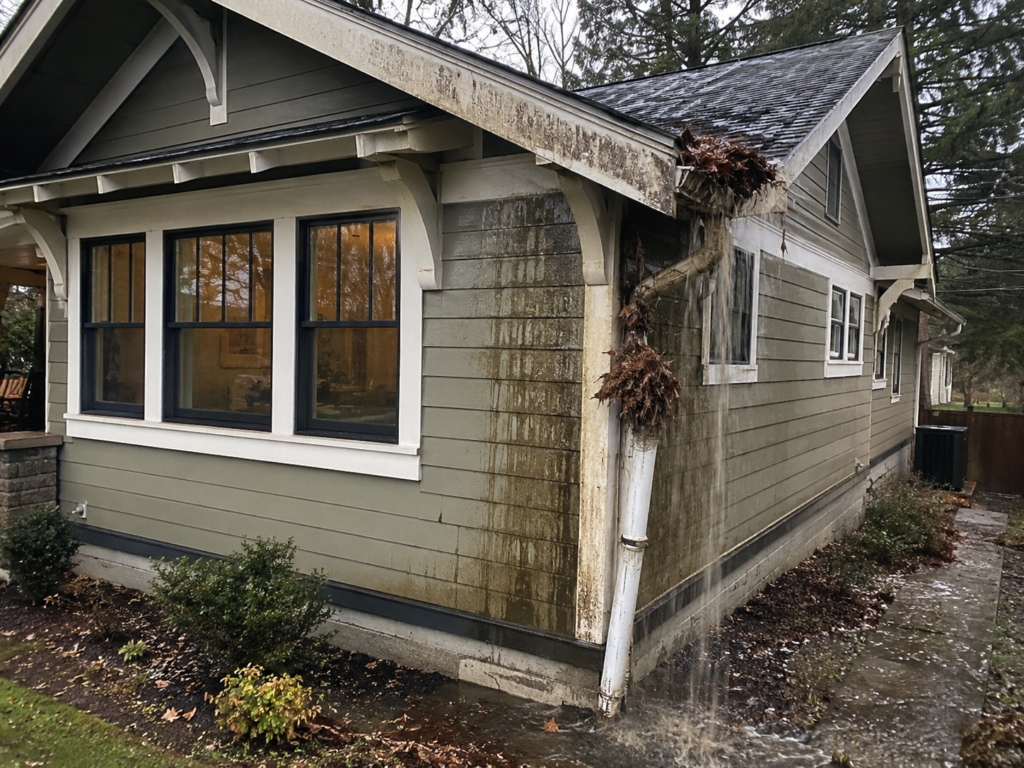
- Debris obstruction: material may collect at the gutter outlet or within an elbow.
- Crushed or disconnected sections: damaged components can restrict or redirect flow.
- Capacity or arrangement: recurring overflow may require reviewing the connected gutter and roof area.
- Ground-level discharge: an open pipe may still empty where water returns toward the building.
- Buried drain connection: a restriction farther downstream can require a separate drainage investigation.
The Building America guide to gutters and downspouts explains the importance of collecting roof runoff and directing it to an appropriate discharge point.
Ask what the cleaning appointment includes
Clarify whether service includes the gutter outlet, all above-ground downspout sections, debris disposal, and a check that water can pass through the serviced route. Ask how a concealed or inaccessible blockage will be handled.
Do not pull apart elevated sections or force tools through a pipe without knowing where it connects. Keep clear of loose gutters and electrical lines. A damaged or inaccessible system needs professional access.
When cleaning is not the whole solution
If a section is crushed, detached, or leaking, the estimate should identify the component to be repaired or replaced. If water continues to overflow after clearing, ask what further evidence supports changes to gutter alignment, outlet arrangement, or capacity.
For a buried drain, establish who will inspect and service that route. Above-ground gutter work does not automatically include excavation, underground pipe repair, grading, or basement waterproofing.
Check the destination of the water
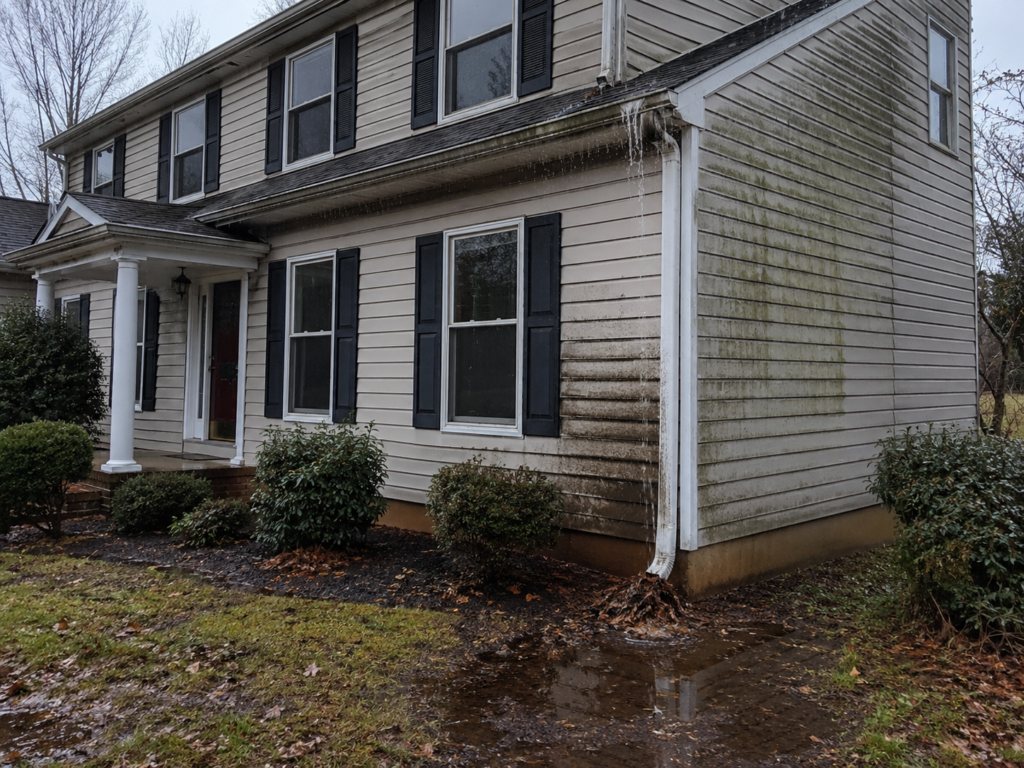
Discuss a discharge arrangement that suits the property, local requirements, and nearby paths or neighboring lots. Avoid creating a trip hazard or directing runoff where it can return to the building. Pooling near a foundation warrants review, but does not by itself prove structural foundation damage.
Ask what the contractor will verify at completion and what maintenance remains necessary. Gutter guards, if used, still need an appropriate care plan and do not guarantee clog-free drainage.
Request a drainage assessment
Contact USA Storm Roofing with your address and the observed overflow or discharge location. Confirm the available cleaning, inspection, or repair scope when booking.
Our gutter service page covers repair and replacement planning. If there is also unexplained interior water entry, mention it separately so we can discuss whether paid leak diagnosis or another specialist is appropriate.