
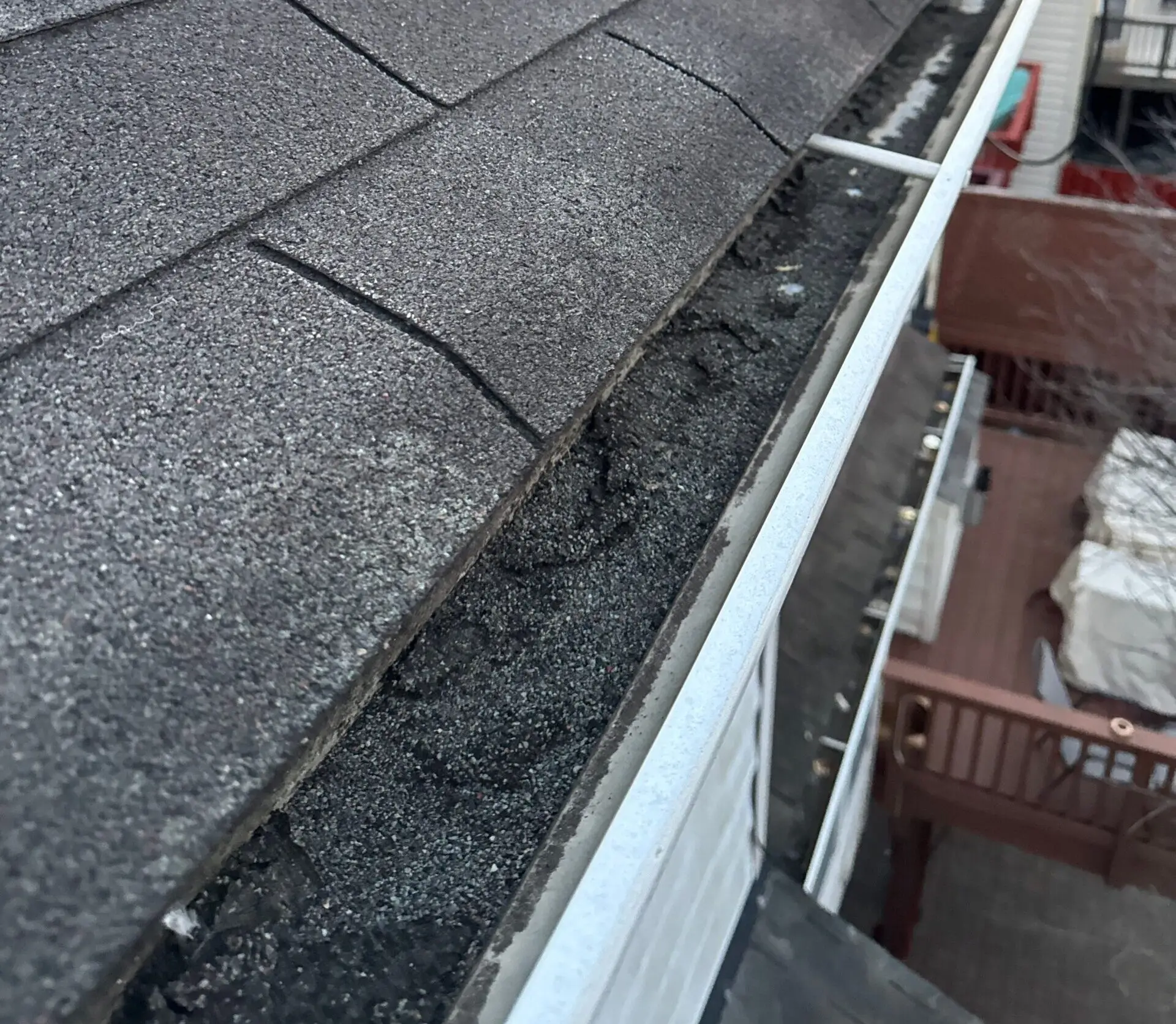
A two-year-old roof should not be judged by its age alone. A small amount of loose granules is different from bare patches, damaged shingles or an active leak. The useful question is what changed, where it happened and whether the roof still sheds water as designed.
Some early granule shedding can be normal
Asphalt shingles have mineral granules embedded in their surface. GAF explains that excess “rider” granules can come loose after a new roof is installed, with shedding generally decreasing over time. That early loss does not by itself establish a manufacturing defect. See GAF’s guidance on granule loss in new shingles.
A pile in a gutter is not a reliable diagnosis of the whole roof. The location, pattern and condition of the shingles matter. Persistent heavy shedding, exposed patches, cracking or a noticeable change in appearance deserve an assessment. Check the guidance for your own shingle manufacturer and product.
Warning signs worth investigating
- New interior moisture: A ceiling stain, damp insulation or dripping requires investigation even on a recently installed roof. Water can travel before it becomes visible indoors.
- Missing or displaced shingles: Record the area and any recent weather event. Do not assume the cause from a ground-level photograph.
- Localized bare patches or physical damage: Ask whether the pattern is consistent with surface wear, foot traffic, impact or another condition.
- Loose flashing or persistent drainage problems: Roof-to-wall junctions, penetrations and gutters need attention as part of the roof system.
- Changes that continue: Dated photographs can show whether a condition is stable or getting worse.
What you can check safely
Observe the roof from the ground and photograph visible changes without climbing. Note when a stain appeared, which room it affects and whether it follows wind-driven rain or every rainfall. Gather the installation contract, product information, invoices, warranty documents and any previous inspection photographs.
Leave elevated inspections and testing to people with suitable training and equipment. Do not scrub the shingle surface, pressure-wash it or try to glue loose granules back on. Altering the area can make the cause harder to assess and may damage the roof.
Ask for findings before choosing a repair
A useful assessment identifies the observed condition, its location, the likely cause and any limitations of the inspection. Ask for photographs and an explanation of why a localized repair, further investigation or broader work is recommended. Two years of age alone is not a reason to replace the entire roof.
Where a leak is involved, confirm the diagnostic scope and fee in advance. Our leak diagnosis service is paid; the inspection fee is credited toward the repair total if you hire us to repair the identified roof leak. An exterior observation may not reveal concealed decking, insulation or interior damage.
Keep warranty and insurance questions separate
Product warranties, workmanship agreements and homeowners insurance address different situations. Locate the actual documents and ask the responsible provider what evidence and notice are required. A suspected product issue should not automatically be described as storm damage, and storm damage should not automatically be described as a manufacturing defect.
Your insurer determines coverage under your policy. A contractor can document observed conditions and a proposed repair scope, but cannot guarantee claim approval or payment for premature wear. The Virginia homeowners insurance guide provides general policy information.
Arrange the next step
If a recent roof has changed or is leaking, contact the original installer with your records and arrange an assessment. USA Storm Roofing and Construction Group can also discuss roof repair and replacement options based on the condition found. When you contact our team, share the roof’s approximate age, product if known, symptoms and photographs taken safely from the ground.