
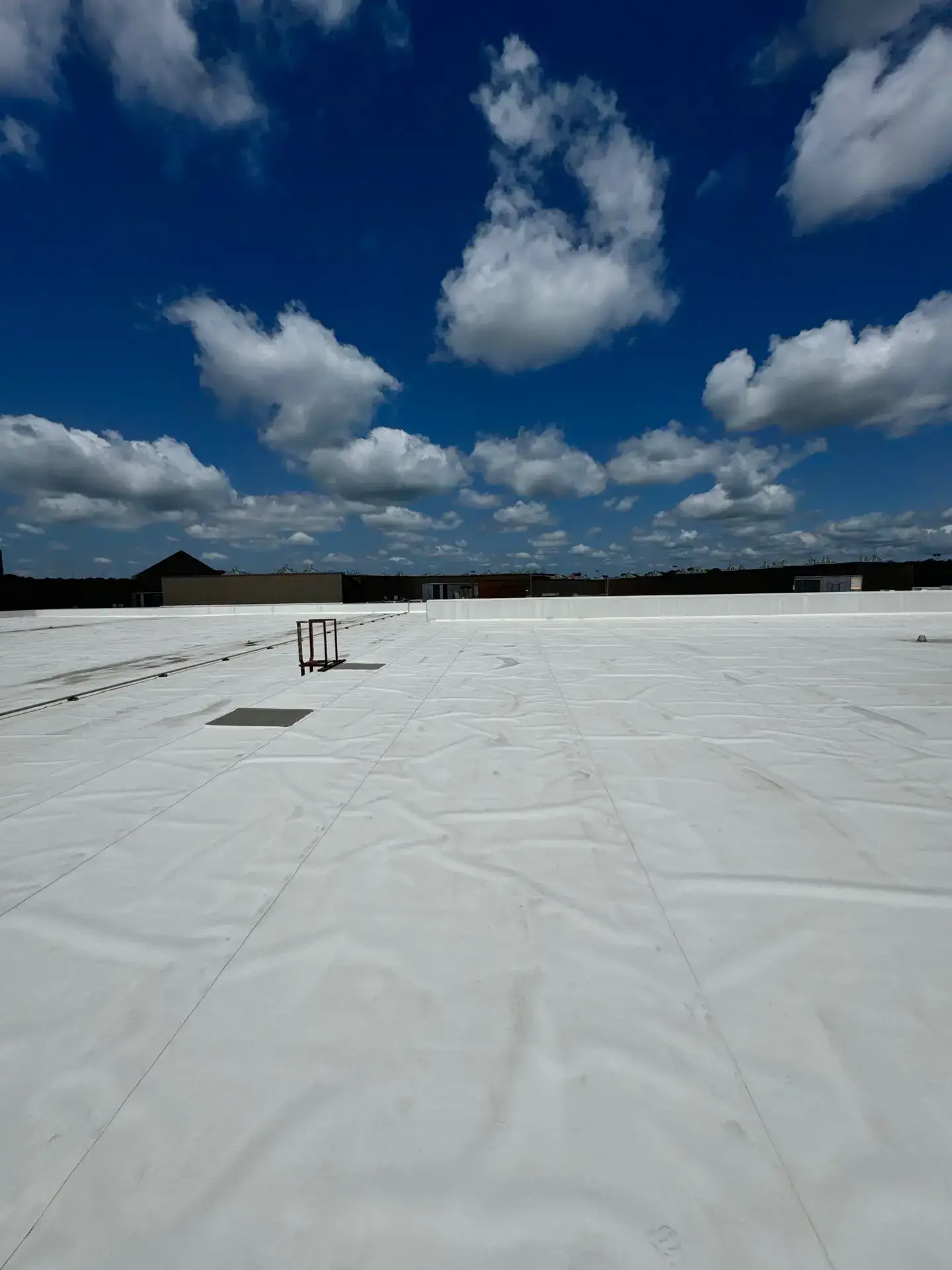
A commercial TPO roof is a building project, not just a membrane purchase. Before comparing bids, establish how the roof is used, where water drains, what equipment sits above it, and whether existing materials can remain. Those decisions shape cost, disruption, and long-term service needs.
Start with an assessment of the existing roof
Gather previous roof plans, warranties, leak reports, and repair invoices. Tell the contractor whether leaks occur during wind-driven rain, prolonged storms, or equipment operation. Interior stains may be some distance from the entry point, so the visible stain alone should not determine the repair location.
The assessment should consider deck condition, moisture, roof edges, wall transitions, penetrations, and drainage. Ask what can be established visually and whether additional investigation is needed. Concealed conditions should be documented before they become extra work.
Specify the complete assembly
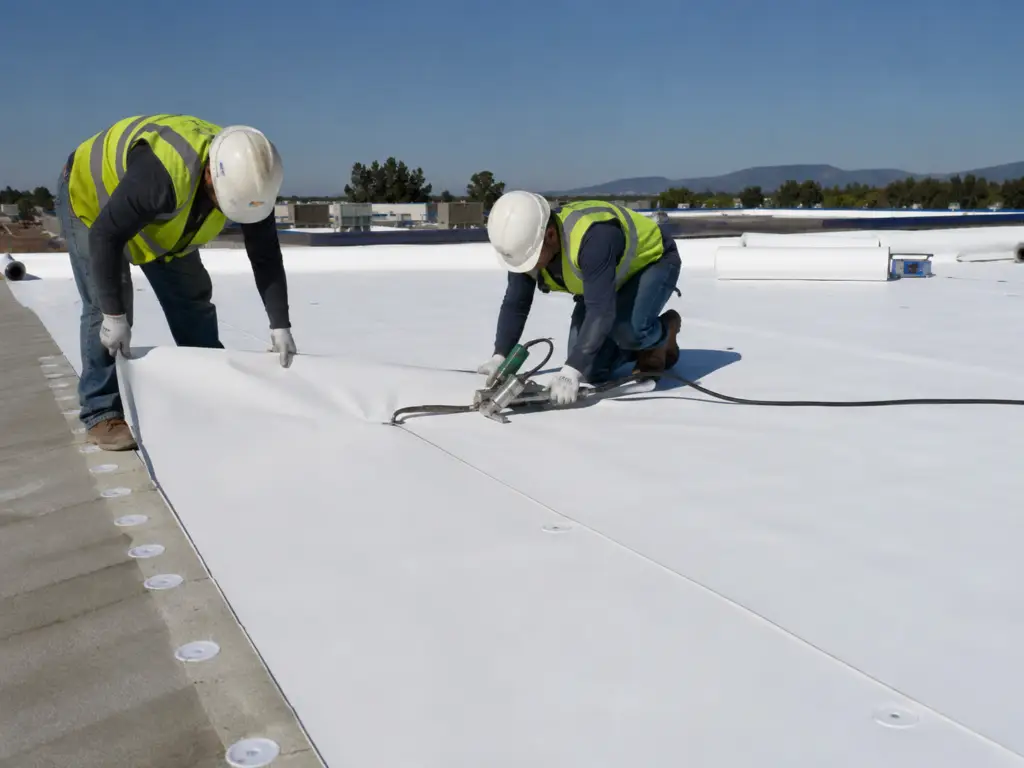
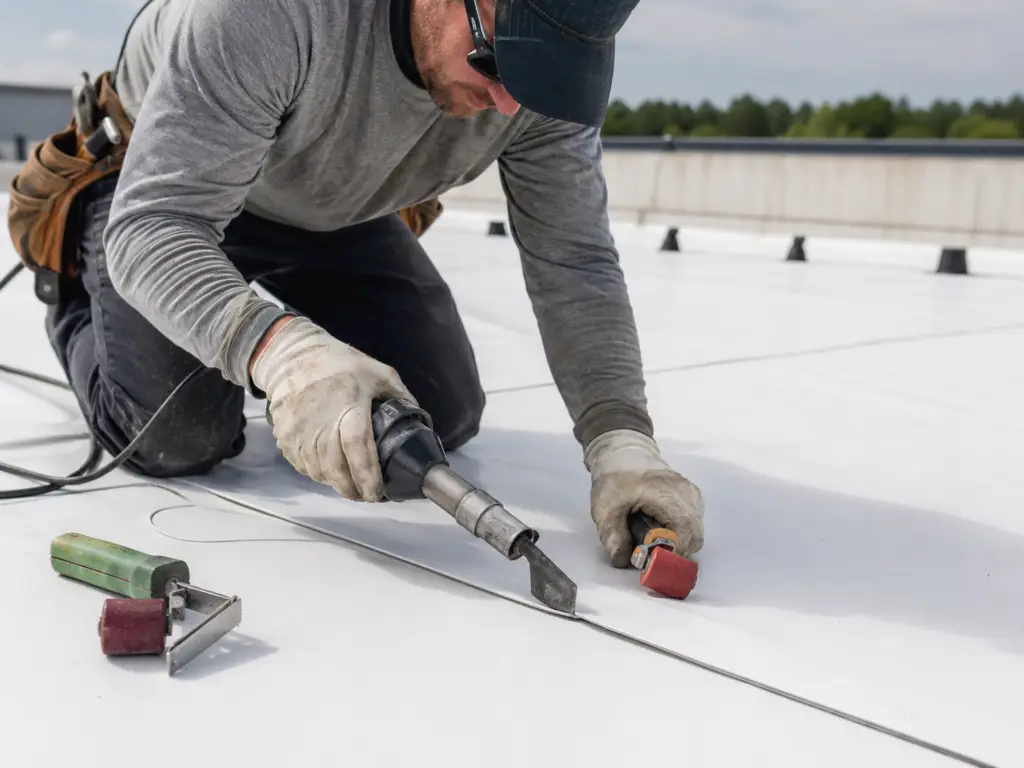
TPO means thermoplastic polyolefin. It is a single-ply membrane with heat-welded seams. Membrane thickness and color are only part of the specification. Insulation, cover boards, fastening or adhesive, flashing, and edge details also affect performance.
GAF’s single-ply roofing information describes TPO and PVC system options. Use the selected manufacturer’s requirements for the actual assembly instead of mixing components based only on price.
Address drainage and rooftop traffic
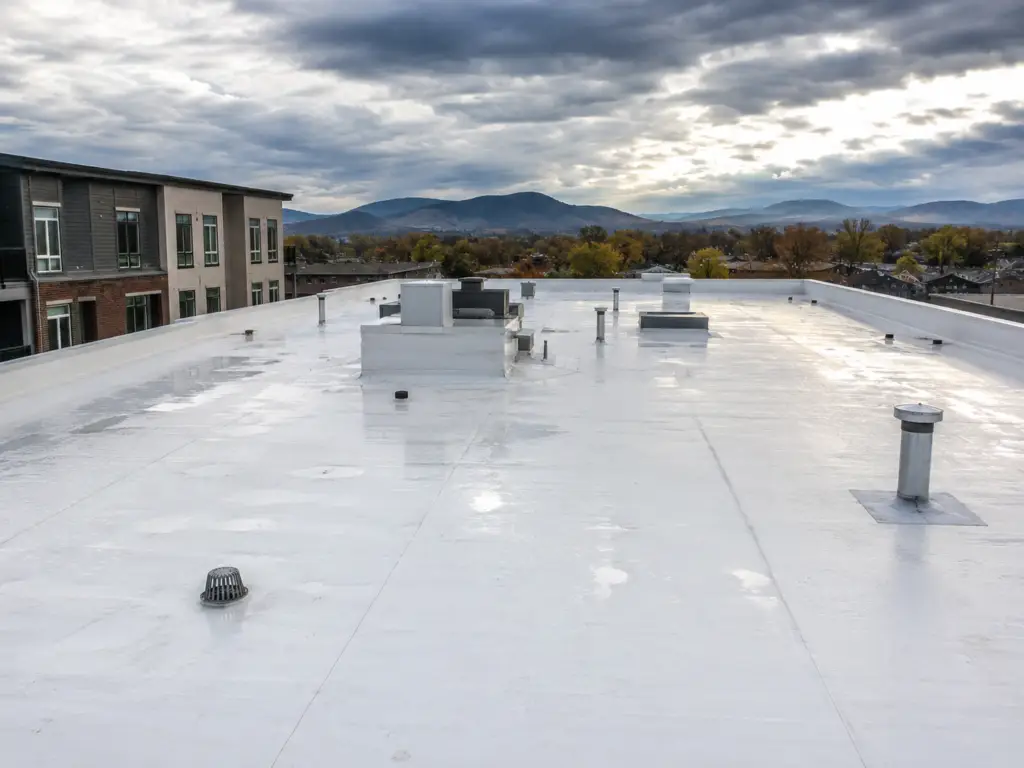
Review drain and scupper locations, overflow provisions, and areas where water remains. If slope or drainage improvements are proposed, show them in the scope. Covering an existing drainage problem with new membrane does not resolve its cause.
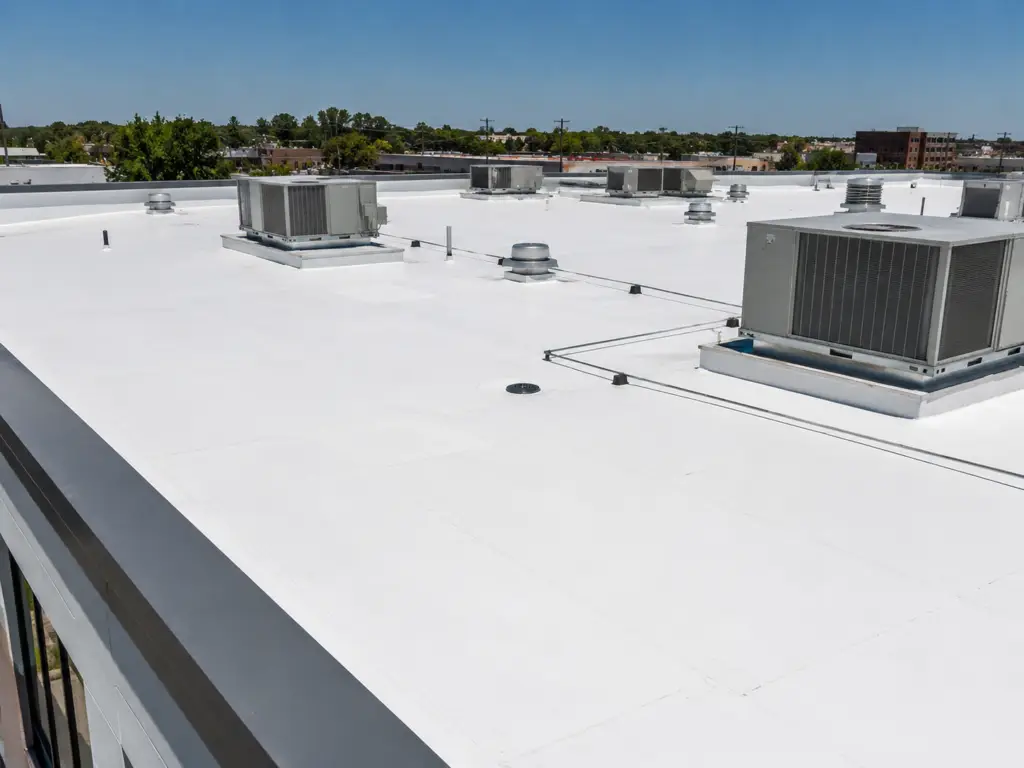
List equipment that needs service access, including heating and cooling units, vents, and communications equipment. Discuss designated access routes and compatible walkway protection. Coordinate with other trades so equipment work does not damage a newly installed roof.
Compare tear-off and recover proposals carefully
A tear-off removes existing roofing and makes more of the underlying condition available for inspection. A recover leaves eligible existing materials in place. Neither approach should be chosen without evaluating moisture, attachment, roof condition, structural loading, and applicable requirements.
If proposals use different approaches, they are not directly comparable. Ask each bidder to identify what remains, what is removed, how wet materials are handled, and what assumptions could change the price.
Plan installation around building operations
- Identify occupied areas, entrances, parking, and delivery access.
- Discuss work hours, noise, temporary weather protection, and material storage.
- Identify any equipment shutdowns or coordination needed with tenants and maintenance staff.
- Agree on how weather delays and concealed conditions will be communicated.
- Request a closeout package with product details, inspection records, warranty documents, and maintenance instructions.
Evaluate energy and sustainability claims
A reflective membrane may reduce solar heat gain, but savings depend on the building and climate. Compare product data and the complete insulation design. Avoid promises of a fixed energy saving without a building-specific basis.
ENERGY STAR’s roof-products specification ended in 2022; current roof purchases should not be presented as newly ENERGY STAR certified. Ask for relevant current ratings and code documentation for the selected product.
Recycling also requires a workable collection and processing route. Confirm the disposal plan for this project rather than relying on a broad claim that all removed roofing will be recycled.
Arrange maintenance and understand the warranty
Keep records of inspections, repairs, storms, and rooftop work. Report leaks and visible damage promptly, keep drainage paths clear, and follow the manufacturer’s maintenance instructions. Roof access and repairs should be handled by qualified people with suitable safety measures.
Review warranty coverage, exclusions, maintenance responsibilities, and reporting deadlines before approving the project. Confirm whether the proposed contractor and assembly qualify for the specific warranty being offered.
Request a scope for your building
For a property in our Virginia, Maryland, and Washington, DC service areas, contact USA Storm Roofing & Construction Group with the building location, approximate roof size, leak history, and access requirements. We can discuss roofing services and the information needed for a written proposal.