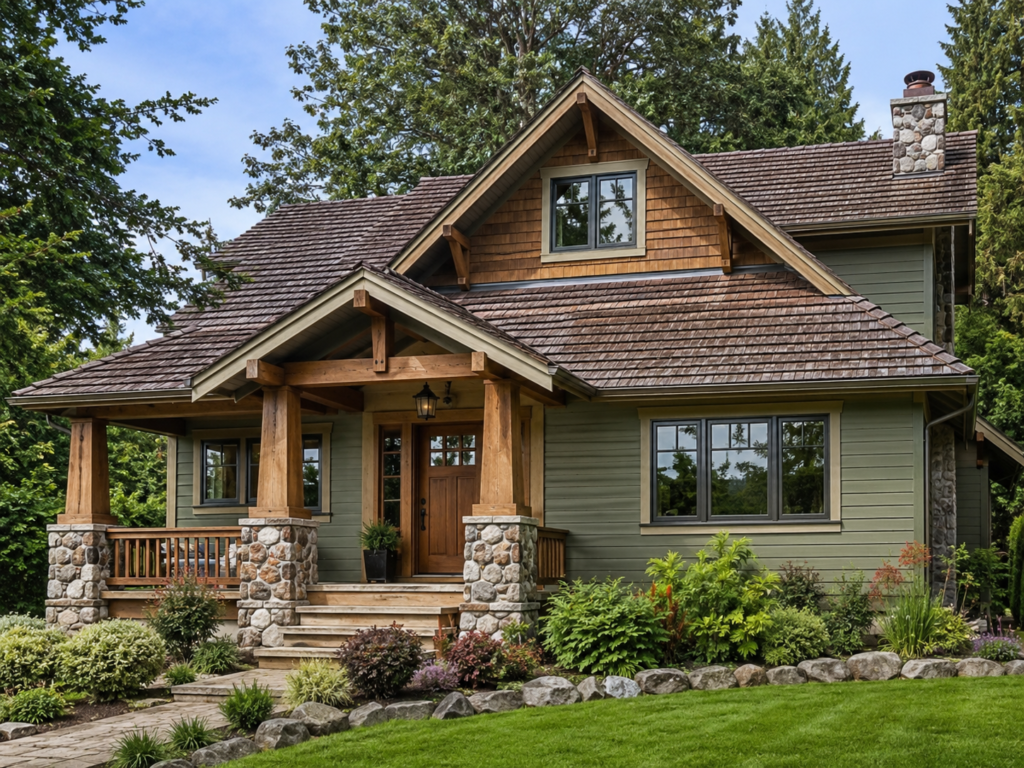
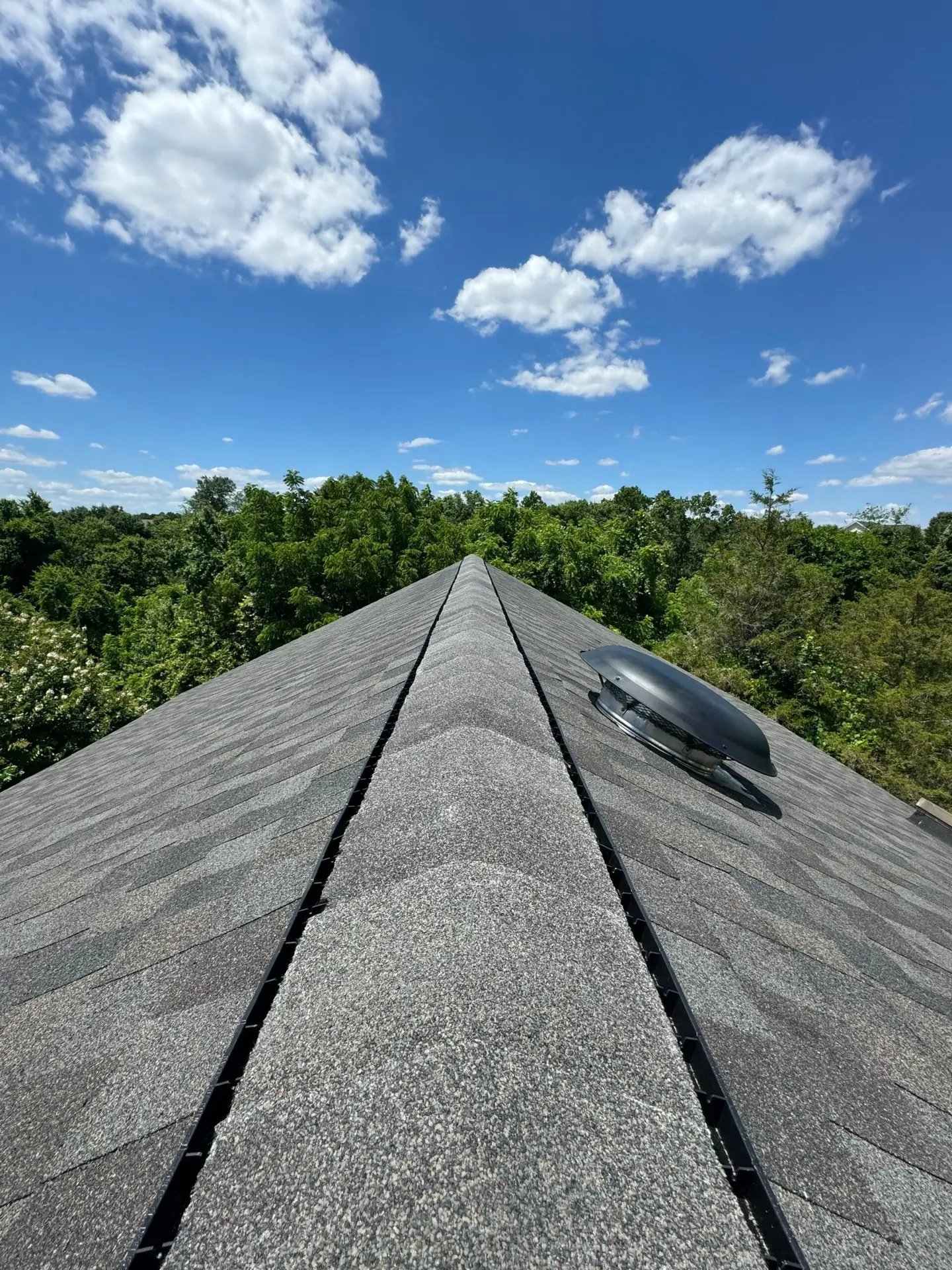
A roof color should work with the home’s permanent exterior features, meet any applicable design rules, and be available in a suitable roofing product. Use this sequence to narrow the options before placing an order.
Start with brick, stone, siding, and trim
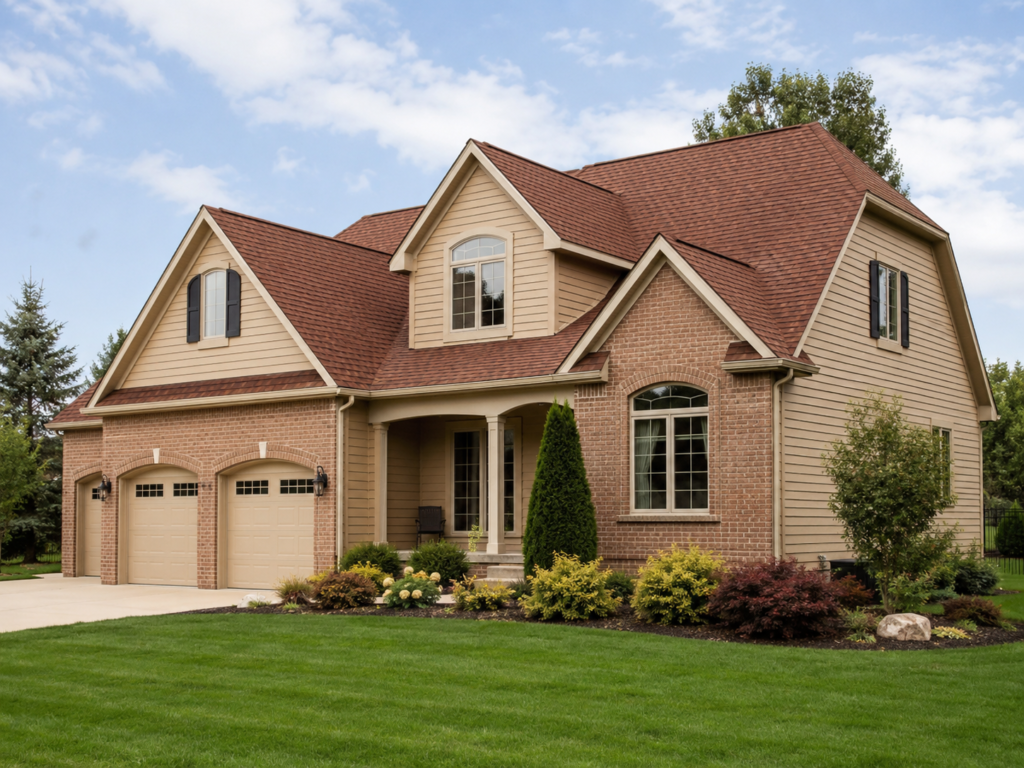
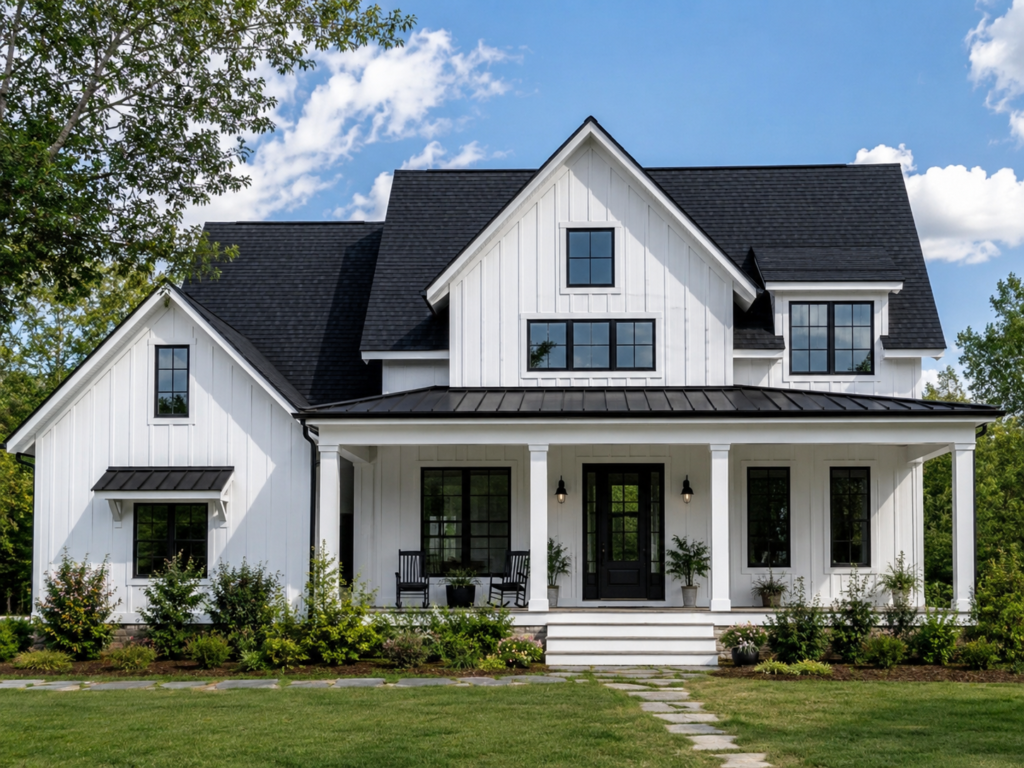
Look at the colors that will remain after the roofing project. Brick and stone often contain several tones; compare samples against those surfaces as well as siding and trim. A dark, light, warm, or cool color can each look different depending on the surrounding materials and the size and shape of the roof.
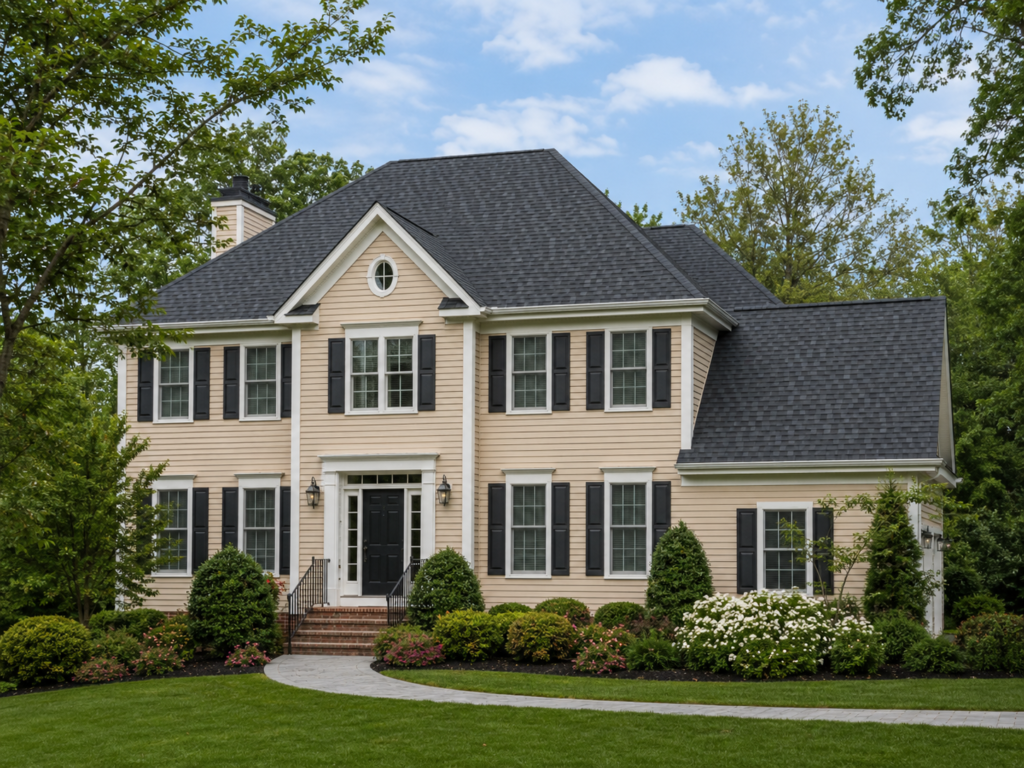
Personal preference matters. Design examples can help you compare possibilities, but there is no single correct color for every colonial, contemporary, or other home style.
Use physical samples in different light
Screen settings, photography, and weather can change how a color appears online. Review a physical sample outdoors in sun and shade. Ask to see a larger sample or a completed roof using the exact product and color where available. A small sample may not show the full variation across an installed roof.
Record the manufacturer, product line, and color name in the written proposal. Similar names from different product lines do not necessarily look the same.
Check approvals before ordering
Ask whether association rules, historic-review requirements, or other local approvals apply to the property. Obtain any required design approval before ordering materials. A color available from a manufacturer is not automatically approved by a neighborhood association.
Separate appearance from energy performance
Color alone is not a complete energy rating. Solar reflectance and thermal emittance describe how a roof responds to sunlight and releases heat. Reflective products can reduce cooling demand in suitable conditions, but heating effects and the home’s insulation, design, shading, and climate also matter. A dark roof does not guarantee lower winter bills, and a light roof does not guarantee a particular annual saving.
Ask for technical data for the exact product and color. The Department of Energy’s Guide to Cool Roofs explains the underlying principles; its dated prices and incentive references should not be used as current offers.
Review product availability, care, and warranty
Confirm that the chosen color is available in the product specified for your roof. Ask about lead times, maintenance guidance, normal weathering, and applicable warranty terms. Appearance may change over time with exposure, dirt, algae, or differences between old and new sections. A repair using new shingles may not blend perfectly with an older roof.
Installation still matters
Shingle color is made at the factory. Correct layout and bundle blending help achieve the intended appearance. Fastening, flashing, underlayment, and moisture management remain essential to the roof assembly regardless of color. The selection discussion should be part of a complete roof replacement proposal.
A final selection checklist
- Compare the sample with the permanent exterior finishes.
- View it in different outdoor lighting conditions.
- Confirm any required color or material approval.
- Check the exact product’s technical data and availability.
- Put the manufacturer, product line, and color in writing.
Contact USA Storm Roofing and Construction Group to discuss product and color options for your roofing project.