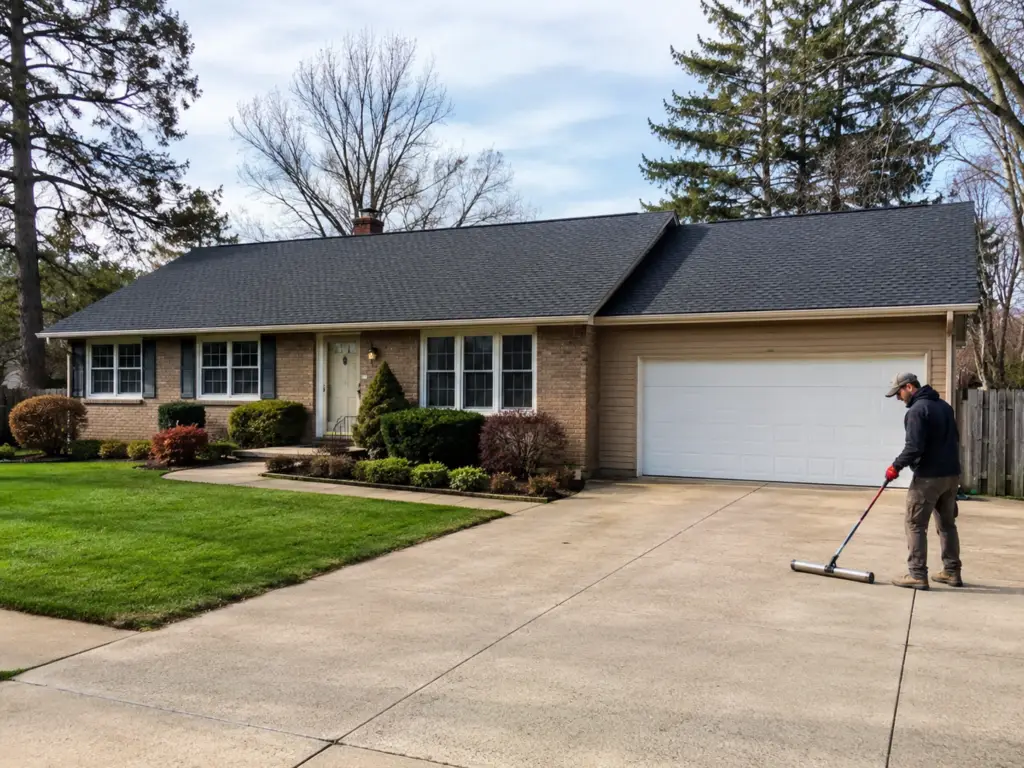
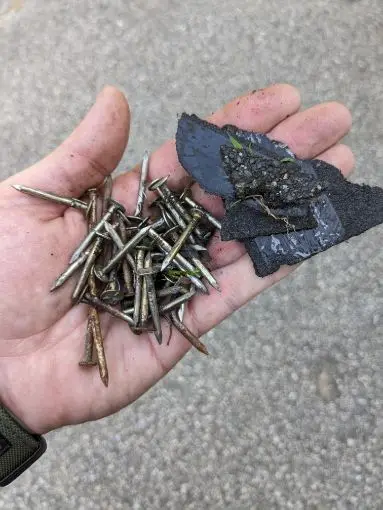
Roof installation cleanup should be part of the written project scope and the final walkthrough. Old shingles, packaging, fasteners, and offcuts can reach driveways, lawns, gutters, and planting beds during removal and installation. Agree on protection, collection, disposal, and the follow-up process before work starts.
Before the crew arrives
- Discuss the delivery and debris-container locations, driveway use, and safe paths into the home.
- Identify delicate landscaping, exterior lights, outdoor equipment, and other areas needing protection.
- Move vehicles, furniture, toys, and portable items from the agreed work area when safe to do so.
- Keep children and pets away from active work and debris collection areas.
- Ask who to contact if access or protection arrangements need to change.
Photographs of the accessible exterior before work can help both parties discuss its condition. Protection methods depend on the site and weather; ask how plants, paved surfaces, and equipment will be handled.

What to include in cleanup arrangements
The estimate should state who removes old roofing, packaging, unused materials, and the debris container. Clarify whether gutter cleanup, adjacent roof sections, attic debris, and any interior protection are included or require separate arrangements.
Magnetic sweeps can help collect ferrous nails and fasteners, but they are not a guarantee that every object will be found. Tall grass, mulch, shrubs, uneven ground, and nonmagnetic debris need other inspection and collection methods. Ask how the crew checks those areas.
A ground-level walkthrough checklist
- Review the driveway, sidewalks, entry paths, patio, and vehicle parking areas.
- Look around accessible planting beds, lawn edges, and the former debris-container location.
- Check that agreed materials and equipment have been removed or stored as arranged.
- Discuss visible debris in gutters or roof junctions with the crew; do not climb onto the roof to inspect it.
- Compare any concerns with the agreed scope and pre-work photographs.
Keep access restricted where debris remains. Do not handle sharp or unstable materials without suitable protection; ask the contractor to collect them.

Record unfinished items clearly
If you notice debris, damage, or an incomplete detail, photograph it from a safe location and identify the area precisely. Agree on who will address it, the expected timing, and how completion will be confirmed. A written list is easier to resolve than a general request to clean up better.
Newly exposed items can sometimes appear after rain or movement through landscaping. Ask for the appropriate contact and follow-up process. Continue using caution around the work area rather than assuming a magnetic sweep removes every hazard.
Keep cleanup separate from roof-performance checks
A tidy yard does not prove that flashing, ventilation, or the roof covering was installed correctly. At handover, also request the agreed completion documentation, product information, warranty details, and applicable inspection records. Ask the contractor to explain any changes from the original scope.
Common questions
Should cleanup be in the estimate?
Yes. A written scope helps clarify removal, disposal, property protection, and responsibilities for areas such as gutters or attic spaces.
Can every nail be guaranteed to be found?
A careful collection and inspection process reduces the chance of debris remaining, but a blanket guarantee is not realistic for every surface and site condition. Agree on a practical follow-up process for anything discovered later.
What should I ask before choosing a contractor?
Ask how access, protection, daily housekeeping, final cleanup, and unresolved items will be handled. Include these questions when comparing roof replacement or roof installation proposals.
Contact USA Storm Roofing and Construction Group to discuss your roofing project, access needs, and expectations for completion.