
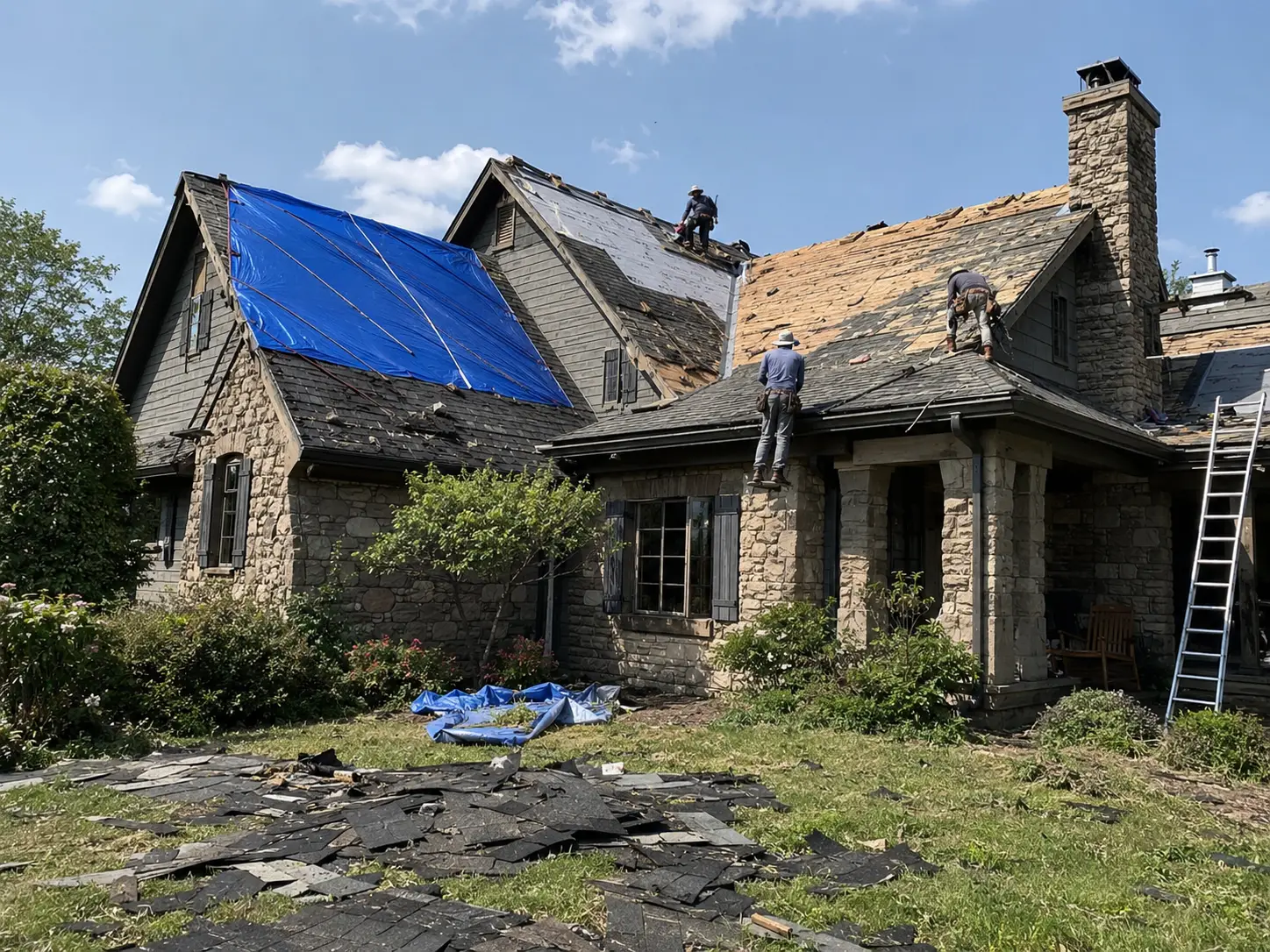
Hail and wind leave different kinds of evidence, and the visible mark is only the start of an assessment. A useful storm report explains the material involved, the location and extent of damage, the basis for the conclusion, and any inspection limits. It should help you understand a proposed repair without assuming that every mark means a new roof.
What you can record safely
Wait until conditions are safe, then observe from the ground or inside the home. Photograph displaced materials, broken siding, damaged screens, dented metal, and new interior water marks if accessible. Note the storm date and when you first noticed each problem. Keep people away from unstable branches, downed wires, broken glass, and loose exterior materials.
Do not walk a roof to look for hail impressions or lift shingles to test them. Report active water entry when contacting a contractor and ask about current availability for assessment or temporary protection.
Hail impact needs a material-specific assessment
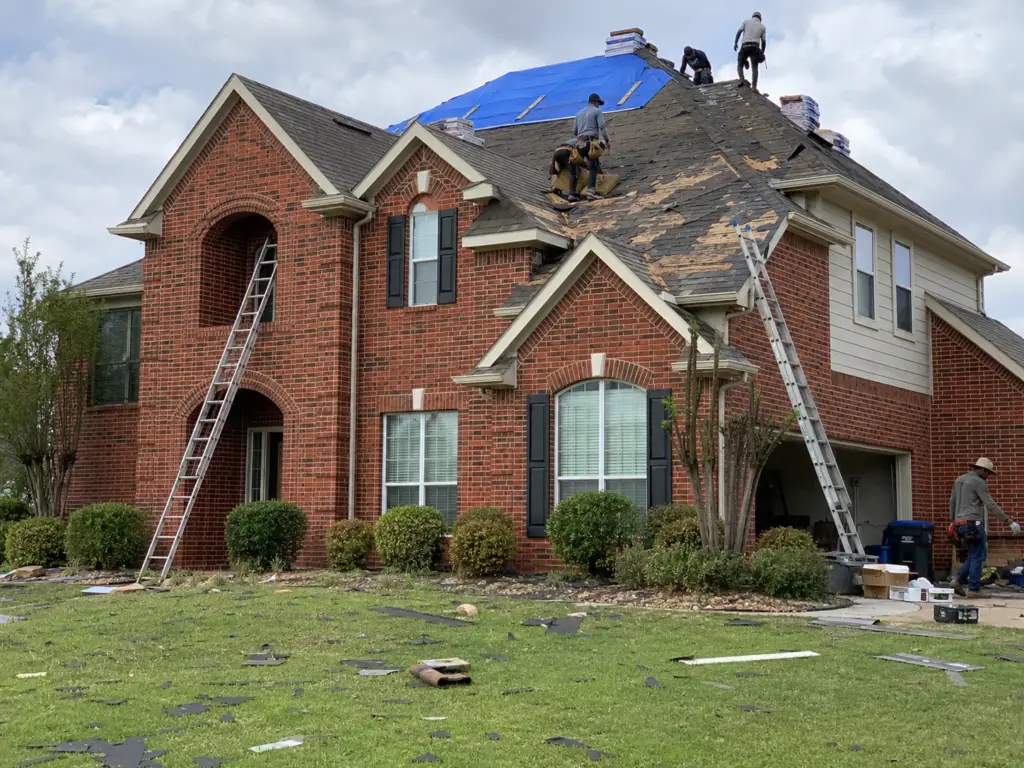
A dent in a metal gutter, a crack in vinyl siding, and a mark on an asphalt shingle are different findings. Ask whether the observed condition affects the component’s function, appearance, or both. Photos should identify which surface is shown and where it is located.
Granules near a downspout or an isolated surface mark do not establish hail damage by themselves. A qualified assessor should consider the material’s condition, other possible causes, and the pattern of findings. Damage on one component is a reason to assess nearby areas, not automatic proof that they all need replacement.
Wind assessment looks beyond loose pieces
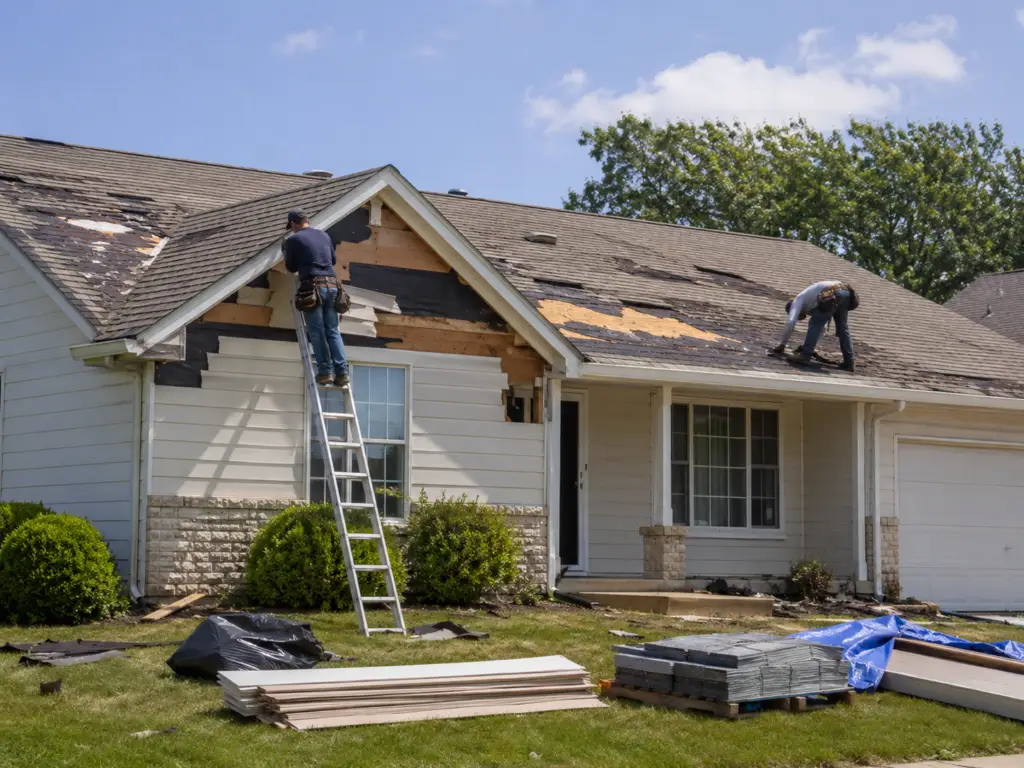
Missing or displaced roofing and siding need attention, but a proposal should also explain the condition of adjoining materials and the details needed for a sound repair. Ask whether the work addresses attachments, damaged surrounding layers, and water-entry points as applicable.
Record any previous repairs or recurring problems. A storm may expose an existing weakness, and the cause of a visible symptom may require further investigation.
What to ask for in the inspection report
- Overview photos and labeled close-ups of the affected areas.
- A description of the material and observed condition.
- The distinction between confirmed observations and suspected causes.
- Areas not accessed and any further investigation recommended.
- Repair or replacement options, including matching and integration limitations.
- A written scope and process for approving concealed damage found during work.
An exterior inspection cannot show every hidden layer. If an active leak needs tracing, confirm the scope and fee for our separate paid leak diagnosis service.
Keep the repair record and insurance record together
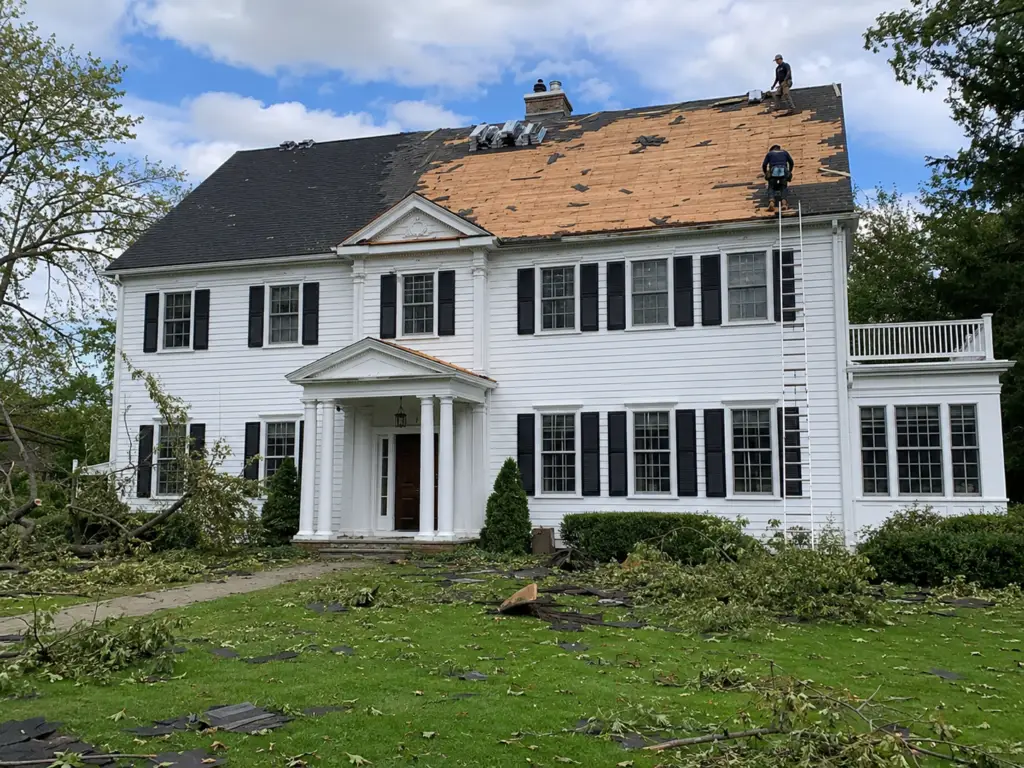
Save photos, estimates, temporary-work receipts, and insurer correspondence. Ask your insurer about policy coverage, deductibles, and claim requirements. A contractor can document findings and price repairs, but cannot guarantee an insurance payment or decide coverage.
If a repair and a replacement are both proposed, compare why each scope is recommended and what conditions would remain afterward. Ask for clarification where an estimate, inspection report, and insurance assessment describe different work.
Request a storm assessment
USA Storm Roofing provides hail damage and storm repair services across our listed Virginia, Maryland, and DC communities. Contact the team with your location, safe observations, and any urgent water-entry concerns.