
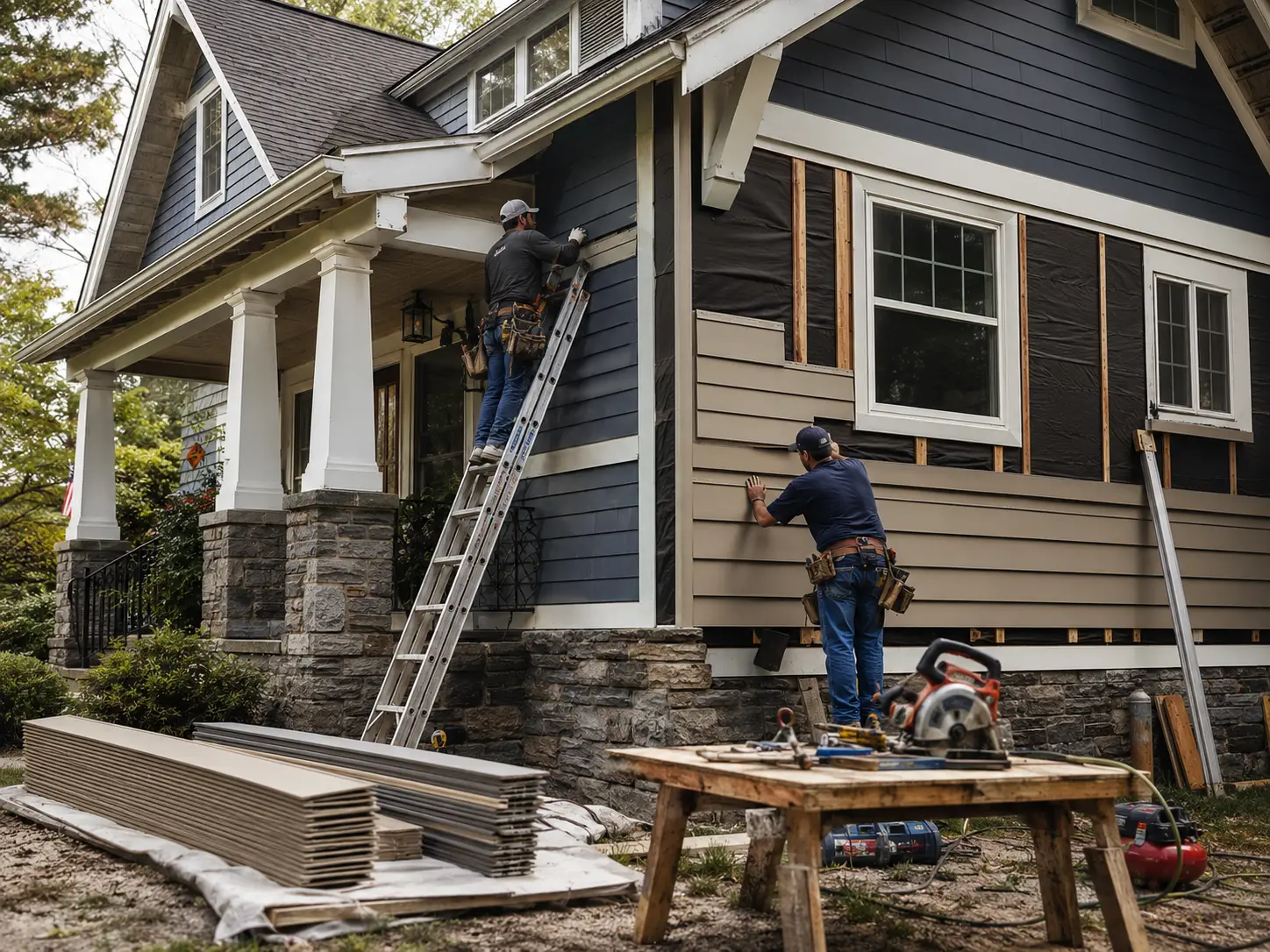
A siding repair needs to fit the material and the wall behind it. Replacing a visibly damaged panel may be only part of the work when flashing, trim, attachments, or concealed layers are also affected. Use these questions to understand what a siding assessment and written repair scope should cover.
Identify the material before comparing remedies
Vinyl, metal, fiber cement, and wood-based siding respond differently to impact and movement. Record cracks, displaced pieces, dents, or damaged finish from the ground, but do not pull panels away to inspect behind them. If a piece is already detached, photograph it safely and keep product records that may help identify it.
A proposed repair should name the product or a compatible replacement and explain how it will attach and join surrounding material. Paint or sealant is not a universal repair for every damaged panel or open joint.
Ask which gaps are intentional
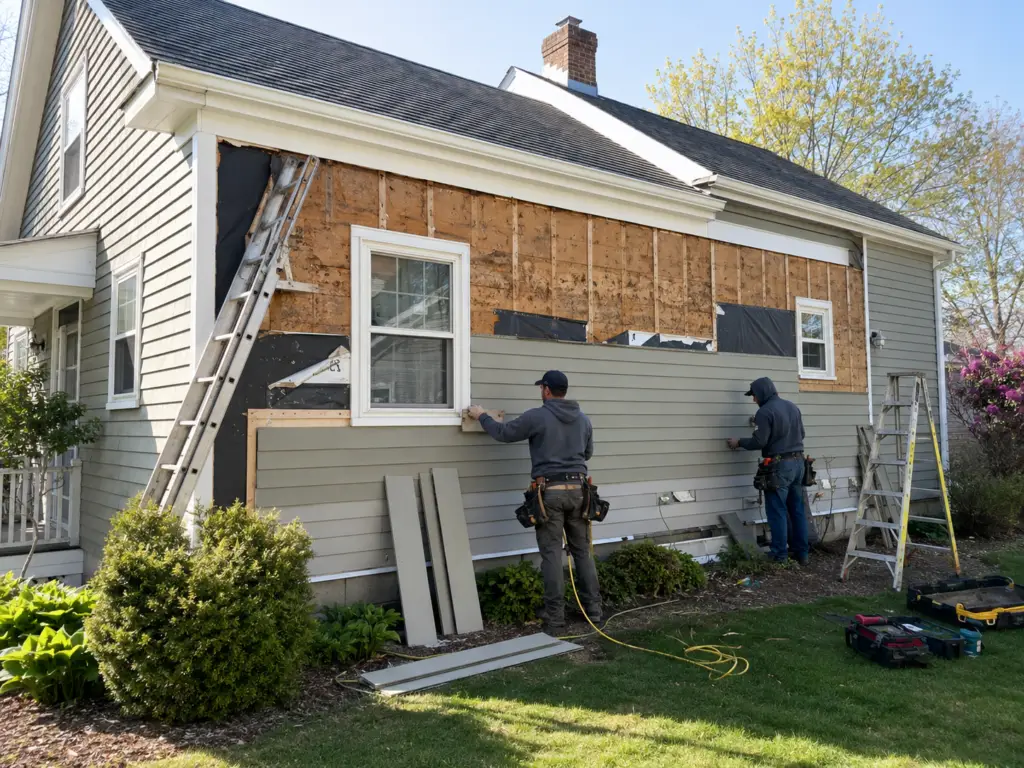
Siding assemblies use product-specific joints, clearances, and drainage details. An opening can be a defect, a required movement allowance, or part of the intended water-management design. Ask the assessor to identify the detail before recommending that it be sealed.
For example, James Hardie’s lap-siding installation guidance addresses joint flashing and other installation details. Use the current instructions for the exact product and application, rather than a rule applied to every type of siding.
Look beyond the visible panel
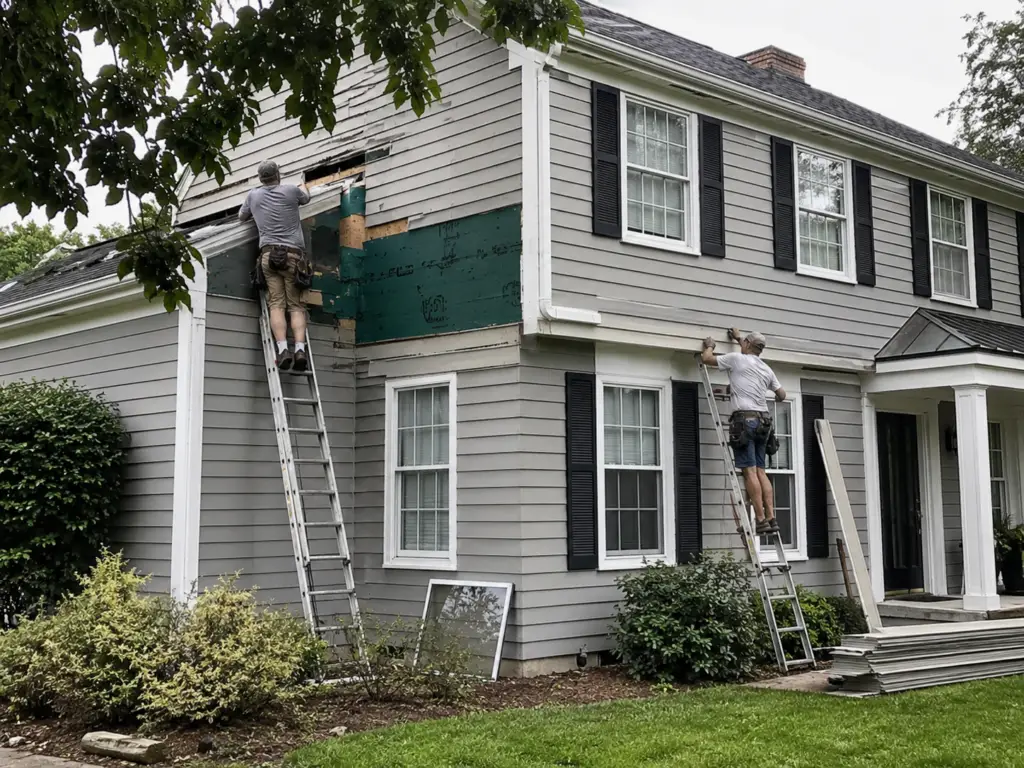
If there is water staining indoors or recurring damage near an opening, ask whether the assessment includes the window or door flashing, roof-to-wall junction, trim, and drainage path. Concealed sheathing or framing cannot always be evaluated before removal. The proposal should explain how further findings will be documented and approved.
Compare a localized repair with a larger section
- Compatibility: Is the original profile, thickness, finish, or attachment system still available?
- Appearance: How might new material differ from weathered siding, even in the same named color?
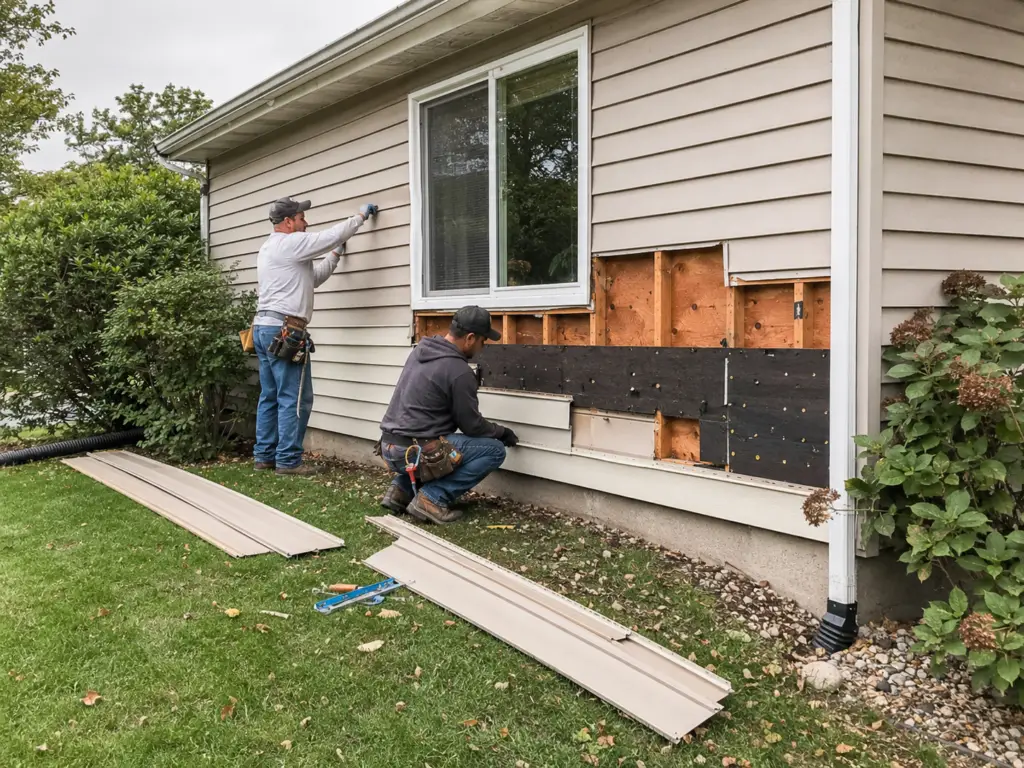
- Condition: Can adjacent panels be removed and reinstalled without creating further damage?
- Integration: Can the repair reconnect properly with flashing and other wall layers?
- Extent: What evidence supports repairing one area or replacing a larger section?
A color mismatch does not by itself decide the technical repair scope or insurance coverage. Ask for the practical options and their costs in writing.
Define the completion details
Confirm removal, disposal, access, landscaping protection, trim, finish work, and any separate interior repair. Review product and workmanship warranty terms, and ask which care instructions apply to the repaired area. Keep completion photos and change approvals with the invoice.
Arrange a siding assessment
USA Storm Roofing offers siding repair and replacement planning across our listed Virginia, Maryland, and DC communities. Contact our team with your location, material if known, and photos of safely visible concerns.
For possible storm damage, retain dates, photos, and receipts, and direct policy questions to your insurer. The assessment should explain the observed condition and repair options without promising claim approval.