
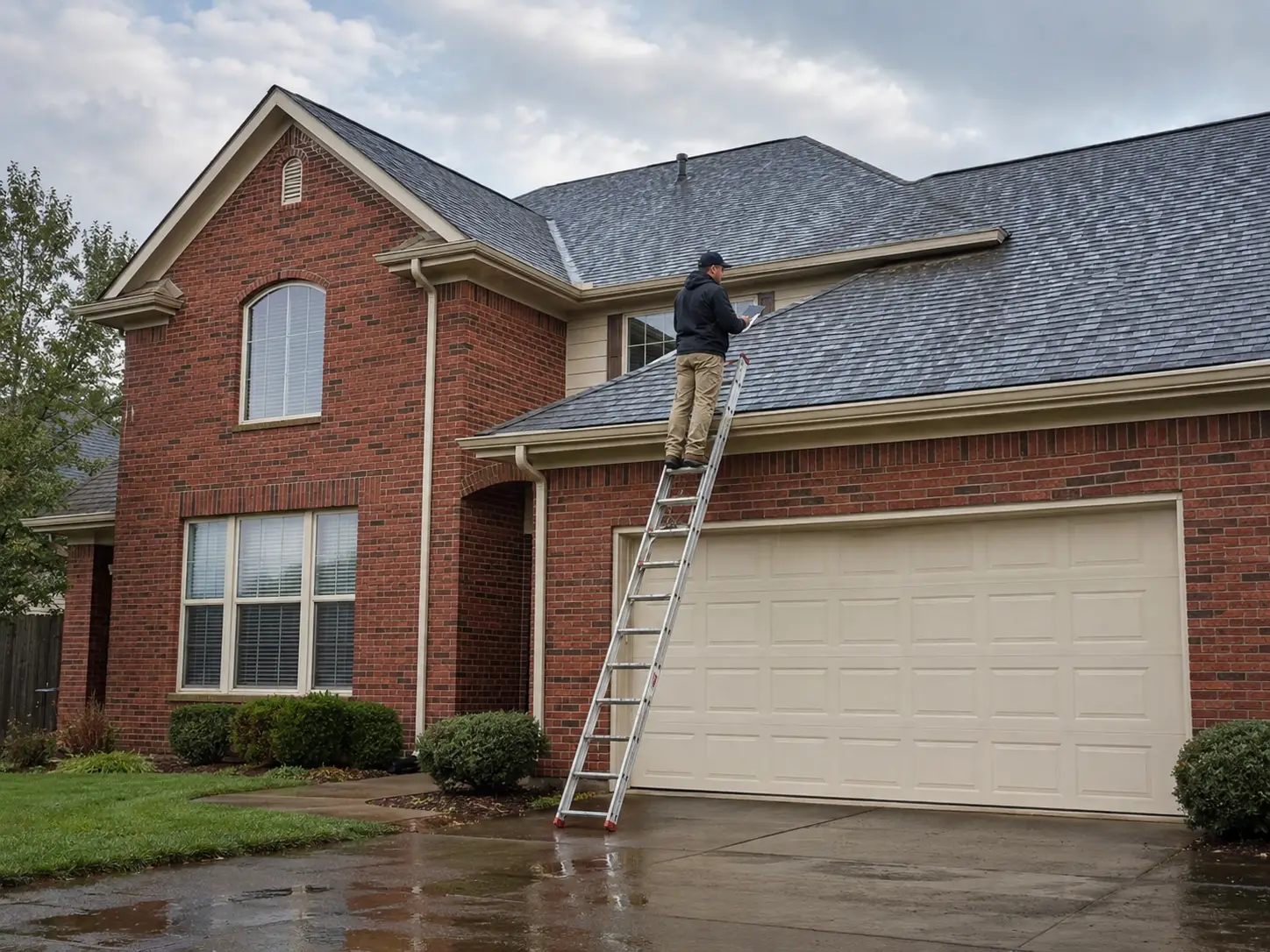
Rain can reveal a water-entry problem that was not apparent in dry weather. A useful post-rain record captures the timing, location, and pattern of the symptom so an assessor can investigate it. You do not need to climb onto the roof or identify the defective component yourself.
Start in normal, safely accessible rooms
Look for new stains, drips, bubbling paint, or moisture around upper walls and openings. Keep away from wet electrical fixtures, bulging ceilings, and unsafe attic spaces. If there is an immediate electrical or structural hazard, contact the appropriate emergency service or qualified professional.
Photograph what you can see safely and identify the room and approximate position. Do not stand beneath a damaged ceiling to inspect it. Report active water entry when calling for help.
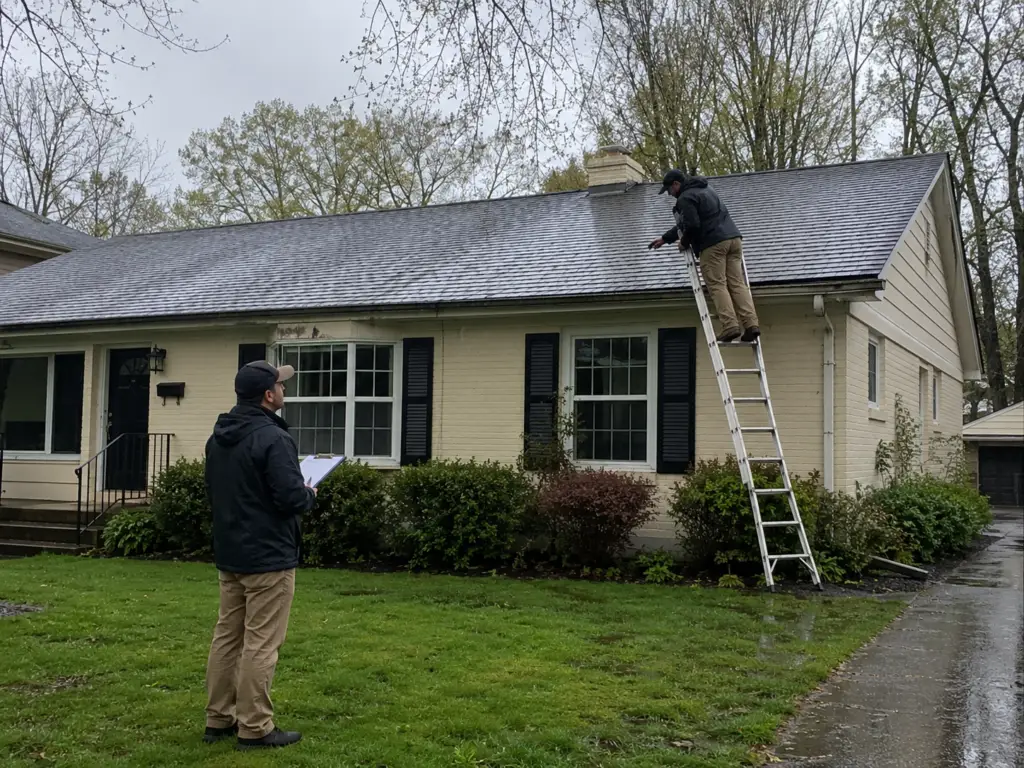
Keep a short rain-event log
Record these details while they are fresh:
- The date and approximate time the rain began and the symptom appeared.
- Whether the rain was brief and intense or prolonged.
- Whether strong wind accompanied it and which exposed side appeared affected.
- Whether dripping continued after the rain stopped.
- Whether the same location has shown a problem before.
- Any recent roof, gutter, siding, window, or interior work.
These observations can help guide the assessment. They do not prove the source: water can travel before appearing indoors, and a problem near the roof may still involve an adjacent wall or another building system.
Observe drainage from the ground
After conditions are safe, note visible roof changes, gutter overflow evidence, loose downspouts, and water collecting at discharge points. Do not use ladders, lift shingles, or dismantle drainage components for this check.
If overflow is the main concern, our gutter drainage guide explains what to record. A roof estimate and a drainage repair may address different problems.
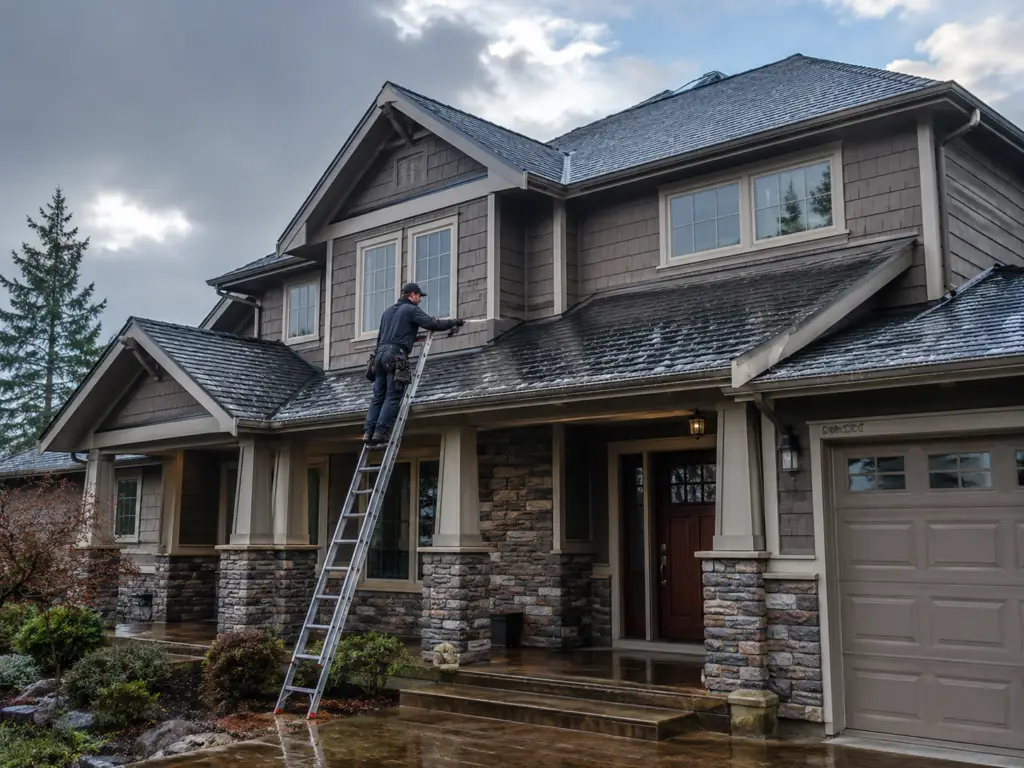
Ask what the inspection can establish
Request the observed findings, accessible areas, limitations, and proposed next step. A dry-weather visit may not reproduce an intermittent leak. Further investigation should have a defined scope, access plan, and agreed fee where applicable.
Ask how the recommended repair relates to the symptom and what remains uncertain. One stain or one heavy rain event is not enough to decide that the entire roof needs replacement.
Plan follow-up after the source is addressed
Keep the findings, approved repair scope, completion photos, and receipts. Ask what drying or interior restoration is needed separately and whom to contact if water reappears. Continue safe observations during later rain, but do not postpone arranging help for an active problem.
Book the appropriate assessment
USA Storm Roofing serves our listed Virginia, Maryland, and DC communities. Contact the team with your address, current conditions, and rain-event notes. Our leak diagnosis service is paid and differs from a free exterior inspection; confirm the investigation scope before booking.
If the damage may involve a claim, ask your insurer promptly about reporting requirements and retain factual records. The insurer decides coverage under your policy.