
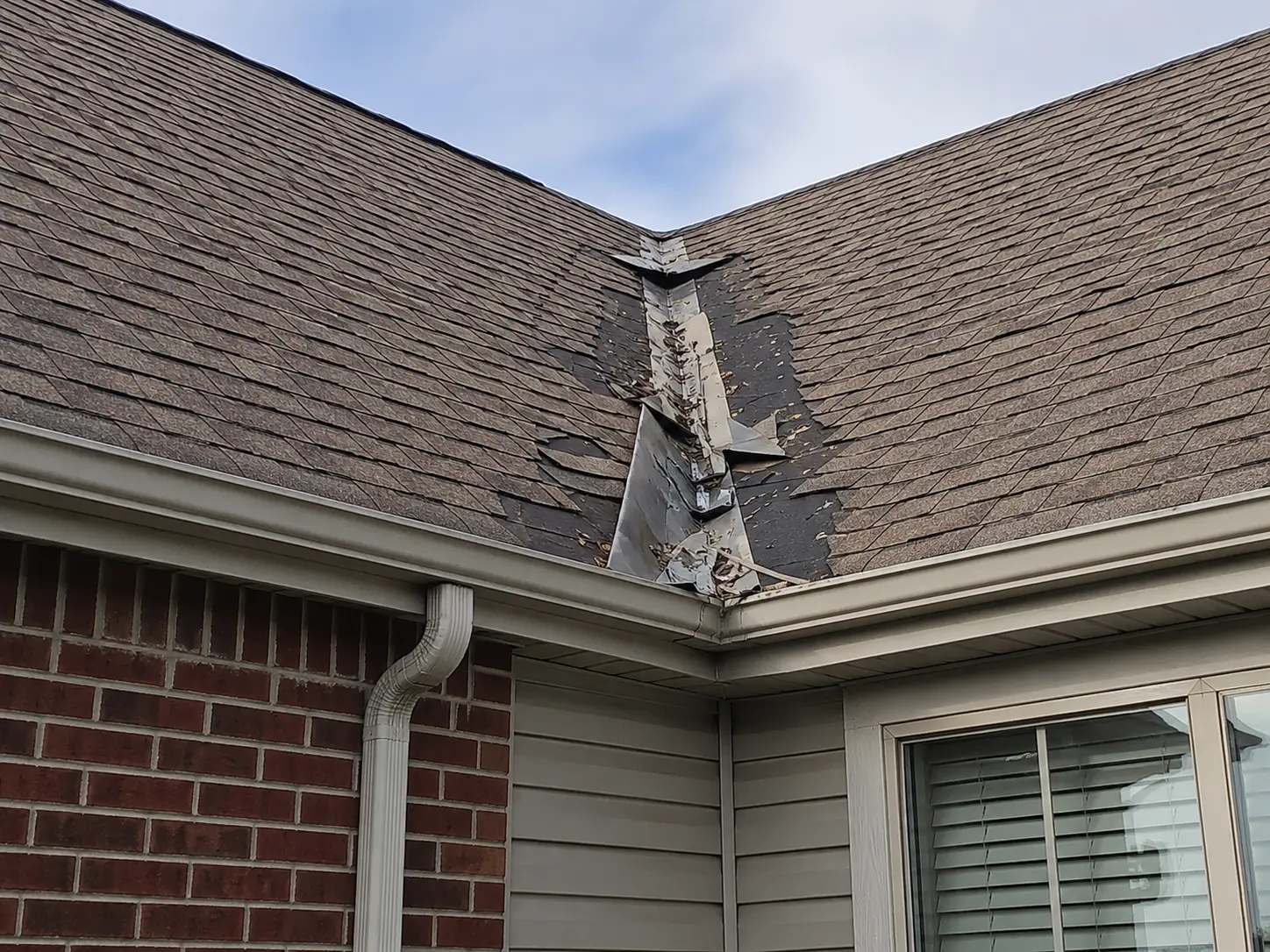
A roof valley is the channel where two roof slopes meet. Water from both slopes runs toward it, so a problem there needs a careful assessment of the water path and adjoining materials. A ceiling stain near a valley is a clue, but it does not establish the entry point by itself.
Identify the valley construction first
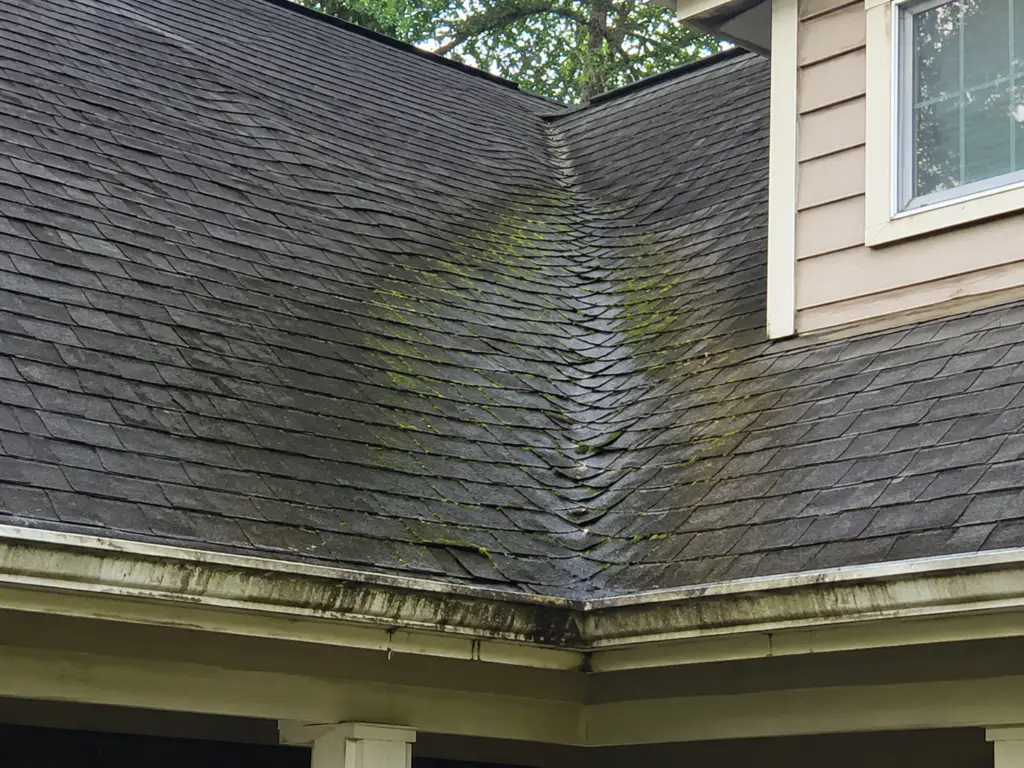
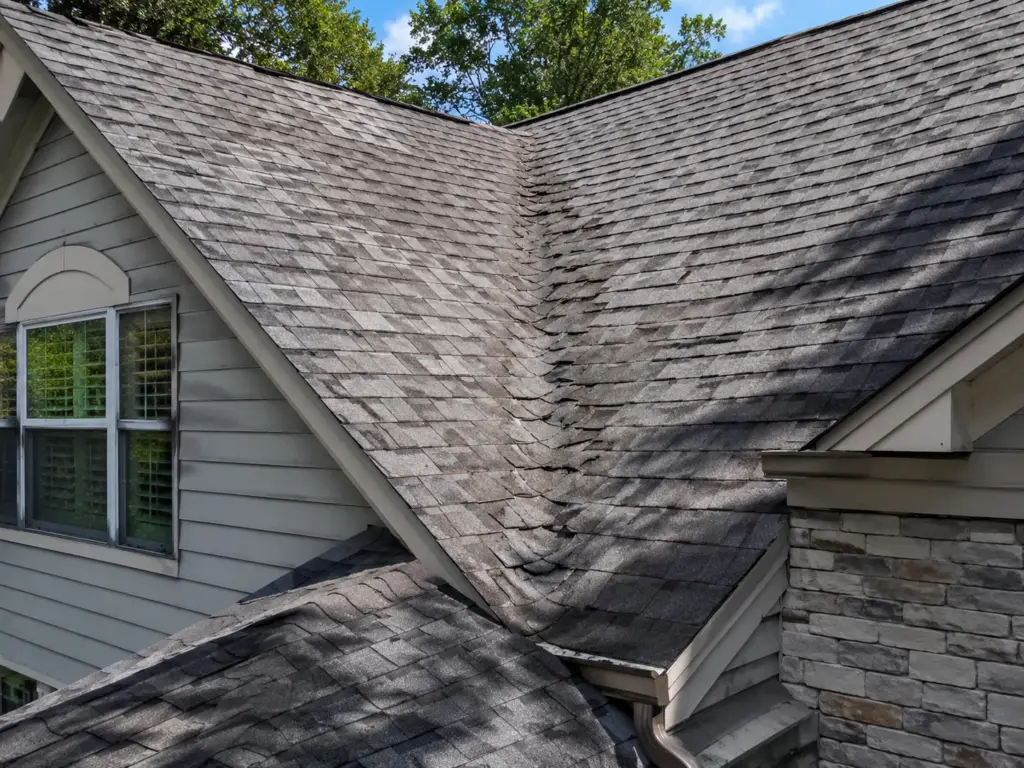
Some valleys show an exposed metal channel; others have shingles covering the valley. These details are designed differently. Visible metal is not automatically a missing-shingle problem, and a covered valley is not automatically missing flashing.
Ask the roofer to identify the existing construction and the applicable product instructions before recommending changes. GAF’s valley flashing bulletin illustrates why an open valley and a closed-cut valley should not be judged as the same detail.
Useful observations from the ground
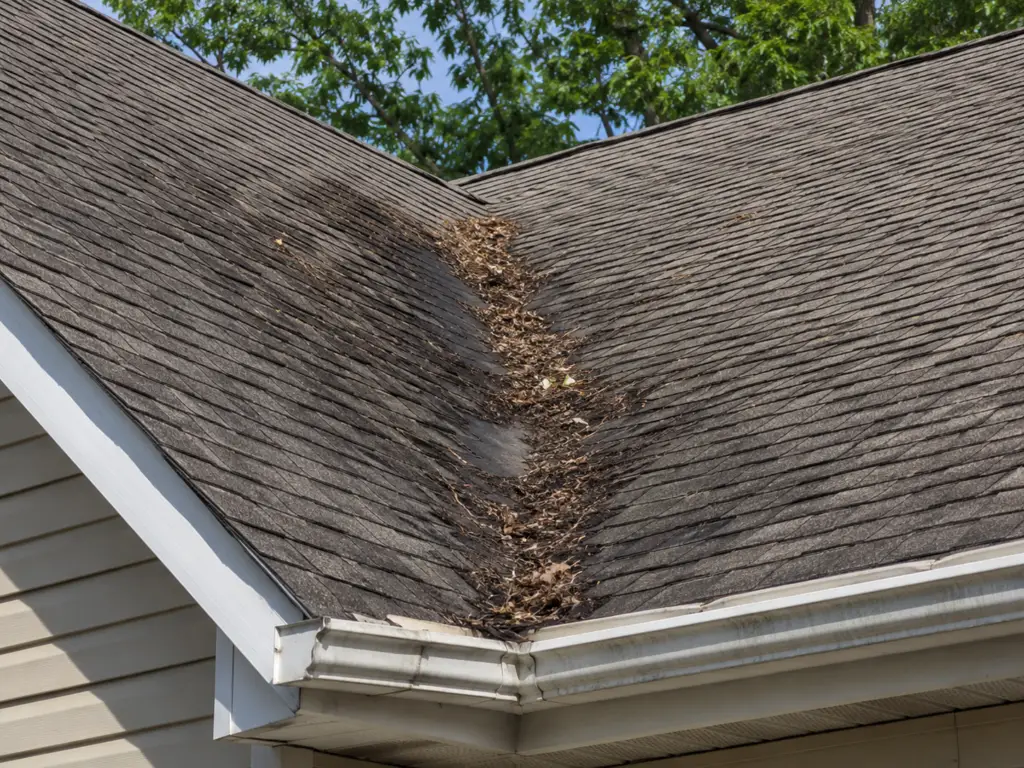
- Debris or a branch lying along the valley.
- A displaced shingle or visibly damaged metal section.
- A change in the roof line that appears new.
- Water spilling unusually at the valley’s lower end.
- A new interior stain or drip during a particular rain event.
Record the location and timing with photos taken from a safe place. A dark patch or granules near a downspout alone cannot identify a valley defect. Do not climb up, pull debris out, or lift shingles to investigate.
Follow the water beyond the visible stain
A useful leak investigation considers the valley, nearby roof penetrations and walls, the lower roof edge, and available interior evidence. Water can travel before it appears indoors. A gutter issue near the valley outlet may also need separate attention.
Ask what was inspected, what remained concealed, and whether additional investigation is needed. A visual assessment cannot guarantee that all hidden damage has been found.
Questions for a valley repair estimate
- What is the likely cause? Ask for photos connecting the finding to the proposed work.
- How much will be opened? The scope should identify the valley section and adjoining shingles to be removed or replaced.
- How will the layers connect? Ask about the valley lining, underlayment, flashing where applicable, and integration with the remaining roof.
- What happens if decking is damaged? Agree on documentation, pricing, and authorization for concealed findings.
- What are the limits? Clarify material matching, surrounding roof condition, warranty terms, and whether related gutter work is included.
A surface patch and a properly integrated repair are different scopes. Ask whether a proposed measure is temporary protection or the intended permanent repair.
When to discuss broader replacement
One valley defect does not automatically require a new roof. Broader replacement may deserve discussion if adjacent materials cannot be reliably reused, deterioration is extensive, or several independent defects affect the roof. The recommendation should follow documented condition, not the presence of a valley alone.
Arrange the appropriate assessment
If water is entering, stay away from affected electrical fixtures and any sagging ceiling. Tell us about active leakage when arranging an appointment. USA Storm Roofing offers paid leak diagnosis as a separate service from a general exterior inspection.
Contact our team for assessment availability in our listed Virginia, Maryland, and Washington, DC service areas. For planning the written scope, see our roof repair service.