
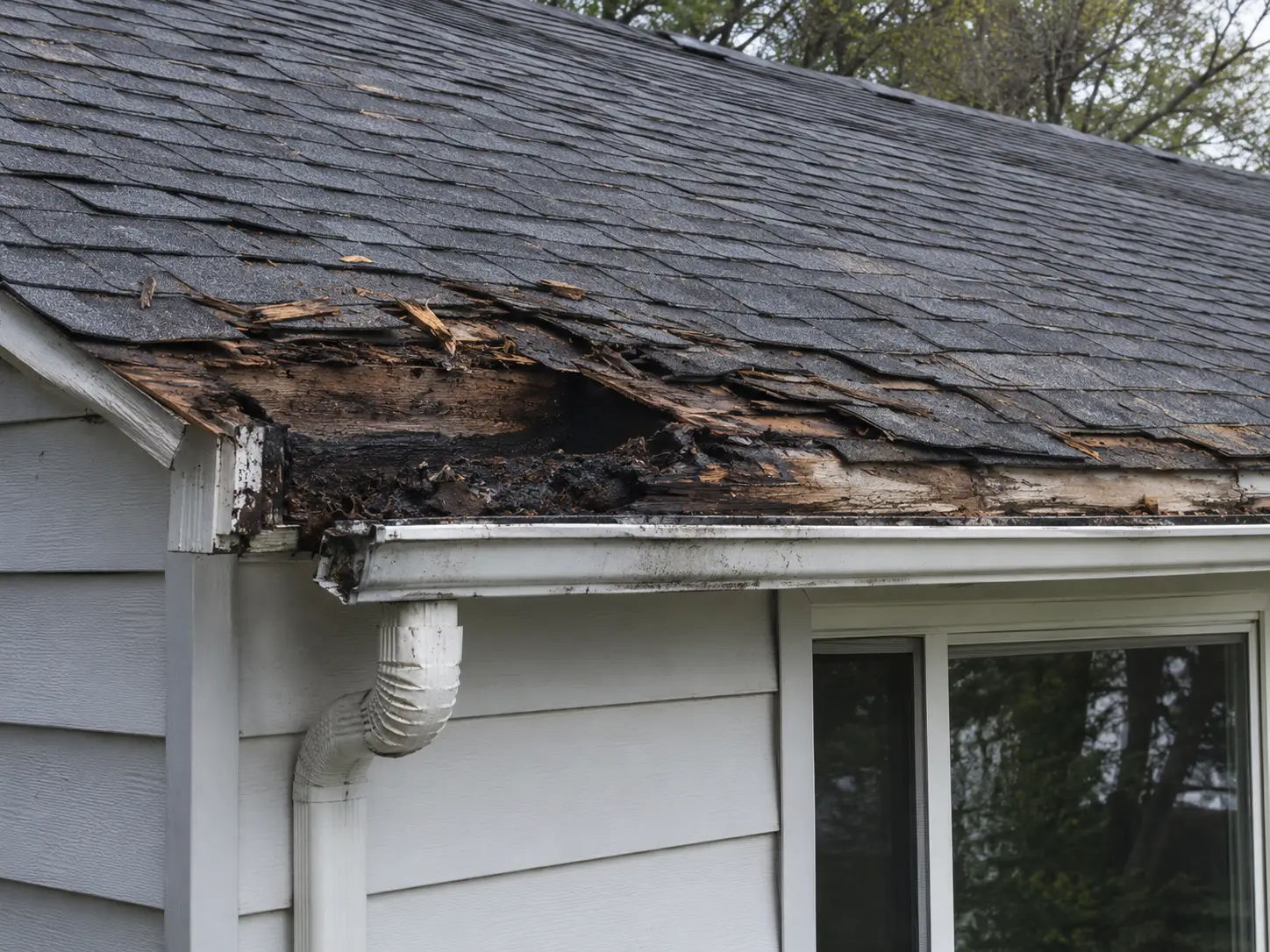
Roof decking is the base beneath the underlayment and roof covering. On many residential shingle roofs it consists of wood panels or boards, while the rafters or trusses below provide the supporting framework. A repair proposal should distinguish damage to the deck from a concern involving that deeper structure.
Warning signs are reasons to investigate
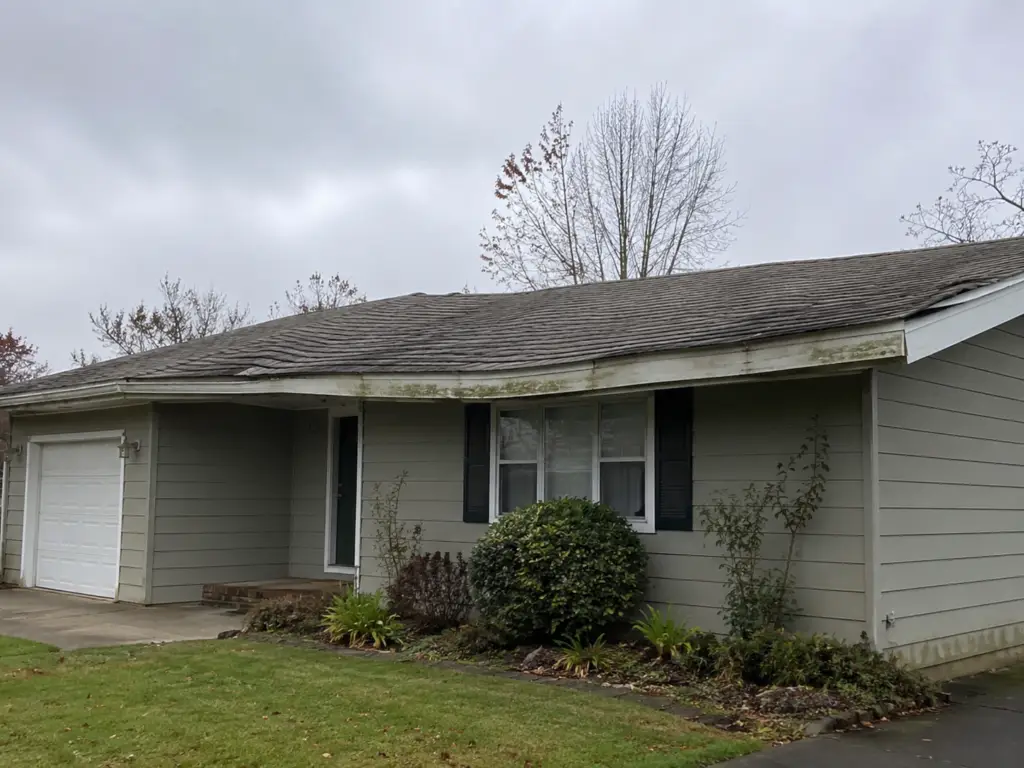
A changed roof line, recurring water entry, or visible deterioration in an accessible area deserves assessment. However, a ceiling stain, dark wood, or a musty smell does not by itself establish how much decking needs replacement. The source and extent of the condition must be evaluated.
Do not walk on the roof to test for soft spots or enter an unsafe attic. Keep away from visibly sagging ceilings and wet electrical areas. If there is an immediate structural or electrical hazard, contact the appropriate emergency service or qualified professional.
Understand what can be seen before removal
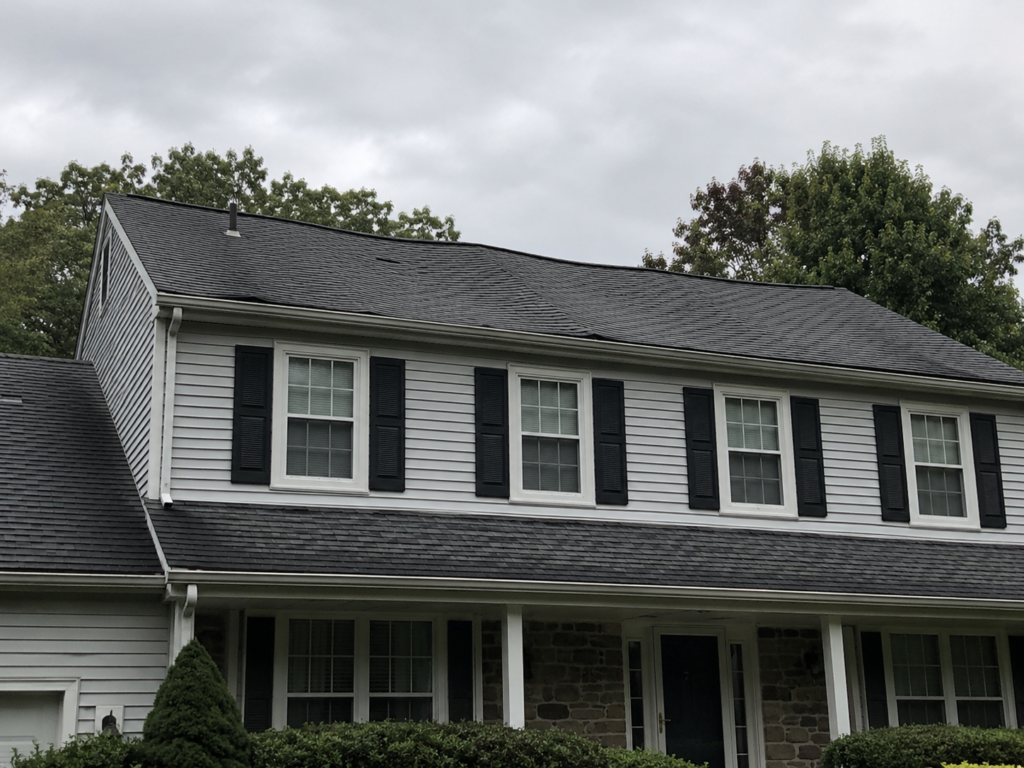
The roof covering hides much of the deck. An accessible attic may provide a view of some underside areas, but insulation, finishes, access limits, and the assembly itself can restrict the assessment. Ask which areas were examined and which remain concealed.
A contractor should explain whether the condition can be assessed now or only after roofing is removed. Avoid treating an exterior inspection as confirmation that every concealed panel is sound.
Ask what caused the damage
If moisture is involved, the scope should address the water or moisture source as well as any deteriorated material. A deck repair alone does not resolve a separate flashing, roof-covering, wall, or condensation problem. Ask how the proposed work connects those findings.
If the support framing or overall roof shape is a concern, ask whether an engineer or other qualified structural professional is needed. Do not assume a routine panel replacement addresses a structural problem.
Define the decking allowance before installation
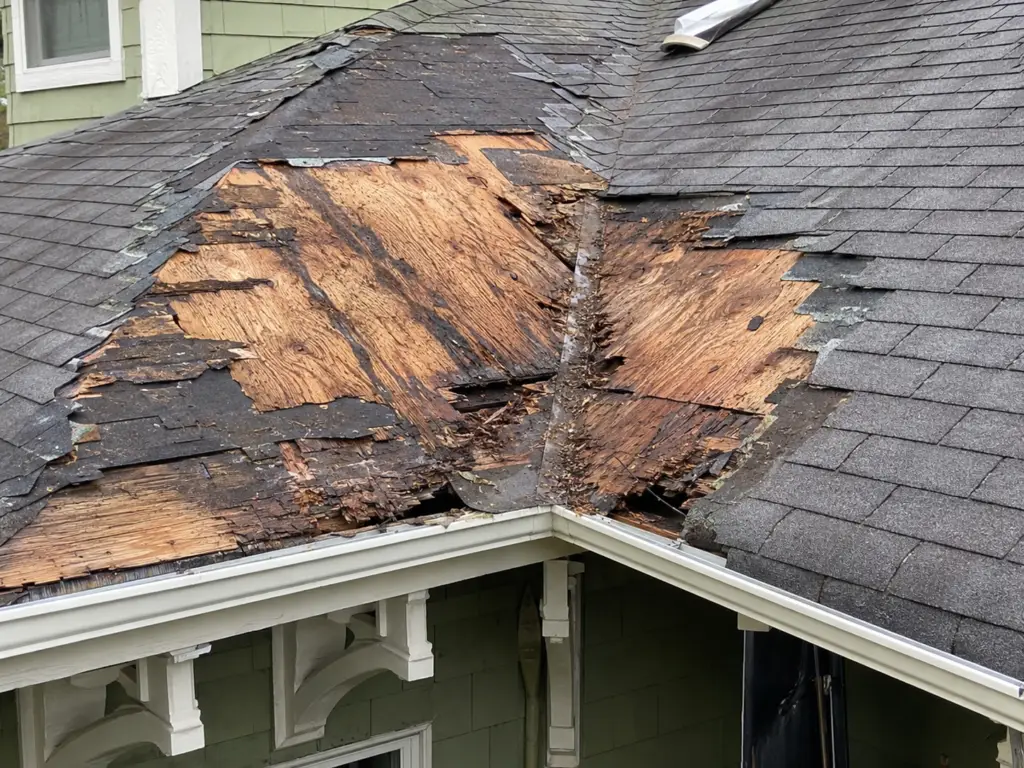
Where concealed work cannot be measured in advance, request a clear process rather than an unexplained extra charge. Useful questions include:
- Is any decking replacement already included in the base estimate?
- How will additional work be measured and priced?
- Which material, thickness, and installation requirements apply to this roof?
- Will photos show the location and condition before replacement?
- Who approves additional work and any schedule change?
- Are framing repairs, engineering, or other related work excluded?
The contract should identify whether an allowance is a budget provision or a defined quantity of included work. Ask for the treatment of unused allowances and overages in writing.
Keep the evidence at handover
Save photos of the exposed condition, approved changes, materials used, completed work, and the final invoice. These records help explain work that is covered again when the roof is finished. Our roof replacement planning guide covers the wider project sequence.
Discuss the concern before agreeing to a scope
Contact USA Storm Roofing for roof repair planning in our listed service areas. Describe recurring leaks or visible changes, and share previous repair records if available. Active leak tracing may require our separate paid diagnosis service.
If insurance may be involved, keep factual records and ask your insurer about coverage. Concealed damage does not automatically establish a covered loss or a particular claim payment.