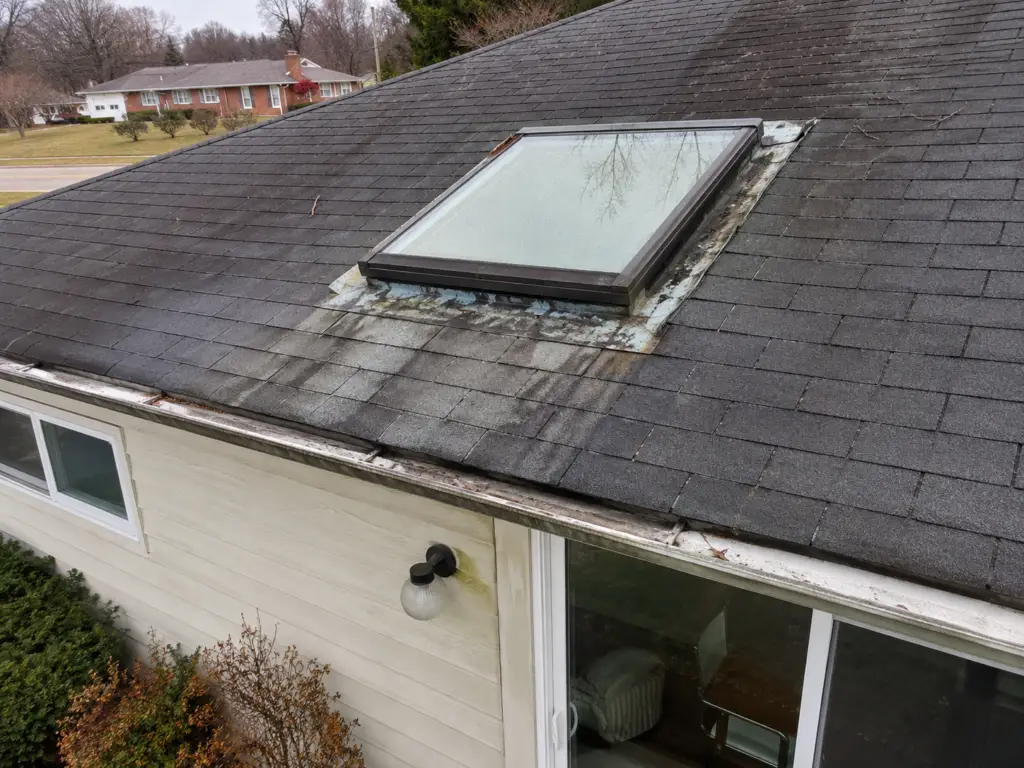
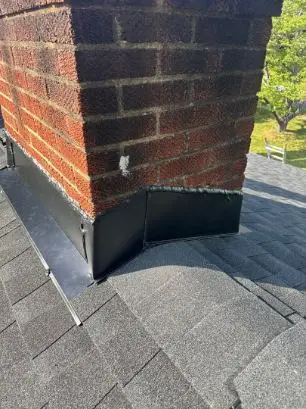
Roof flashing helps direct water at junctions and openings such as walls, chimneys, valleys, and vents. A leak near one of these areas may involve flashing, but the visible interior stain does not prove the entry point. Water can travel through the assembly before it appears indoors.
How flashing works
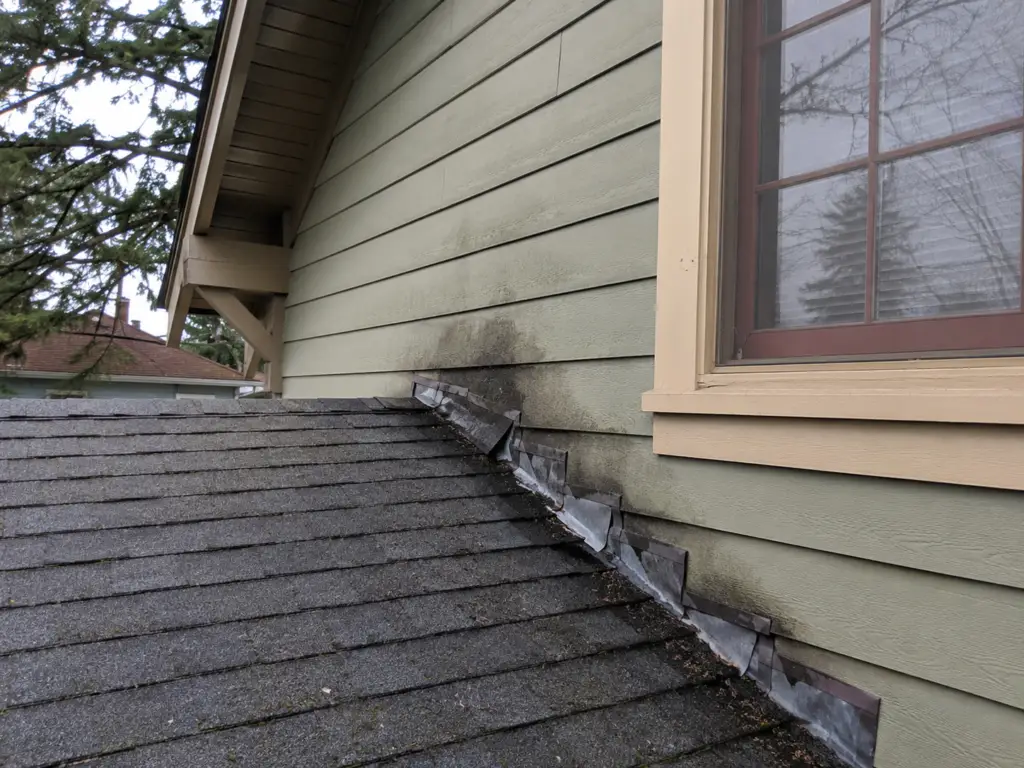
Flashing details rely on appropriate materials, overlaps, and integration with adjacent roofing and wall components. At some roof-to-wall junctions, step flashing works with successive shingle courses and counterflashing or the wall covering protects its upper edge. Other locations need different details.
See GAF’s homeowner explanation of roof flashing. The selected roofing system and location determine the installation requirements; one generic sealing method does not fit every junction.
Conditions worth investigating
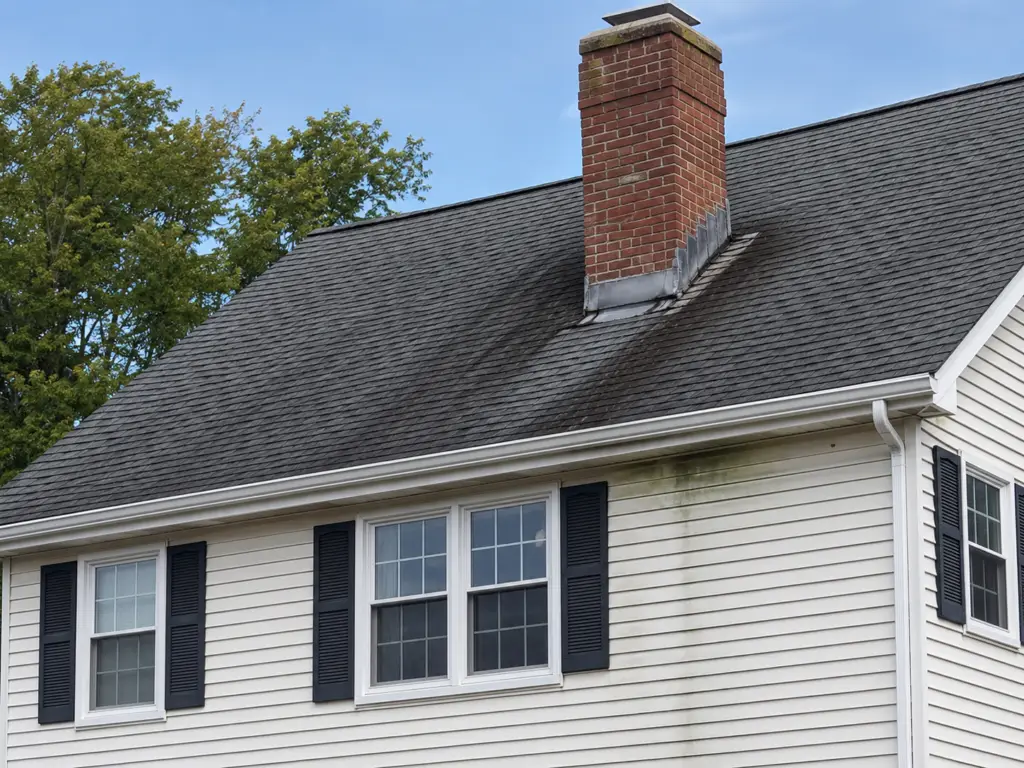
- Incorrect integration: water may get behind a detail when overlaps, termination, or connections to surrounding materials are unsuitable.
- Physical damage: displaced, torn, punctured, or bent components may create an entry path.
- Deterioration: metal, coatings, seals, or flexible parts can deteriorate depending on their materials and exposure.
- Movement: a connection may separate or become stressed as components move. The source of movement needs assessment.
- Debris or drainage problems: blocked flow can affect the way water reaches a junction.
These are possible causes to investigate, not a diagnosis for a particular roof. Nearby siding, masonry, a chimney cap, a skylight assembly, or another source may also need assessment.
Why adding sealant may not solve the leak
Sealants can be part of a specified detail, but a surface patch may leave failed overlaps or concealed defects in place. Applying material in the wrong location can also interfere with drainage. Ask whether the proposed repair restores the intended water path or only provides temporary protection.
What to record before the visit
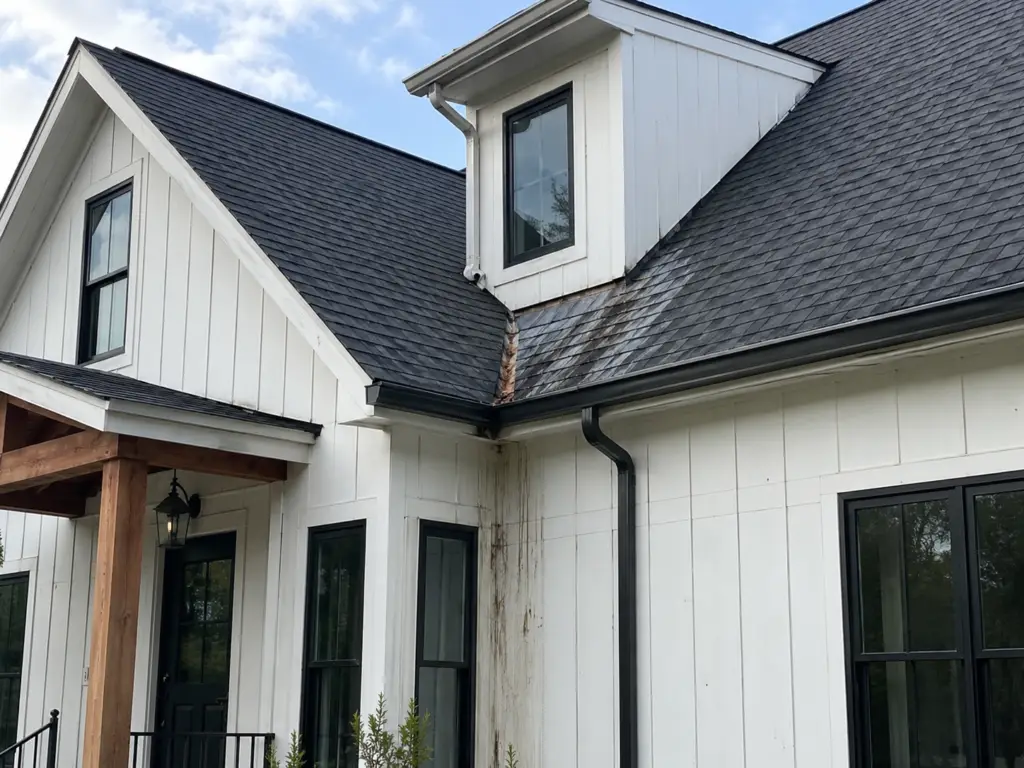
Note the interior location, when water appears, and whether wind direction or rainfall duration seems relevant. Share previous repairs and photographs taken from safe locations. Do not climb onto the roof or remove roofing to inspect the flashing yourself.
Stay away from unstable ceilings and water near electrical equipment. If there is immediate danger, contact emergency services or the appropriate utility. Tell the roofing company if water is actively entering and ask about availability and temporary protection.
What a repair proposal should explain
- The observed condition, likely source, and remaining uncertainty.
- Which roof or wall components will be opened or removed.
- The flashing materials and integration details to be repaired or replaced.
- Any related siding, masonry, trim, or interior work included or excluded.
- How concealed damage will be documented, priced, and approved.
- Completion checks and written coverage for the agreed work.
Common questions
Does a flashing leak require a new roof?
Not automatically. A localized repair may be practical if the surrounding materials are suitable and the detail can be integrated properly. Widespread deterioration or inaccessible connections may change the scope.
Can a free exterior inspection identify every leak?
No inspection can guarantee that every concealed condition will be identified. Locating active water entry may require a separate investigation. Our leak diagnosis service is paid; confirm the fee, access needs, and scope when scheduling.
What if the same area leaks after a previous repair?
Provide the earlier scope and describe what changed. Ask the next assessment to review alternative water paths and the limitations of the earlier repair rather than simply repeating the same patch.
Contact USA Storm Roofing and Construction Group to discuss your symptoms and repair history. Learn more about our roof repair service and the next steps for investigation.