
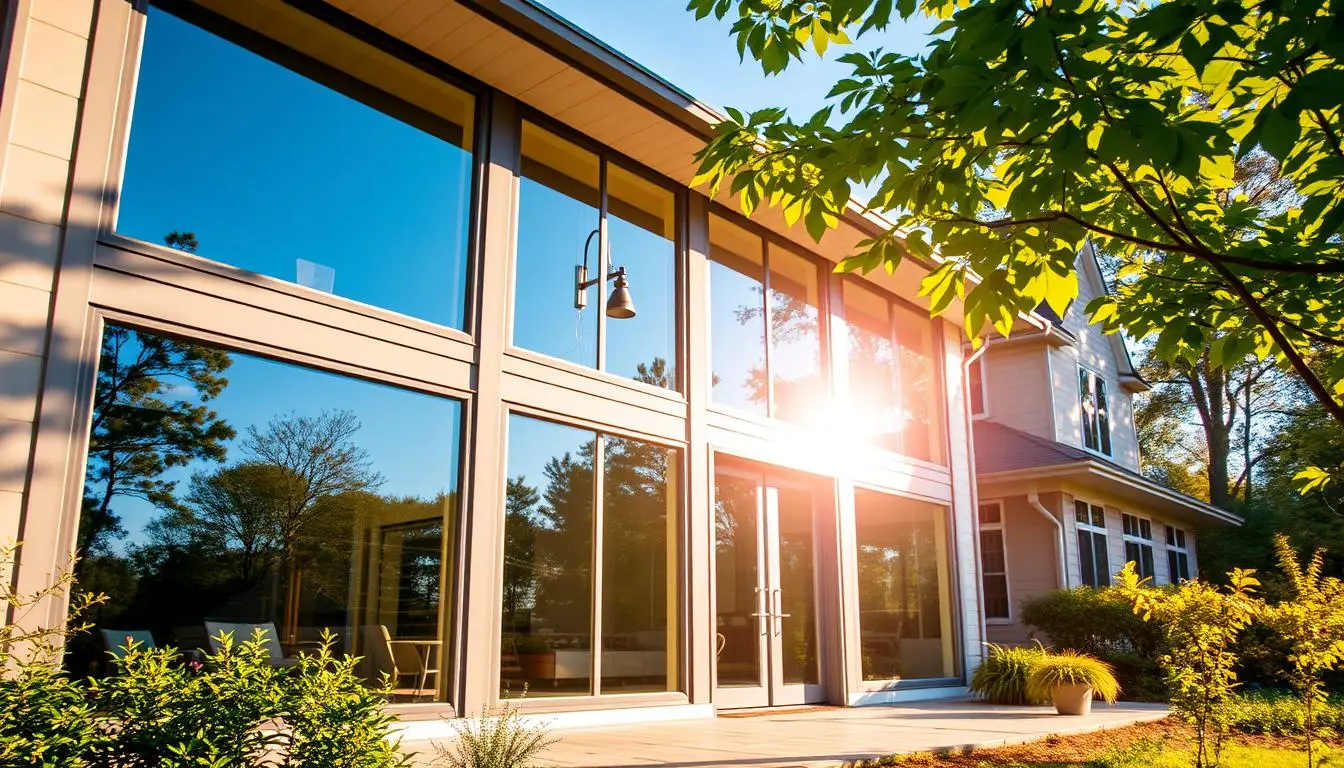
Low-E means low emissivity. A low-E coating changes how glass transfers radiant heat, helping a window manage heat loss and solar heat gain. It is one part of the window’s performance, alongside the frame, glass layers, spacers, gas fill, and installation.
For Virginia homeowners, the useful question is which complete window and glass package suits the home. A label that simply says “low-E” does not tell you how two products compare.
How low-E glass works
Low-E glass uses a very thin coating to affect the passage of radiant energy. Different coatings and glass configurations provide different balances of heat transfer, solar gain, and visible light. The coating is normally part of the manufactured glass product; installing a replacement window is not the same as applying a coating on site.
Low-E is also different from the number of panes. A double-pane or triple-pane window may include low-E glass, but the pane count does not identify the coating or the final whole-window performance.
Three ratings to compare
- U-factor: a lower whole-window value means less heat transfer through the product.
- Solar heat gain coefficient (SHGC): a lower value admits less solar heat. A higher SHGC does not automatically keep summer heat out.
- Visible transmittance: this indicates how much visible light passes through the product.
Review the Department of Energy’s explanation of window performance. Ask for ratings for the exact model, operating style, and glass package in your quote.
Choose for the climate and the room
Heating and cooling needs, window orientation, shading, and room use all matter. A sunny room that overheats can have different priorities from a shaded room. Avoid choosing a high or low SHGC solely from a broad statement about Virginia weather.
Check the applicable climate-zone criteria in ENERGY STAR’s window guidance. Discuss comfort, glare, daylight, and appearance with the installer, and review physical samples when possible.
What benefits are realistic?
A suitable low-E window can improve comfort and reduce heat transfer compared with a less efficient existing unit. Some glass packages also reduce ultraviolet transmission. That does not eliminate all causes of fading, and performance varies by product.
Energy savings depend on the old windows, the new product, installation quality, insulation, air leakage, weather, and household use. There is no universal percentage saving or payback period for adding low-E glass to every home. Ask what assumptions support any project-specific estimate.
Installation still matters
A high-performance glass package cannot correct a damaged wall, poor flashing, or gaps around the frame by itself. The quote should explain whether the work is an insert replacement or full-frame installation and what sealing, flashing, trim, and concealed repairs are included.
If the existing window has fogging between panes, ask whether replacing the insulated glass unit is feasible. If the frame or surrounding wall is damaged, a broader repair may be needed.
Care and warranty questions
Follow the manufacturer’s cleaning instructions for the selected product. Avoid abrasive tools or unapproved films and cleaners. Report damaged seals, hardware problems, or persistent moisture so the cause can be checked.
Read glass-seal, finish, hardware, and installation coverage separately. Ask about exclusions, registration, transfer terms, and who to contact if a problem appears.
Plan your window project
Make a list of rooms with drafts, overheating, condensation, or difficult operation. Bring that list to the consultation along with your budget and appearance preferences. Our window buying guide explains how to compare the broader installation scope.
USA Storm Roofing & Construction Group provides window replacement services. Request a consultation or call (571) 653-1241 to discuss suitable products for your home.